
Are you Sure you Got This?

Are you Sure you Got This?

Friends, we live in a culture that relentlessly celebrates the self-made person. From every podcast and billboard, the message is the same: “Pull yourself up by your bootstraps,” “Trust your gut,” and “You are your own hero.” This mindset, which emphasizes personal strength, control, and achievement above all else, feels like the air we breathe. It tells us that success, stability, and even happiness are entirely dependent on our hustle, our cleverness, and our capacity to manage every crisis.

But what if this powerful drive to be our own savior is, in fact, the greatest spiritual trap?

When we turn to the Scriptures, we find a story that sounds a profound and powerful warning against this very mindset—a story about a man who had everything—God’s anointing, charisma, military might—but lost it all because he chose to rely on himself instead of his God. That man was King Saul.

Saul began his reign with incredible potential, humble and strong. Yet, his ending was tragic, marked by paranoia, bitterness, and destruction. And it all began when he decided he knew better than God. His narrative is not just an ancient history lesson; it’s a timeless mirror for our own souls, showing us the dangerous allure and devastating consequence of trying to be our own savior. It’s a message of ultimate importance for anyone seeking true peace and lasting reliance.

The Warning: The Instant Folly of Self-Reliance

Saul’s spiritual downfall wasn’t a sudden, cataclysmic event; it was a slow, subtle surrender to pressure. His first majoract of disobedience, recorded in 1 Samuel 13, perfectly illustrates how self-reliance kicks in at the moment we feel most vulnerable. This story challenges us to recognize the precise moment we attempt to step into God’s role, exchanging faith for frantic action.

The Pressure Point: Fear Over Faith (1 Samuel 13:5-14)

Imagine the scene: Saul and his men are trapped in a geopolitical pressure cooker. The Philistines, a powerful and intimidating enemy, are massed in Michmash, their numbers described as being “like the sand which is on the seashore in multitude.” Saul was commanded by the prophet Samuel to wait seven days for him to arrive and offer a sacrifice to consecrate the army for battle. This was God’s specific, explicit instruction: wait for Me.

But as the days dragged on, the waiting became unbearable. The soldiers, gripped by terror, began to scatter and desert Saul’s camp. Saul looked at his dwindling resources, felt the terrifying weight of imminent collapse, and panicked. He thought, “I have to do something, or I’ll lose everything.”

The action that followed—Saul performing the priestly duty himself—was the birth of his self-reliance. He put his perceived urgent need (preserving his army and his kingdom) above God’s explicit patient command (waiting).

This is the lesson for us: Self-reliance kicks in when we feel we have to control an outcome. It’s the whisper in your mind during a financial crisis that says, “God isn’t moving fast enough; you handle this by cutting corners.” It’s the impulse when a relationship is rocky to manipulate or control the other person because you can’t trust the timing of healing or reconciliation. We exchange the powerful peace of faith for the futility and exhaustion of our own frantic action. We confuse our human deadline with God’s perfect timing. Saul’s error was believing that his immediate action could generate better results than God’s intervention.

The Deeper Cost: Disobedience Masquerading as Piety

When Samuel finally arrived and confronted Saul, Saul’s response wasn’t a humble apology; it was a complex rationalization. He essentially argued that his disobedience was a necessary good.

“I saw that the people were scattered from me, and that you did not come within the days appointed, and that the Philistines gathered themselves together at Michmash, I forced myself therefore, and offered a burnt offering” (1 Samuel 13:11-12, adapted).

Saul dressed up his blatant disobedience as a necessary religious act, trying to “compel myself to offer the burnt offering.” He tried to sanctify his frantic need for control by calling it piety. This is the deeper cost of self-reliance.

When we rely on self, we invariably rationalize our sin. We lie to ourselves: “I have to fudge these numbers to save my business.” “I have to lash out and control my children because they’ll fail otherwise.” “I have to keep overworking because God rewards effort, not rest.” We cloak our arrogance of control in the guise of good intentions, necessity, or even faith. We make excuses, but God sees the deeper issue: a lack of trust in His absolute sovereignty. Saul’s kingship was stripped from him not because he missed a date on the calendar, but because his act revealed a heart that had elevated its own judgment above the living God.

The Revelation: God Values Trust Over Talent

Saul’s second major failure, detailed in 1 Samuel 15, revealed a profound and incredibly inspiring truth about what God desires from us. This truth is deeply liberating because it takes the pressure off our performance, our impressive talents, and our personal accomplishments.

The Idol of Partial Obedience (1 Samuel 15)

In this second scenario, God gave Saul a clear, black-and-white command: wage war against the Amalekites and utterly destroy everything—people, livestock, and goods. This was a judgment rooted in history, and the command was absolute.

Saul went, fought, and won. But instead of executing the command fully, he spared Agag, the Amalekite king, and the best of the sheep and cattle. When confronted by Samuel, Saul offered the same tired defense:

“The troops took sheep and oxen, the best of the things devoted to destruction, to sacrifice to the Lord your God in Gilgal” (1 Samuel 15:21).

Saul thought his military success and his “good” idea of a superior sacrifice would compensate for his disobedience. He thought his talent as a general and his generous offering could somehow improve upon God’s will. He substituted God’s command with his own human judgment, relying on his impressive works and resources to cover his lack of simple trust.

The lie here is that partial obedience is just disobedience with a good excuse. By saving the best, Saul was building an idol to his own talent: “I won the war, and now I’ll use my superior wisdom to manage the spoils.” He was attempting to edit the Creator’s script.

The Inspired Priority: “To Obey is Better than Sacrifice”

When Samuel finally confronted Saul, he declared one of the most eternal and powerful truths in Scripture:

“Has the Lord as great delight in burnt offerings and sacrifices, as in obeying the voice of the Lord? Behold, to obey is better than sacrifice, and to heed is better than the fat of rams. For rebellion is as the sin of divination, and arrogance is as iniquity and idolatry” (1 Samuel 15:22-23).

This passage is a stunning revelation and an incredibly inspiring message for all of us struggling with performance anxiety and self-reliance. It tells us that God doesn’t need our impressive plans, our superior resources, or our self-generated achievements. He doesn’t need your perfect business plan, your massive bank account, or your flawless reputation. He doesn’t need the “best of the sheep” that you stole from His plan.

What God desires is our simple, humble reliance and trust.

It is liberating to know that our greatest gift to God is not a performance we have to strive for, but the simple, beautiful act of obedience—submission to His will. Saul’s talent couldn’t save him from his fate; our quiet, daily obedience can save us from the exhaustion of constantly trying to be better than God. Our performance matters far less than our position of dependence. This shifts the focus from our competence to God’s, and that is where true peace lies.

The Path Forward: Choosing Dependence Over Dominance

The story of Saul doesn’t have to be our story. The opposite of self-reliance isn’t weakness; it’s a powerful, liberating dependence that leads to true, sustainable strength.

The Remedy for Arrogance: Humility

Samuel called Saul’s rebellion a sin like “arrogance like the evil of idolatry” (1 Samuel 15:23). Why is self-reliance likened to idolatry? Because when we rely solely on self, we effectively make ourselves the idol. We transfer the attributes of omnipresence, omniscience, and omnipotence from God to our own capacity for control. We believe we are the source, the resource, and the ultimate savior of our own lives. This is spiritual narcissism.

The path out of this spiritual dead-end is not a path of greater striving, but a path of radical surrender. It is the simple, honest, and profoundly encouraging acknowledgment that “I can’t. I don’t know. I’m not enough. But God can.” This acknowledgement is not weakness; it is the genesis of all true power. Humility is simply accepting your role as the dependent creature and resting in the knowledge of the all-sufficient Creator. It’s the ultimate step out of exhaustion and into freedom.

Trusting God’s Provision, Not Our Plan

Saul’s mistake was constantly believing his resources—his army, his judgment, his stolen cattle—were his source of power. He was always looking inward or outward to his possessions, never upward to his Provider.

When we feel the pressure to control, to manipulate, or to race ahead of God’s timing, it’s a sign that we’ve forgotten that God is the source of all provision, protection, and wisdom. We don’t have to strive for control over our circumstances; we only have to trust His competence over our own.

This looks like:

  1. Pausing before Acting: When anxiety demands an immediate, frantic response, pause, pray, and ask, “Is this action based on faith or fear?”
  2. Laying Down the Crown: Regularly placing the weight of your worries—finances, relationships, health—at the foot of the cross.
  3. Seeking First: Prioritizing prayer, quiet meditation, and the study of the Scriptures before you prioritize work, endless consumption, or networking.

When we lean into God’s competence, He gives us peace that surpasses understanding and directs our steps toward His perfect, unfailing plan.

A Word from Our Savior

Saul’s tragedy was believing he could manage life better than God. He tried to save his own kingdom through his own efforts, his own disobedience, and his own partial obedience, and he lost it all.

The message for us, the ultimate antidote to the spiritual trap of self-reliance, comes directly from the gentle teaching of our Lord Jesus Christ. Saul’s self-talk was, “I can do it.” Jesus’ invitation to us is a radically different one: “Come to Me.”

In the Sermon on the Mount, Jesus speaks directly to our worries—the very things that drive our self-reliance: our food, our clothing, our future. He confronts our panicked striving head-on:

“Therefore do not worry, saying, ‘What shall we eat?’ or ‘What shall we drink?’ or ‘What shall we wear?’… But seek first the kingdom of God and His righteousness, and all these things shall be added to you” (Matthew 6:31, 33).

Jesus invites us to lay down the exhausting, fruitless burden of trying to be our own god, our own provider, and our own savior. He calls us to a radical, liberating dependence. The man who truly “has this” isn’t the one running the fastest or controlling the most variables. The one who “has this” is the one who has fully surrendered the desire to control and has simply handed the reins back to the Creator.

Let’s step out of Saul’s shadow and step into the light of Christ’s promise: True strength, true peace, and true provision are found only when we stop trying to do it ourselves and simply trust Him to do it through us.
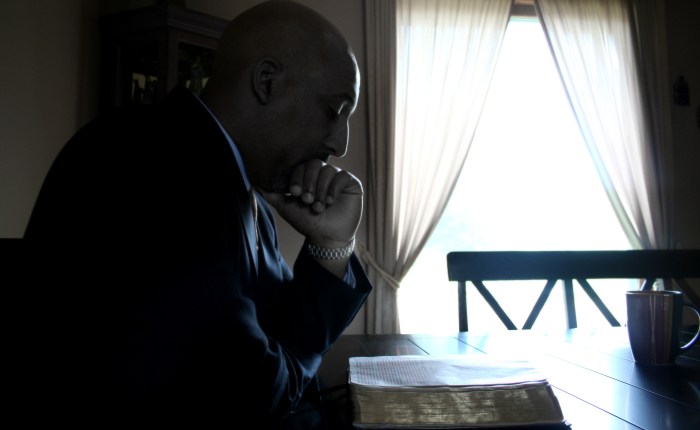
The Courage of Waiting

The Courage of Waiting

There is a particular kind of courage that doesn’t roar. It doesn’t charge into battle with a war cry or leap from a precipice to save a life. It’s a quieter, more profound kind of strength, born not of action but of stillness. It is the courage of waiting.

This is a quiet, resilient fortitude that the ancient songbook of faith, the Psalms, explores with remarkable clarity. Across its verses, we find a consistent message: true courage is not the absence of fear, but the presence of an unshakeable trust in a higher power. It’s a strength born not from our own will, but from a divine source that acts as both our light and our stronghold. Consider these three passages that connect courage directly to our relationship with God:

  • Psalm 27:1: “The Lord is my light and my salvation—whom shall I fear? The Lord is the stronghold of my life—of whom shall I be afraid?”
  • Psalm 27:14: “Wait for the Lord; be strong, and let your heart take courage; wait for the Lord!”
  • Psalm 31:24: “Be strong and take heart, all you who hope in the Lord.”

Our journey begins with the words of King David, a man who knew a great deal about facing down giants—both literal and figurative. He confronted giant adversaries, endured the relentless pursuit of an envious king, and even suffered the deep wound of betrayal from his own son. Yet, in the face of such turmoil, he makes an incredible, faith-reorienting declaration. This is not a flippant or dismissive rhetorical question. It is a statement of faith that completely reorients a person’s world. David isn’t claiming to have no reason to be afraid; rather, he is choosing to center his identity and security not on his own strength or the absence of danger, but on God. The world may be full of things that inspire fear, but for David, the Lord is a “light” that exposes the darkness and a “stronghold” that offers unshakeable protection. His courage, therefore, isn’t the absence of fear, but the presence of faith. He has an anchor that holds firm no matter how turbulent the sea. This challenges us to ask a fundamental question: who or what is the stronghold of our lives? When we place our trust in anything less than God—our career success, our financial stability, our physical health, or the fleeting approval of others—our courage will inevitably falter. For these are all things that can and will fail us. But the courage that stems from a foundation in God is one that cannot be shaken.

The next theme we will explore is the profound and powerful command to persevere in the very act of waiting. In our modern, fast-paced world, the very concept of waiting feels like a weakness. We are conditioned to seek immediate solutions, instant answers, and quick fixes. The advent of instant communication, next-day delivery, and on-demand streaming has trained us to believe that waiting is an inconvenience, a failure of efficiency. But the psalmist tells us that true courage is found not in the haste of action, but in the profound discipline of waiting on God. To “wait for the Lord” is not to sit idly by in passive resignation. It is a deliberate, active, and expectant posture of hope. It is a deep-seated conviction that says, “I may not see the way forward, the path may be obscured by shadow and uncertainty, but I will trust the one who does. I will be strong and courageous in this present moment, even as I wait for his perfect timing.” This kind of courage is not flashy. It is a quiet, resilient strength that endures through seasons of silence and uncertainty, much like a plant waiting for the right season to bloom or an athlete training for years for a single moment of triumph. It is the resolve to keep your hands open and your heart attentive, even when nothing appears to be happening. This is where the deepest, most enduring kind of courage is forged—in the crucible of patience. It is the courage to not force a timeline, to not rush an answer, but to trust that the one who holds all time in His hands is working on our behalf, even when we cannot perceive it.

Finally, we turn to the conclusion that echoes the theme of hope, but with a new and vital dimension. This verse is a final, resounding call to action. It is not just a personal encouragement, but a collective one, addressed to “all you who hope in the Lord.” It reminds us that our faith journey is not a solitary one. When we feel overwhelmed by the demands of waiting, we can and should draw strength and courage from one another, from the community of faith that shares the same profound hope. Our courage isn’t a solitary act of will; it is a communal practice. In the same way that a team of mountain climbers shares the weight of their gear and encourages each other to keep going, so too do we share the burden of our fears and celebrate the small victories of hope. The courage to wait is fortified by the knowledge that we are not alone. It is a shared journey, and our hope isn’t in our own ability to be strong, but in the steadfast character of God himself. The more we hope in Him, the more our hearts are filled with the courage we need to face whatever comes our way.

The courage of waiting is a tapestry woven from these three threads: the unshakeable foundation of faith in God as our stronghold, the active discipline of patient endurance, and the collective strength found in a community of shared hope. It is the courage to stand in the face of the unknown, not because we are fearless, but because we know the one who holds all things together. It is a courage that is forged in the silent moments of trusting, in the difficult moments of hoping, and in the shared moments of encouragement. And in a world that rushes toward the next thing, the quiet, powerful act of waiting is perhaps the most courageous act of all.

Thank God I Failed

Thank God I Failed

Embracing Failure as an Aspect of Faith

We are taught from a young age to strive for success and avoid failure at all costs. The word “failure” itself can conjure feelings of defeat, inadequacy, and disappointment. It’s a concept we dread, something we hide, and something we desperately try to prevent. Given this deeply ingrained instinct, the idea of being grateful for failure seems, at best, counter-intuitive. Yet, this is precisely the profound and often overlooked truth we must confront: failure is not adversarial to faith; rather, it is an integral aspect of faith itself.

The common perception is that if we have true faith, we will succeed. This perspective positions failure as an enemy, something that undermines our belief. If our prayers go unanswered, or our plans fall apart, it’s easy to feel as though our faith was misplaced or insufficient. However, this belief often stems from a misunderstanding of what faith is. Faith is not a cosmic vending machine that dispenses our desired outcome in exchange for belief. Instead, failure doesn’t invalidate faith; it simply means the story is taking a different, unexpected turn.

How Failure Informs and Strengthens Faith

Instead of weakening our faith, failure can actually be a crucial part of its development and deepening. Faith, like a muscle, grows stronger under strain, not in comfort. When we face setbacks, our faith is tested, and we have the opportunity to reaffirm and deepen it, leading to a more resilient and mature belief. Failures are also our greatest teachers. In a faith context, they can teach us about patience, perseverance, and humility. They strip away our pride and self-reliance, prompting us to recognize our limitations and lean more fully on God’s strength and grace. This humility is where God loves to meet us.

Furthermore, failure is rarely a dead end; it’s often a potential turning point. Our faith traditions are rich with themes of redemption, forgiveness, and new beginnings. Failure is the moment God invites us into spiritual renewal or redirects us onto a different path, guided by His divine hand. True faith isn’t just believing when things are easy; it’s most powerfully demonstrated when we continue to hope and strive despite our failures, trusting that God is still at work.

God Works in All Things

Perhaps the most powerful scripture that underscores this idea is Romans 8:28: “And we know that in all things God works for the good of those who love him, who have been called according to his purpose.” This verse directly addresses the idea that failure is not adversarial to faith. It implies that even the things we perceive as failures—the setbacks, mistakes, and moments of weakness—are not outside of God’s redemptive work. He doesn’t just work in our successes; He works in all things.

This speaks to the idea that failure is an aspect of faith. For those who love God and are called by His purpose, failures become part of a larger divine plan. In this context, failure isn’t a sign of abandonment but a step, a lesson, or a refining process within the broader journey of faith. It leads to humility, deepens our dependence on God, and fosters growth. This is beautifully echoed in 2 Corinthians 12:9, where Jesus tells Paul, “My grace is sufficient for you, for my power is made perfect in weakness.” God’s power isn’t made perfect in our flawless performance, but precisely in our weakness and our failures.

Biblical Figures Who Failed

The Bible is a raw and honest portrayal of real people with real faith who experienced profound failures. Through their stories, we see how failure was not an adversary but an integral part of their journey.

  • Peter: He was impulsive and often spoke before thinking. His most notable failures include sinking while walking on water (Matthew 14:28-31) and, most famously, denying Jesus three times (Matthew 26:69-75) after boldly declaring his loyalty. Yet, Jesus never gave up on him. After the resurrection, Jesus sought him out, restoring him by asking him, “Do you love me?” three times, a direct reversal of the three denials. Peter went on to become a foundational leader of the early church, and his failures likely humbled him and made him more reliant on God’s grace.
  • King David: Despite being called “a man after God’s own heart,” David committed the grievous sins of adultery with Bathsheba and the murder of her husband, Uriah (2 Samuel 11). This was a profound moral failure. However, when confronted by the prophet Nathan, David immediately repented and poured out his heart in Psalm 51. God, in His mercy, did not revoke David’s kingship, and it was through his lineage that the Messiah came. David’s failures and deep repentance underscore the power of God’s forgiveness and restoration.
  • Moses: The great leader who brought Israel out of Egypt also had significant failures. In his youthful zeal, he killed an Egyptian, leading to forty years of exile (Exodus 2:11-15). Later, he struck the rock instead of speaking to it for water, an act of disobedience that resulted in him being forbidden from entering the Promised Land (Numbers 20:7-12). Despite these failures, Moses remained God’s chosen leader. His time in the wilderness transformed him from an impulsive prince into a humble and patient shepherd. Even though he didn’t enter the Promised Land, he saw it from Mount Nebo and is still considered one of the greatest prophets in Israel’s history. His journey illustrates that God can still use us mightily even when we fall short.

These biblical figures show us that faith isn’t a flawless performance but a dynamic journey that includes missteps, doubts, and outright failures. It is in the aftermath of these failures that genuine faith is often refined, deepened, and proven to be resilient.

Embracing the “Thank God I Failed” Mindset

Failure is an inevitable part of life, but as we’ve seen, it is not an adversary to faith; it is an integral aspect of it. To embrace this mindset, we must first change how we view failure. See each setback not as a condemnation but as a classroom. Don’t hide your failures; instead, allow God to use them for humility and growth. Trust that God is working in all things for your good, even in the mess.

For those discouraged by past failures, find hope in God’s redemptive power promised in Romans 8:28. For those fearing future failures, I encourage you to step out in faith, knowing that God’s grace is sufficient for you, and His power is made perfect in your weakness, as 2 Corinthians 12:9 reminds us. Let us embrace the journey of faith, knowing that even our stumbles can be used by God for His glory and our deepest good. So, yes, we can say with confidence and gratitude, “Thank God I Failed.” For through those failures, His power is made perfect, and our faith is made strong. Amen.

Minding the Master

Minding the Master

In our rapid-fire, demanding world, it’s easy to get caught up in endless to-do lists, urgent tasks, and the constant clamor for our attention. This relentless pace often leaves us feeling overwhelmed, stressed, and anxious. The 21st century, with its continuous connectivity, information overload, and societal pressures, has seen a significant rise in anxiety. From the gnawing financial and economic fears that keep us up at night, to worries about the future of Social Security benefits, the struggle of underemployment, and the dread of health scares, anxiety has become a pervasive undercurrent in modern life. The unsettling reality of environmental abnormalities and the deeply personal pains of singleness or marital problems can compound this burden, sometimes leading to a profound sense of hopelessness. We often find ourselves busy, but are we busy with the right things, or are we simply trying to outrun our anxieties?

Luke 10:38-42 presents a timeless encounter in the home of Martha and Mary, offering a profound lesson on priorities. Jesus visits their home, and their responses reveal two distinct approaches to His presence, one of which is clearlyburdened by anxiety. This passage challenges us to consider what it truly means to “mind the Master”—to prioritize listening to Jesus above all other good, but lesser, things, especially when the anxieties of life threaten to consume us.

Martha’s Distraction:

Martha’s intentions were not just good; they were rooted in deeply ingrained cultural values. In first-century Jewish society, hospitality (Hebrew: hakhnasat orehim) was not merely good manners but a moral institution and a sacred duty. It was considered a great mitzvah (commandment) and an expression of loving-kindness. Hosts were obligated to provide lavishly for guests, offering food, water for washing dusty feet, and shelter. Abraham, for instance, is a biblical paragon of hospitality, eagerly running to meet and serve his unexpected guests (Genesis 18:1-8). The reputation of a household, and even a community, could hinge on its ability to offer generous hospitality. As the likely head of the house, Martha felt the immense weight of this expectation. She was diligent, taking on the responsibility of preparing a significant meal for Jesus and His disciples—a task that would have been physically demanding and time-consuming. This pressure to perform perfectly and meet such high cultural standards became a primary source of her internal worry.

Her service, though noble and culturally expected, became a source of distraction and overwhelming anxiety. The Greek word periespato, translated as “distracted” (Luke 10:40, NIV), literally means to be “pulled or dragged in different directions.” Martha was being pulled by the numerous tasks, the intense pressure to perform perfectly, and the sheer volume of work required for such an important guest. This internal pulling and scattering of her focus directly led to her anxious state. Her anxiety manifested as worry, frustration, and a sense of being overwhelmed. Her complaint to Jesus—”Lord, don’t you care that my sister has left me to do the work by myself? Tell her to help me!” (Luke 10:40, NIV)—reveals not just a desire for assistance, but a deep-seated stress, irritation, and perhaps a feeling of unfairness or unappreciation, all hallmarks of an anxious mind. She was consumed by the “many preparations” (Luke 10:40) and the fear of falling short of her cultural duty.

This narrative highlights how our good intentions and diligent service can sometimes lead us away from what is most important, especially when driven by external pressures or internal perfectionism. Are we so busy for God that we neglect being with God, allowing our actions to be fueled by worry rather than peace? What “many things” distract us and drive our anxiety, preventing us from focusing on the main thing and finding peace in His presence?

Mary’s Devotion:

In stark contrast to Martha, Mary’s posture signifies humility, reverence, and a profound desire to learn. Sitting at Jesus’ feet was the position of a disciple learning from a Rabbi—a role highly unusual for a woman in that cultural context, yet one she embraced wholeheartedly. Her focus was singular: listening intently to the words of Jesus. She understood the unique and precious opportunity before her, choosing to engage with the source of true peace amidst potential chaos. Mary recognized that the presence of Jesus and His teaching was more important than the elaborate preparation of a meal, no matter how necessary it seemed or how much cultural pressure there was. She chose intimacy and spiritual nourishment over practical tasks, finding peace and tranquility in His presence rather than succumbing to the pressure and anxiety of the moment. Her choice reflects a spiritual “mindfulness” that centers on Christ.

What does it look like for us to “sit at Jesus’ feet” in our daily lives, particularly when facing the anxieties of today? It’s about intentional presence that calms our fears, reorients our priorities, and anchors us in a tumultuous world.

“But one thing is necessary,” Jesus declares. “Mary has chosen what is better, and it will not be taken away from her”(Luke 10:42, NIV). This is the core message. Amid many good things, there is one best thing that truly addresses our deepest needs and anxieties. The spiritual nourishment Mary received from Jesus was eternal and lasting, providing a peace that worldly tasks and accomplishments cannot. This peace offers a profound contrast to Martha’s temporary, anxiety-laden efforts. It is the ultimate antidote to the pervasive worry of life.

Jesus’ Gentle Correction: The One Thing Needed for Freedom from Anxiety

Jesus’ response to Martha is tender yet direct: “Martha, Martha,” the Lord answered, “you are worried and upset about many things, but few things are needed—or indeed only one” (Luke 10:41-42, NIV). He sees her heart and her internal struggle, directly naming her anxiety and the burden she carries. He doesn’t condemn her desire to serve, but the worry that has consumed her. He points out that her frantic activity has produced anxiety, suggesting a better way to live free from such burdens by shifting her focus from the overwhelming “many things” to the singular “one thing.”

What is that “one thing” for us? It is our relationship with Jesus, our communion with Him, and our obedience to His word. Everything else flows from this and is the ultimate antidote to our anxieties. We must guard this “good portion”against the demands and distractions of the world, choosing peace over worry.

Choosing to “Mind the Master”

The story of Martha and Mary is not about condemning service, but about prioritizing the source of all service—Jesus Himself—as the ultimate remedy for our anxieties and worries. The title “Minding the Master” encapsulates the core message of Luke 10:38-42. To “mind” means to pay attention to, to obey, to care for, and to be concerned with. It implies a conscious and deliberate focus. In this context, “Minding the Master” means intentionally prioritizing Jesus—His presence, His words, and His will—above all the demands and distractions of life. It means choosing to sit at His feet, to listen to Him, and to allow His peace to govern our hearts, rather than being consumed by the “many things” that lead to anxiety. In truly minding Him, we find freedom from the grip of worry.

In our lives, we will always have “many things” vying for our attention and contributing to our anxiety, from financial strain to health concerns, and societal pressures to personal struggles. The challenge is to discern the “one thing” that is truly necessary and offers lasting peace. Are we truly “minding the Master” by making Him our ultimate priority, allowing His presence to calm our troubled hearts and minds?

Let us take time to be still and listen to Jesus, especially when anxiety mounts. Let us evaluate our daily schedules and identify what distractions steal our focus from Him and feed our anxiety. Let us choose the “good portion” daily—intentional time in His presence, soaking in His word, and allowing His peace to guard our hearts and minds.

Lord, help us to be like Mary, choosing the better part. Deliver us from the anxiety of many things, and draw us into deeper communion with You, the one thing necessary, that we may find true peace in Your presence.

References

* Brown, C. (Ed.). (1976). Dictionary of New Testament Theology. Zondervan. (For periespato)

* Keener, C. S. (1993). The IVP Bible Background Commentary: New Testament. InterVarsity Press. (For cultural context of hospitality and women as disciples)

* Longenecker, R. N. (2016). The Expositor’s Bible Commentary (Revised Edition): Luke. Zondervan Academic. (For general commentary on Luke 10:38-42)

* Strong, J. (2009). Strong’s Exhaustive Concordance of the Bible. Hendrickson Publishers. (For Greek word definitions)

Remember

Remember

When challenges mount and fears loom large in the whirlwind of life, it’s easy to feel adrift, as if we’re facing insurmountable odds alone. The weight of present troubles can obscure our vision, making us forget the very source of our strength and hope. Yet, the ancient words of King David in Psalm 27:1-6 offer a profound antidote to this despair: “Remember.”

David, a man intimately acquainted with adversity – from facing giants and fleeing a jealous king to enduring betrayal and war – begins this psalm not with a lament, but with a resounding declaration of confidence: “The Lord is my light and my salvation; whom shall I fear? The Lord is the stronghold of my life; of whom shall I be afraid?” (Psalm 27:1). This isn’t a naive optimism, but a battle-tested faith rooted in memory.

David’s confidence isn’t abstract; it’s grounded in his past experiences. He recalls, “When evildoers came against me to devour my flesh, my foes and my enemies stumbled and fell” (Psalm 27:2). He had seen God’s hand move, time and again, turning the tide against seemingly overwhelming forces. It’s in these moments of divine intervention, these countless deliverances from troubles that seemed impossible to overcome, that we find a powerful testament to God’s existence and His active interaction in our lives.

Think about it: can any person truly navigate the “numerous obstacles” of life – the unexpected illnesses, the crushing losses, the sudden betrayals, the financial ruin – without some form of support? While human support is vital, there are moments when only a divine hand can provide the light in the deepest darkness, the salvation from utter despair, and the stronghold against forces that would otherwise consume us. When we look back at our own lives, at the times we somehow made it through, when a door opened unexpectedly, when peace settled in the midst of chaos, or when strength appeared from nowhere, we are witnessing God’s faithfulness. These are not mere coincidences; they are echoes of His promise, “I will never leave you nor forsake you.”

David’s life was a tapestry woven with such divine interventions. Before he ever wore a crown, as a young shepherd boy, he faced beasts that threatened his flock. He didn’t just survive; he conquered. He remembered how God enabled him to rescue his lambs from the jaws of a lion and a bear (1 Samuel 17:34-37). These weren’t minor skirmishes; they were life-or-death struggles where a shepherd boy, armed with only a staff and sling, triumphed over formidable predators.

And then came the ultimate test: Goliath, the Philistine giant, defying the armies of Israel. While seasoned warriors trembled, young David, fueled by the memory of God’s past faithfulness, stepped forward. He declared, “The Lord who delivered me from the paw of the lion and from the paw of the bear will deliver me from the hand of this Philistine” (1 Samuel 17:37). His victory over Goliath was not merely a physical feat; it was a profound act of faith, born from a deep well of remembered deliverances.

David’s reflection in Psalm 27 was likely not about one isolated occurrence, but about journeying through the halls of his memory, recalling each instance of God’s powerful intervention. This process wasn’t just nostalgic; it was an act of worship. Each recalled victory became a fresh reason to honor God with praise, solidifying his confidence that the God who had been faithful in the past would surely be faithful in the present and future. This constant act of remembering and praising transformed his past struggles into pillars of present strength, allowing him to declare with conviction, “Though an army encamp against me, my heart shall not fear; though war rise up against me, yet I will be confident” (Psalm 27:3).

This divine support is not just about external rescue; it’s also about internal transformation. The Apostle Paul reminds us in 2 Timothy 1:7, “For God has not given us a spirit of fear, but of power and of love and of a sound mind.” This verse beautifully complements David’s fearless stance. When we remember God’s faithfulness, we are empowered to overcome the spirit of fear that seeks to paralyze us. We receive a spirit of power, enabling us to face challenges with courage; a spirit of love, allowing us to respond with compassion even in difficult circumstances; and a sound mind, granting us clarity and wisdom when confusion reigns. This inner fortitude is itself a profound deliverance, a testament to God’s ongoing work within us.

It’s tempting to wish away our troubles, to pray for their immediate removal. But some of life’s most profound growth happens not by avoiding the storm, but by learning to lean into it, trusting that God is present and purposeful in the midst of it. David’s psalm isn’t just about escaping trouble; it is about finding God in trouble. His “one thing” was not freedom from enemies, but to “dwell in the house of the Lord all the days of my life, to gaze upon the beauty of the Lord and to inquire in his temple” (Psalm 27:4). He sought intimacy with God despite the surrounding chaos.

When we choose to lean into our trials, when we consciously seek God’s presence and wisdom within the difficulty, we allow Him to refine us. It’s in the crucible of adversity that our faith is tested and strengthened, like gold purified by fire.We learn resilience, patience, and a deeper reliance on God than we ever thought possible. The very things that threaten to break us can, with God’s divine support, become the tools He uses to build us into stronger, more compassionate, and more faithful individuals. We grow not just through the trials, but because of them, as God uses them to shape our character and deepen our understanding of His unwavering faithfulness.

So, when the “army” encamps against you, and “war rises up,” take a moment to pause. Remember. Remember the countless times God has been your light, your salvation, your stronghold. Remember the unseen hand that guided you, the peace that sustained you, the strength that appeared when you had none left. These memories are not just personal anecdotes; they are evidence of a living, interacting God.

Let the spirit of power, love, and a sound mind replace the spirit of fear. And as you lean into the present challenge, trust that the same God who delivered you before is actively working to grow you now. For in remembering His faithfulness, we find not just hope for today, but an unshakeable confidence for all our tomorrows.

In All Thy Ways: Finding God’s Unexpected Path to Healing

In All Thy Ways: Finding God’s Unexpected Path to Healing

We live in a world that often celebrates the grand, the complex, and the highly visible. We strive for success, curate our online personas, and often believe that with enough resources, intelligence, or connections, any problem can be solved. But what happens when we encounter a problem that money can’t buy a solution for, a status can’t overcome, or influence can’t fix?

Our anchor text, 2 Kings 5:1-15, introduces us to Naaman, a man who, by all worldly measures, had it all. He was the commander of the Syrian army, a man of immense stature and success, even credited by the Lord for victories. He was the ancient equivalent of a CEO, a military general, a social media influencer with millions of followers. Yet, beneath the polished exterior, Naaman carried a devastating secret: he was a leper. This incurable disease would eventually lead to isolation, disfigurement, and death. It’s a stark reminder that human achievement, no matter how great, cannot overcome every human limitation.

This brings us to a crucial question: When our greatest strengths fail us, and our biggest problems seem insurmountable, where do we turn for a solution? How does God intervene in such situations?

The Unexpected Messenger of Hope

Naaman’s hope doesn’t come from his king, his advisors, or his vast wealth. It comes from the most improbable source: a young, unnamed Israelite girl, captured in a raid and serving as a slave in his household (2 Kings 5:2-3).

Imagine getting life-changing advice not from a TED Talk speaker or a best-selling author, but from a child, a janitor, or a new immigrant. God delights in using the overlooked, the marginalized, those without a platform, to deliver His most profound messages. This young girl, snatched from her home and forced into servitude by Naaman’s people, could have been consumed by bitterness. Yet, she shows remarkable empathy for her captor, simply stating, “If only my master would see the prophet who is in Samaria! He would cure him of his leprosy.” Her faith wasn’t just a wish; it was a certainty.

In a world saturated with information, misinformation, and skepticism, do we have the courage and conviction of this unnamed girl to speak simply and truthfully about the hope we have in God, even to those who might seem to have everything?

The “App” That Doesn’t Work vs. God’s Simple Command

Naaman, accustomed to power and protocol, takes the “top-down” approach (2 Kings 5:4-5). He goes to his master, the King of Aram, who then writes a letter to the King of Israel. Naaman arrives with immense wealth—a king’s ransom—expecting to buy his healing. How often do we try to “app-ify” our spiritual problems? We seek complex solutions, expensive programs, or influential connections, believing that a “high-level” approach is necessary for a “big” problem. We want a quick fix, a formula, a transaction.

But the King of Israel’s reaction is telling: he tears his clothes in despair. “Am I God, to kill and to make alive?” He recognizes his utter powerlessness in the face of leprosy. This vividly illustrates that no amount of human authority, political power, or technological advancement can solve our deepest, most fundamental spiritual problems. We can build skyscrapers, cure diseases, and connect the world, but we cannot heal a broken spirit or cleanse a sinful heart on our own.

Naaman’s conventional, “top-down” approach has reached its absolute limit. The King of Israel’s helplessness creates a void that only God can fill. This prepares Naaman, and us, for the radical simplicity of God’s true solution, which will come through Elisha. Naaman is about to learn that God’s way is often not about complexity, cost, or prestige, but abouthumble obedience to a seemingly ordinary command, leading to an extraordinary transformation.

In All Thy Ways: Embracing God’s Unexpected Ways to Healing

This narrative powerfully illustrates the timeless wisdom of Proverbs 3:5-6: “Trust in the LORD with all your heart, and lean not on your own understanding; in all your ways acknowledge Him, and He shall direct your paths.”

Naaman, a man who relied on his own understanding and conventional wisdom, had to learn to trust in the Lord and acknowledge Him “in all his ways.” When Elisha sent a messenger with the simple instruction to “Go and wash in the Jordan seven times” (2 Kings 5:10), Naaman was initially furious. This wasn’t the dramatic, impressive display he expected from a prophet. His pride was wounded, and his expectations of a grand solution were shattered. Yet, it was the humble counsel of his servants that led him to obey this simple, counter-intuitive command.

When he finally humbled himself and dipped seven times in the Jordan, his flesh was restored like the flesh of a little child, and he was clean (2 Kings 5:14). This physical healing was followed by a profound spiritual realization as he declared, “Indeed, now I know that there is no God in all the earth, except in Israel” (2 Kings 5:15).

What “leprosy” (deep, incurable problems) do we face in our lives today – the relentless anxiety, the unshakeable addictions, the brokenness in our relationships, the spiritual emptiness that no amount of “likes” or achievements can fill?

Are we open to God working through unexpected people or simple means, or do we insist on our own “grand” solutions, the latest self-help trend, or the most technologically advanced fix? Are we willing to humble ourselves, set aside our pride and our need for control, and listen to the “little voices” – perhaps a quiet prompting, a simple word from a friend, or a verse from Scripture – that might be pointing us to God’s solution?

The Ultimate Healer: Jesus Christ

Naaman’s physical cleansing foreshadows the far greater spiritual cleansing offered through Jesus Christ. Just as Naaman needed to be washed in the Jordan to cleanse his flesh, we need to be washed by the blood of Jesus to be cleansed from the “leprosy” of sin (Romans 3:23, 6:23).

Like Naaman, who was a Gentile, Jesus’ ministry extended beyond the Jewish people, demonstrating God’s universal love and desire for all to be saved (Luke 4:27, where Jesus himself references Naaman’s healing, emphasizing God’s grace to outsiders). Jesus often healed in simple, unexpected ways, just as Elisha did. He didn’t always perform grand spectacles but often used a touch, a word, or even mud and spit, requiring faith and obedience from those he healed (e.g., the blind man in John 9). His power is not about human showmanship, but divine authority.

The humility Naaman learned is central to following Christ. In our self-sufficient age, we must humble ourselves, acknowledge our profound need for a Savior, and trust in His simple, yet profound, call to faith and repentance. It’s not about what we can do or buy, but about what He has done for us.

In a world that constantly tells us to strive, to achieve, to control, Jesus invites us to surrender. Like Naaman, let us be willing to lay aside our pride and preconceived notions, and embrace God’s often simple, yet powerful, instructions for healing and transformation. Trust that God’s way, revealed ultimately in Jesus Christ, is always the best way to find truecleansing, lasting freedom, and eternal life. Indeed, “In all thy ways acknowledge Him, and He shall direct thy paths.”

Don’t Fight Your Toxic Co-Worker—Let Them Be Your Unofficial Spy!

Don’t Fight Your Toxic Co-Worker—Let Them Be Your Unofficial Spy!

Ah, the office tyrant. We all know them, and we’ve all been subjected to their unique brand of charm (read: condescension and rudeness). They’re the self-proclaimed president of “Jerks Are Us,” yet somehow, they’ve managed to keep their job longer than that one sad office plant in the corner. You’ve fantasized about putting them in their place, perhaps with a well-aimed stapler or a passive-aggressive Post-it note. But hold on to your horses, because I’m here to tell you: don’t do that!

Yes, you read that right. That obnoxious colleague, the one who makes your blood pressure rise faster than the company’s stock value during a tech boom, might just be your secret weapon. Unconventional? Absolutely. Brilliant? Potentially.

Your Office Irritant: The Inside Man You Never Knew You Needed

Think about it: disrespectful people might be nerve-wracking, but they have one undeniable quality—they always tell you what they’re thinking. And while it always sounds negative, their unsolicited opinions and sly put-downs can actually be a sign that you’re on the right track. Consider them your indirect, albeit incredibly grumpy, insider.

More often than not, the more insecure these office bullies get, the more erratic their behavior becomes. Their nonsensical rants and subtle jabs are likely a neon sign flashing: “You’re looking good in the eyes of those who matter!” So, before you start drafting that anonymous HR complaint, consider this: why get rid of a perfectly good (and free!) information source?

These “tazmanians” of the office world even have friends (yes, it’s a shocker, I know). And those friends, few as they may be, often have influence that directly impacts your workflow. Your obnoxious colleague, in their tireless pursuit of negativity, will inadvertently clue you into their friends’ thoughts and feelings about you, the company, management, and basically anything else under the sun. Read between the lines of their nasty comments and rude emails, and you’ll uncover a treasure trove of insights. It’s the classic adage: “Keep your friends close, and your enemies closer.”

They never run out of opinions, so stop trying to shut them up! Let them talk, let them make fools of themselves. The truth is, if you eliminate this particular devil, another one will simply take its place. At least you know this one.

How to Harness Your Human Alarm Bell

So, how do you manage this invaluable, albeit irritating, resource?

  • Maintain Your Professionalism (Always): Do not stoop to their level. Your stellar behavior, emails, Zoom calls, and verbal communication should be impeccable. In fact, use AI to assist you with crafting clear, concise, and professional communications. Let them be the loud, unprofessional one.
  • Consider Generational Communication Styles: Sometimes, what seems rude is simply a difference in how generations communicate. While this doesn’t excuse outright disrespect, understanding it can help you decode their messages more accurately.
  • Don’t Let Them Dethrone You: Your toxic co-worker secretly admires you. They fantasize about the respect and recognition you receive. Their erratic behavior is often a desperate attempt to knock you off your pedestal. Don’t give them the satisfaction of stooping to their level.
  • Treat Them Like the Child They Are: Seriously. Approach their outbursts and rudeness with the calm, measured response of a parent dealing with a toddler’s tantrum. Every so often, you might even need to explain, patiently and clearly, why the parent (you) knows best.

Embrace the chaos. Let your toxic co-worker be rude. Because underneath all that negativity lies a goldmine of information, just waiting for you to uncover it.

The Unexpected Goldmine: A Concluding Thought

So, the next time your office’s resident grump unleashes a volley of negativity or a subtly passive-aggressive email, resist the urge to deploy your well-rehearsed eye-roll. Instead, consider this: they might just be giving you a priceless gift wrapped in a prickly, uninviting package.

In a world where corporate jargon often obscures true intentions, your toxic colleague offers a refreshing (albeit jarring) dose of unvarnished opinion. Their very rudeness can be a highly sensitive barometer, signaling shifts in power dynamics, simmering resentments, or even just what someone really thinks about your latest project. Think of them as your human lie detector, only instead of “lie,” it’s “everything they’re too insecure to say politely.”

By mastering the art of professional detachment and strategic observation, you transform a hindrance into a helpful (don’t forget free!) intelligence asset. You gain insights into the true pulse of the office, understanding unspoken alliances and hidden agendas—all without having to lift a finger or engage in tiresome office politics. You get to maintain your composure, your dignity, and your stellar reputation, while they… well, they just keep being themselves. And in this particular scenario, that’s perfectly fine.

So, let them be rude. Let them vent. Let them inadvertently spill the beans. Because in the grand scheme of your career, that seemingly impossible colleague might just be the most valuable, albeit annoying, mentor you’ll ever have.

The Adversary Makes Mistakes

The Adversary Makes Mistakes

The spiritual realm often feels like a battlefield where a cunning, powerful, and relentless adversary lurks, seeking to sow discord, despair, and destruction. We acknowledge the very real presence of spiritual warfare, a struggle against unseen forces that aim to undermine our faith and God’s kingdom. Yet, amidst this daunting reality, there lies a profound and paradoxical truth: despite their formidable power, the adversary makes crucial errors that God, in His infinite sovereignty, masterfully uses for our ultimate good and His unparalleled glory.

There are compelling instances in scripture where the adversary’s actions backfired, serving God’s divine plan. By examining these moments, we will gain strategic insight into spiritual battles, find renewed hope, and witness the undeniable evidence of God’s ultimate and unwavering control.

The adversary, often identified as Satan and his demonic forces, is indeed powerful. They are intelligent, malicious, and actively seek to destroy. As 1 Peter 5:8 warns, “Your adversary, the devil, prowls around like a roaring lion, seeking someone to devour.” John 8:44 further describes the devil as “a murderer from the beginning and the father of lies.” These scriptures paint a clear picture of a formidable foe.

However, it is crucial to understand that this power is not omnipotent. The adversary is a created being, not the Creator. He is finite, not omniscient, lacking God’s infinite knowledge, power, and omnipresence. This inherent limitation is precisely what makes him capable of error. Our struggle, as Ephesians 6:12 states, is against “spiritual forces of evil in the heavenly realms,” implying they are forces, distinct from the ultimate, all-powerful God. They are not the ultimate Power.

Remember, God’s plan is supreme. Nothing, absolutely nothing, happens outside of His permissive or active will. The adversary operates, as it were, on God’s leash. Psalm 115:3 declares, “Our God is in the heavens; he does all that he pleases.” Proverbs 19:21 reinforces this: “Many are the plans in a person’s heart, but it is the Lord’s purpose that prevails.”

This divine sovereignty is the ultimate context for understanding the adversary’s blunders. Even when evil seems to triumph, God is working. Romans 8:28 offers profound comfort: “And we know that in all things God works for the good of those who love him, who have been called according to his purpose.” This truth transforms our perspective on spiritual warfare, shifting it from fear to confidence in God’s ultimate victory.

History, particularly biblical history, is filled with instances where the adversary’s schemes failed and were ingeniously repurposed by God to advance His kingdom. Here are just a few:

Joseph: Evil Intended for Good

The story of Joseph is a testament to God’s ability to turn profound suffering into divine purpose. Joseph’s brothers, driven by jealousy and malice, sold him into slavery. This act was undoubtedly influenced by adversarial forces seeking to destroy God’s promise to Jacob’s lineage and prevent the birth of the nation of Israel. Joseph endured years of hardship, false accusations, and imprisonment.

However, God used every painful step of Joseph’s journey to position him precisely where he needed to be: as a powerful leader in Egypt, capable of saving his family and an entire nation from famine. Joseph’s profound words to his brothers summarize this divine reversal: “You intended to harm me, but God intended it for good to accomplish what is now being done, the saving of many lives” (Genesis 50:20).

Pharaoh and the Exodus

Pharaoh’s stubborn refusal to release God’s people from slavery was a clear manifestation of his own will and the influence of spiritual darkness. The Bible also reveals that God, in His sovereign purpose, hardened Pharaoh’s heart. This divine act, working alongside Pharaoh’s inherent resistance and the adversary’s influence, led to a series of increasingly severe plagues, culminating in the death of the firstborn and, ultimately, his own demise and the destruction of his army. The adversary’s miscalculation here was believing that Pharaoh’s defiance would thwart God’s plan; instead, it became the very instrument through which God’s power was spectacularly displayed and His people delivered.

Each act of defiance by Pharaoh, whether stemming from his own will, the adversary’s orchestration, or God’s sovereign hardening, served only to magnify God’s power and deliver His people in a spectacular, undeniable way. God Himself declared to Pharaoh, “But I have raised you up for this very purpose, that I might show you my power and that my name might be proclaimed in all the earth” (Exodus 9:16). The adversary’s attempt to hold God’s people captive resulted in God’s name being glorified throughout the world.

Paul’s Thorn in the Flesh

The Apostle Paul, a giant of faith and ministry, was afflicted with a mysterious “thorn in the flesh,” which he explicitly identifies as “a messenger of Satan, to torment me” (2 Corinthians 12:7). The adversary’s aim was likely to hinder Paul’s incredibly effective ministry, drive him to despair, or cause him to become conceited.

Yet, this torment became a crucible for divine revelation and power. Instead of hindering him, it forced Paul to rely entirely on God’s grace. God’s response to Paul’s pleas for removal was profound: “My grace is sufficient for you, for my power is made perfect in weakness.” Paul concludes, “Therefore I will boast all the more gladly about my weaknesses, so that Christ’s power may rest on me” (2 Corinthians 12:9-10). The adversary’s attack inadvertently served to deepen Paul’s dependence on God, making God’s power more evident through Paul’s human frailty.

The Cross, Satan’s Greatest Miscalculation

Perhaps the most monumental blunder of the adversary occurred at the cross. From a human perspective, and surely from Satan’s, the crucifixion of Jesus Christ appeared to be the ultimate defeat for God’s Son and His mission. Satan likely believed he had destroyed God’s plan, eradicating the very source of redemption.

Yet, this apparent defeat was, in reality, the ultimate victory over sin, death, and the adversary himself. Acts 2:23-24 powerfully states, “This Man was handed over to you by God’s deliberate plan and foreknowledge; and you, with the help of wicked men, put him to death by nailing him to the cross. But God raised him from the dead, freeing him from the agony of death, because it was impossible for death to keep its hold on him.” The adversary’s act of malice unwittingly fulfilled God’s eternal redemptive plan. 1 Corinthians 2:8 confirms this: “None of the rulers of this age understood it, for if they had, they would not have crucified the Lord of glory.” Through the cross, God “disarmed the powers and authorities, he made a public spectacle of them, triumphing over them by the cross” (Colossians 2:15).

These biblical accounts offer more than just historical anecdotes; they provide profound insights into our own spiritual journey. We clearly see that the adversary is not omnipotent; he can be outmaneuvered, outwitted, and ultimately defeated by God. This knowledge empowers us to face spiritual opposition without paralyzing fear. Furthermore, God’s wisdom, power, and boundless love are never more evident than when He takes the evil intentions of the adversary and flawlessly turns them into good outcomes, showcasing His supreme authority. When we endure trials orchestrated by the adversary, our faith is tested and refined, and we learn to trust God more deeply through these challenges, developing a spiritual resilience that prepares us for future battles. Paradoxically, persecution and opposition often inadvertently lead to the spread of Christianity, as Paul noted in Philippians 1:12: “what has happened to me has really served to advance the gospel.” Thus, the adversary’s attempts to suppress the truth often cause it to spread further and faster.

Understanding that the adversary makes mistakes and that God is sovereign should profoundly impact how we live. We are called to be discerning, acknowledging the reality of spiritual warfare without being paralyzed by fear, for our God is greater. It is essential to cultivate trust and patience, trusting God’s overarching plan even when circumstances are dire, knowing He is working behind the scenes to turn obstacles into opportunities. Our primary defense and source of wisdom in these battles comes through engaging in prayer and relying on the Holy Spirit. Finally, we must persevere in good works, continuing to serve God faithfully, confident that He can use even the enemy’s efforts for His purposes and the advancement of His kingdom.

Willful Faith

Willful Faith

Have you ever found yourself in a state where your emotions feel like a runaway train, and you’re merely a passenger, helpless to control its destructive course? Perhaps it’s anxiety gnawing at your peace, depression casting a long shadow over your days, or a general sense of discouragement that weighs heavily on your spirit. This universal cry of the downcast soul is precisely what the Psalmist captures in Psalm 42. It’s a raw, honest look into the heart of someone experiencing profound distress, not pretending or putting on a brave face, but grappling with a fundamental question. In Psalm 42:5 (NIV), we hear this poignant lament and a profound declaration: “Why, my soul, are you downcast? Why so disturbed within me? Put your hope in God, for I will yet praise him, my Savior and my God.” This single verse presents an internal struggle, a willful act, and a confident expectation. It introduces us to the concept of “Willful Faith”—not blind optimism or a dismissal of pain, but an active, intentional decision to engage our faith in the midst of struggle, choosing to believe and hope even when it feels unnatural.

The problem, then, is the downcast soul itself. The Psalmist asks, “Why, my soul, are you downcast?” This speaks to a general sadness, a feeling of being weighed down, perhaps by unfulfilled desires, loss, or sheer weariness. But he goes deeper, asking, “Why so disturbed within me?” This implies an inner turmoil, a restless anxiety, an agitation that disrupts peace. It’s the internal wrestling match, a swirl of doubts and fears. It is crucial to recognize and honestly identify these feelings in our own lives, normalizing them as experiences even devout people face. The danger of remaining in this state unchecked is that it can lead to despair, paralysis, bitterness, or even the abandonment of faith. We risk being defined by our feelings rather than by our identity in Christ. The Psalmist, however, makes a crucial move: self-interrogation. He doesn’t merely wallow; he asks why. This active examination of the source of his despair, rather than letting it consume him, is the essential first step in active faith. It is a refusal to passively accept his emotional state.

This leads us to the principle: “Put your hope in God.” This is not a gentle suggestion but a direct command from the Psalmist to his own soul. Herein lies the essence of willful faith—an act of the will, not merely a fleeting emotion. The “hope” spoken of here is not wishful thinking; it is a confident expectation firmly rooted in God’s unchanging character and unfailing promises. It’s based on what God has done and what He will surely do. The object of our hope is critical: “in God.” Not in changing circumstances, not in our own limited strength, not in the fallibility of others, but in God alone. To “put your hope” involves active steps. It means recalling God’s character, reminding ourselves of who He is: faithful, loving, powerful, just, sovereign, and intimately present. It involves remembering God’s past faithfulness, looking back at how He has shown up for us or others in seemingly impossible situations. It means resting on God’s promises found in Scripture—His unwavering care for His children, His provision, and His ultimate victory (Philippians 4:6-7, Romans 8:28). This willful part of faith also requires engaging in spiritual disciplines: crying out to God in prayer, pouring out our hearts; choosing to worship Him even when we don’t feel like it, allowing praise to shift our perspective; immersing ourselves in Scripture, letting God’s word speak truth into our situations; and seeking godly counsel and encouragement within a faith community.

The beautiful outcome of this willful act is the promise: “I will yet praise him.” This is not a present reality for the downcast Psalmist, but a future certainty, born from his resolute decision to hope in God. The word “yet” is profoundly powerful; it signifies that despite the current struggle, there will be a time of praise. It is a statement of faith and defiance against despair. The foundation of this future praise is deeply personal: “My Savior and my God.” He grounds his coming praise in who God is to him. “My Savior” speaks of the one who delivers, redeems, and rescues, pointing ultimately to Jesus Christ as the supreme Savior. “My God” reveals a personal relationship; this is not an abstract deity, but the God who is intimately involved in his life. The fruit of such willful faith is multifaceted: joy can coexist with sorrow, for willful faith doesn’t erase pain, but it allows peace to permeate it. It provides perseverance, the strength to keep going when all we want to do is give up. It grants a renewed perspective, shifting our gaze from our overwhelming problems to the all-powerful Problem-Solver. Ultimately, the goal is not just to feel better, but to truly be able to praise God for His faithfulness, even for guiding us through the darkest valleys.

The journey from a downcast soul to putting hope in God inevitably leads to future praise. Embracing willful faith is a daily, often hourly, choice. It is a spiritual muscle that requires consistent exercise. Crucially, it’s not about mustering strength on our own, but about inviting the Holy Spirit to empower our will to hope in God. So, when your soul feels downcast and disturbed, dare to ask yourself the Psalmist’s question, and then, with intentionality, command your soul: “Put your hope in God!” He is unequivocally worthy of your willful faith. He is faithful, even when our feelings betray us. “May the God of hope fill you with all joy and peace as you trust in him, so that you may overflow with hope by the power of the Holy Spirit” (Romans 15:13).

Your Pastor is a Gift from God

Your Pastor is a Gift from God

Many churchgoers and individuals alike often hold a superficial understanding of what the church truly is and how it functions within their lives. This ignorance frequently extends to a profound misunderstanding of the roles of faith leaders. When we fail to grasp the essence and purpose of the church, cultivating a healthy, reciprocal relationship with its leadership becomes nearly impossible. While most acknowledge that the church and its pastors exist to “serve” or “minister,” the practical “how” remains largely undefined in their minds.

Faith leaders are often perceived as figures attached to a particular building—like gears in an institutional machine—rather than as integral members of a spiritual family. To many, their pastor is akin to a distant relative at a family gathering: present, but not intimately known, consulted only in moments of crisis or when an urgent need, like a wedding venue, arises.

This prevailing perception leads to a significant forfeiture of invaluable support. We unknowingly relinquish a wealth of guidance and care when we neglect to establish a genuine relationship with the faith leaders “given to us.” The Apostle Paul, in Ephesians 4:11-13, illuminates this profound truth:

“So Christ himself gave the apostles, the prophets, the evangelists, the pastors, and teachers, to equip his people for works of service, so that the body of Christ may be built up until we all reach unity in the faith and in the knowledge of the Son of God and become mature, attaining to the whole measure of the fullness of Christ.”

The New Living Translation’s opening—”Now these are the gifts Christ gave to the church…”—underscores this revelation: pastors, alongside other spiritual guides, are not merely professionals or administrators but divine gifts from God Himself. The Lord Jesus Christ did not gift a structure or an organization; He gifted people as pastors. More profoundly, He gifted every believer a personal faith leader, both collectively within the body and individually.

Imagine the profound implications of this divine provision: we have the opportunity to unwrap a gift tailor-made for us. A curious exploration of the pastor’s role would reveal a treasure of knowledge, wisdom, care, understanding, and potent praying power. The realization that faith leaders possess the capacity to intercede on our behalf, approaching heaven with our concerns, is in itself a compelling reason to embrace and unravel this divine gift.

Once we embrace this incredible blessing, the true scope of its benefits, as outlined in Ephesians 4:11-13 and elaborated upon through further scriptural understanding, becomes clear:

  • Equipping God’s people for works of service: Pastors are entrusted with training and preparing believers for active ministry. Their role isn’t to shoulder all the work but to empower and enable the entire congregation to utilize their spiritual gifts, serving both within the church and the wider world.
  • Building up the body of Christ: Pastors equip, strengthen, and steer the church’s growth. Their focus encompasses both numerical increase and spiritual maturation.
  • Attaining unity in the faith and the knowledge of the Son of God: Through the faithful ministry of pastors, believers are guided toward a deeper, unified comprehension of Christian truth and a more profound, intimate knowledge of Jesus Christ. This unity defends against division and promotes doctrinal soundness.
  • Becoming mature, attaining to the whole measure of the fullness of Christ: Pastors serve as spiritual guides, leading believers toward profound spiritual maturity, shaping them to increasingly reflect Christ’s character and conduct. This involves moving beyond spiritual infancy, becoming firmly established in faith, and not being easily swayed by deceptive teachings.

While Ephesians 4:11-13 directly articulates these core functions, the qualities of knowledge, wisdom, care, concern, mentorship, and intercessory prayer are inherently woven into the fabric of a pastor’s role and are indispensable for fulfilling the passage’s mandates. The ability to “equip God’s people” and lead them to “unity in the faith” necessitates a pastor’s knowledge of Scripture, enabling them to teach truth and safeguard the flock from error, as warned in verse 14.

Beyond knowledge, wisdom is essential for applying biblical truth to life, guiding individuals through challenges, and discerning God’s will. The very term “pastor,” derived from the Greek “poimenas” (shepherd), intrinsically implies profound care and concern for the flock—a vital nurturing aspect for “building up the body of Christ.” Mentorship is a natural outgrowth of equipping and leading to maturity, as pastors guide, train, and model Christ-like living. Furthermore, a pastor’s spiritual leadership and deep care for their flock inherently involve intercessory prayer, a fundamental aspect of pastoral care and a key way they “serve” and “build up” the body.

A Deeper Dive

Pastors offer critical protection from false teaching and cultivate spiritual discernment. Ephesians 4:14 explicitly states, “Then we will no longer be infants, tossed back and forth by the waves, and blown here and there by every wind of teaching and by the cunning and craftiness of people in their deceitful scheming.” Through sound teaching and unwavering commitment to biblical truth, pastors act as shields against errant doctrines.

The divine gift of leaders also establishes order and stability within the church. Pastors, as overseers, contribute to the healthy functioning of the community by providing spiritual guidance, resolving conflicts (Matthew 18:15-17), and ensuring smooth operations. Their role also encompasses encouragement and, when necessary, loving admonishment, both crucial for “building up the body of Christ” (1 Thessalonians 5:12-13; Titus 2:15).

Pastors bless the congregation by modeling Christ-like character, serving as living examples of integrity, humility, and faithfulness (1 Timothy 3:1-7; Titus 1:5-9). By equipping saints for ministry, pastors actively cultivate a culture of service, transforming the church from a passive “consumer” entity into a vibrant, “contributing” body. Their primary means of equipping is through spiritual growth fostered by preaching and teaching—regular, clear, and challenging exposition of God’s Word that nourishes believers and prompts them to apply biblical truths. As shepherds, pastors offer vital pastoral care and support, providing comfort, guidance, and assistance during times of crisis, grief, and personal struggle. Finally, when pastors effectively lead and teach, they foster unity in purpose and mission within the congregation. They foster a shared vision for reaching the lost, serving the community, and glorifying God.

The prevalent disconnect between the average churchgoer and their understanding of church leadership isn’t merely a semantic oversight; it represents a profound missed opportunity for spiritual growth, support, and community. By failing to recognize faith leaders as divine gifts, specially appointed by Christ to equip, build up, and unify His body, we inadvertently limit our own access to the very resources necessary for a vibrant and mature faith.

Embracing the biblical truth that pastors are heaven-sent provisions unlocks a wealth of knowledge, wisdom, protection, and intercession designed to help us flourish personally and collectively. When we move beyond viewing faith leaders as mere institutional figures or emergency contacts and instead see them as cherished, God-given guides, we open ourselves to the transformative power of a healthy, Christ-centered relationship. This relationship propels us toward spiritual maturity and empowers us to fully participate in the glorious purpose of the church.

It’s time for the church to truly understand its leaders—not as employees of a building, but as integral, invaluable gifts, unwrapped and cherished for the building of God’s kingdom on earth.