Have you ever stopped to consider how strange it is when God addresses dead things? Throughout Scripture, we encounter moments where the Almighty speaks directly into contexts defined by silence, decay, and finality. In Ezekiel 37:1–4, the prophet is led into a valley filled with sun-bleached human bones, the remnants of lives long gone. In that desolate landscape, God commands Ezekiel in verse four to prophesy to the dry bones and say, “O ye dry bones, hear the word of the LORD.” Centuries later, in John 11:38–44, Jesus stands before a tomb housing His friend Lazarus, who had been dead for four days. In verse forty-three, Jesus shouts into the darkness, “Lazarus, come forth!”
In both accounts, the dead are presumed to be able to hear. They are spoken to not as passive matter, but as entities capable of receiving a command. To human logic, commanding a corpse to listen seems foolish. Yet with God, His words don’t just describe reality—they create it. Theologians call this the effectual call. When God speaks into spiritual or physical death, His Word doesn’t depend on our human ability. Instead, the utterance itself imparts life, forming the ability to respond.
Understanding this truth shifts the primary question of our human experience. The pressing issue facing our souls is never whether God is actively speaking into our dead, exhausted, or stagnant circumstances. His voice is continually echoing across the valleys of human despair and shouting into the closed tombs of our spiritual paralysis. Rather, the crucial question is simple: when His living Word grants you the capacity to wake up, will you step into resurrection life or stay in the quiet familiarity of the tomb?
To respond to this divine summons, we must first recognize that God addresses our potential rather than our present posture. When Ezekiel surveyed the valley in Ezekiel 37, his eyes reported only dry, scattered bones. When Martha stood outside her brother’s tomb in John 11, her perspective was locked onto the reality of decomposition. Human perception is habitually restricted to current states. We look at broken relationships, deeply ingrained habits, spiritual apathy, or suffocating regrets, and conclude that the story has ended. However, God never addresses you based on the static posture of your current failure. His voice decrees what shall be according to His sovereign purpose. When God commanded the prophet to preach to dry bones, He was speaking to an army that had not yet stood up. When Jesus called Lazarus by name, He was addressing a living servant, not a rotting corpse.
This truth demands that we silence the lying narratives that keep us entombed in despair. You are not defined by the graveyard of your past mistakes, nor are you permanently trapped by spiritual apathy. God is not conversing with the corpse of who you used to be, nor is He intimidated by the stench of your past failures. He is actively speaking to the redeemed and resurrected self that He declared before the foundation of the world. The moment you recognize that His voice is calling you beyond your present posture, you are empowered to lift your eyes above your circumstances and respond to your Creator, who is calling you back to life.
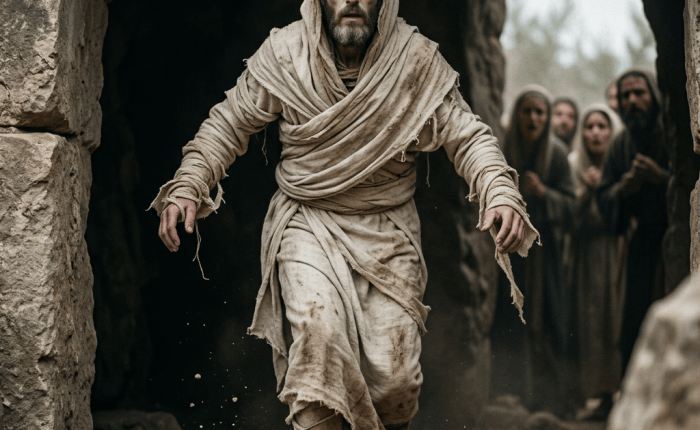
While divine grace provides the capacity to wake up, faith requires a personal choice to step forward into freedom. Consider the mechanics of Lazarus’s awakening in John 11:44. The text tells us that he who was dead came forth, bound hand and foot with grave clothes. Picture that extraordinary moment: a man wrapped tightly from head to toe in burial strips, moving toward the light. Jesus supplied the reanimating power that restarted Lazarus’s heart, yet Lazarus still had to physically shuffle toward the cave’s opening. Resurrection power is an invitation, never a coercion. God’s grace grants you the ability to hear and stand, but He will not drag you out of the tomb against your will.
Far too often, we pray for God to transform our lives while refusing to abandon the shadowed comfort of our spiritual graves. It can feel intimidating to step into the light of accountability and holiness when you have grown accustomed to the dark. The tomb may be unpleasant, but its confines are predictable. Yet, staying in the dark after life has been offered is a choice to embrace deathly unfulfillment. The call has gone out, and the Holy Spirit has imparted spiritual capacity. You must now decide whether you will linger in the familiar shadows of compromise or make the courageous decision to move toward the light of God’s presence.
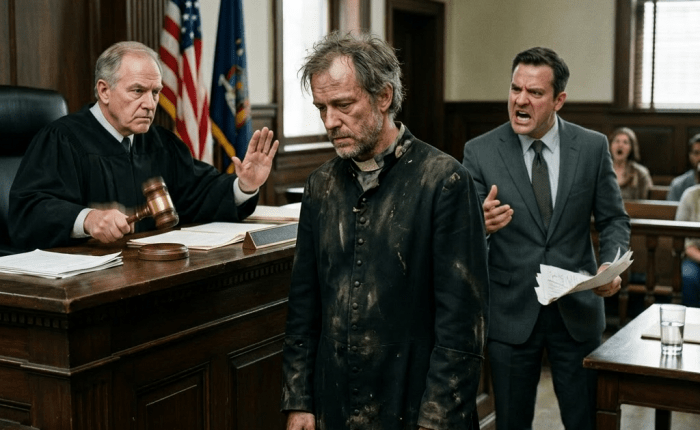
Furthermore, stepping into life requires us to unbind ourselves from the past and strip away the garments of our former state. When Lazarus emerged from the cave, he was unequivocally alive, yet he remained wrapped in burial garments. Seeing this in John 11:44, Jesus commanded the community, “Loose him, and let him go”—a directive to take off the grave clothes. This striking image illustrates a profound spiritual reality: it is entirely possible to be saved, regenerated, and loved by God, yet still walk around wrapped in the lingering habits, toxic mindsets, and crushing shame of your former existence.
Grave clothes represent old identities that no longer belong to a resurrected child of God. They manifest as the heavy rags of guilt over forgiven sins, the restrictive wrappings of old coping mechanisms, or the dark shroud of negative thought patterns whispering that you will never be whole. You cannot walk fruitfully in the newness of eternal life while continuing to wear the uniform of the grave. Jesus did not call you out of death merely to leave you shrouded in reminders of your captivity. He desires your complete liberation, inviting you to unbind every lingering artifact of death and take off the grave clothes so that you may walk in glorious, unencumbered freedom.
Ultimately, the miraculous restorations in Ezekiel 37 and John 11 were prophetic signposts pointing toward a far greater reality. Ezekiel spoke to a valley of dry bones, and they stood up as an army. Jesus called to a dead friend, and Lazarus walked out of a tomb. Yet years later, those soldiers returned to dust, and Lazarus faced physical mortality once again. But three days after Calvary, when Jesus Christ stepped out of His garden tomb, He shattered the power of death forever. No human voice had to shout into His cave to wake Him, for He is Himself the Resurrection and the Life. By His authority, He broke the bonds of the grave and opened the doorway to eternal life.
In John eleven, Jesus makes the definitive declaration that He is the resurrection and the life, assuring us that whoever believes in Him will live even if they die. Right now, that exact same voice, the voice that rattled dry bones in the ancient valley and shattered the dark quiet of the Bethany tomb, is speaking directly to the depths of your spirit. If you are weary of surviving in the dark cave of spiritual emptiness, and if you are exhausted from carrying the heavy grave clothes of past mistakes, know that your Redeemer is calling your name. Hear the Word of the Lord today, choose life over the tomb, strip away the burial garments of your past, and step boldly into the freedom of His resurrection power. Take off the grave clothes.