From Fear to Favor

From Fear to Favor

We live in a culture caught in a strange, polarized paradox. On one hand, we are in a perpetual state of trembling. We lie awake at night, anxious about the daily news cycle, paralyzed by financial instability, or terrified of failing the people we love. We are hypersensitive to every shift in our circumstances. Yet, on the other hand, when it comes to the Sovereign Creator of the universe, our world exhibits a profound, casual apathy. We have domesticated God, reducing Him to a harmless, cosmic bystander. We tremble at everything in the world, yet we have lost the capacity to tremble before Him.

This lack of holy fear is perhaps the greatest spiritual crisis of our time. We cannot experience the weight of God’s favor if we have never felt the weight of His holiness.

It is this reality that has created a profound holy tension. How do we transition from the cold, irreverent apathy of our culture to a genuine, trembling fear of the Lord—and from there, into His intimate favor? How do we move from treating God as irrelevant to trembling at His majesty to ultimately resting in His love?

The answer to this modern crisis is beautifully captured in a single, remarkable verse from the Old Testament prophet Zephaniah:

“The Lord your God is with you, the Mighty Warrior who saves. He will take great delight in you; no longer will he rebuke you, but will rejoice over you with singing.” — Zephaniah 3:17 (NIV)

To fully appreciate the depth of this promise, we must look at the historical backdrop of the small, overlooked prophetic book that houses it.

The Danger of Complacency

To understand the beauty of God’s favor in Zephaniah 3:17, we have to understand the bleak landscape of the chapters that precede it. Zephaniah prophesied during the reign of King Josiah in the late 7th century BC. While Josiah was a good king who attempted religious reforms, the nation of Judah was spiritually decaying. Decades of wicked leadership under Manasseh and Amon had left the people steeped in idolatry, moral compromise, and worst of all, spiritual apathy.

The people of Zephaniah’s day weren’t necessarily trembling in fear of God; they simply did not think about Him. In Zephaniah 1:12, the prophet warns that God will search Jerusalem with lamps to punish those “who are complacent, who say to themselves, ‘The Lord will do nothing, either good or bad.'” They had lost their holy fear. They believed God was passive, harmless, and irrelevant to their daily lives.

Because of this deep irreverence, Zephaniah’s opening chapters are some of the most terrifying in the prophets. He warns of the impending “Day of the Lord”—a day of wrath, ruin, distress, and darkness. God is presented as a sovereign Judge coming to sweep away complacency. The message was clear: you cannot ignore the holy Creator forever.

But then, in chapter 3, a dramatic, breathtaking pivot occurs. The tone shifts radically from global judgment to intimate restoration. To experience this restoration in our own lives, there are three vital shifts we must make: Recognize God’s magnitude, receive God’s favor, and rest in God’s sovereignty and song. 

Recognize God’s Magnitude

Zephaniah 3:17 begins with a striking declaration:

“The Lord your God is with you, the Mighty Warrior who saves.”

To receive God’s favor, we must first recognize His magnitude. We must repent of our casual, low-view of God. Zephaniah reminds us that He is Yahweh, the Gibbor—the Mighty Warrior. He is the Creator of the stars, the Commander of angel armies, and the absolute authority over all creation. He is terrifyingly powerful.

Our initial human reaction to such power, when we finally wake up to it, is to tremble. When Moses encountered God on Mt. Sinai, the people shook with fear. When Isaiah saw the Lord high and exalted, he cried out, “Woe to me! I am ruined!” However, notice the incredible modifier Zephaniah attaches to this Warrior: He is the Mighty Warrior who saves.

The very power that should make us tremble is the very power He deploys to rescue us. The transition from fear to favor begins when we realize that God’s omnipotence is not weaponized against us, but mobilized for us. We do not stop fearing His power; rather, our holy fear is transformed into holy safety because we know the Warrior is on our side.

Receive God’s Favor

Zephaniah continues:

“…He will take great delight in you; no longer will he rebuke you…”

Why do so many of us struggle to live in God’s favor? Once we wake up to His holiness, we often swing to the opposite extreme. Instead of being apathetic, we become terrified that we are permanently disappointing Him. We assume His default posture toward us is a frowning brow, a wagging finger, and an impending rebuke.

We try to earn His favor through spiritual performance—praying longer, serving harder, acting better—hoping we can quiet His frustration. But favor is never earned; it is received.

The Hebrew word for “delight” used here suggests a brightness of face, a joyful pleasure. Zephaniah declares that under the banner of His grace, the rebuke has been silenced. Your past mistakes, your current shortcomings, and your lingering struggles do not disqualify you from His love.

When God looks at you, He does not see a project to be tolerated; He sees a child to be celebrated. Transitioning to favor means giving up the exhausting struggle of trying to perform for a Judge, and instead, resting in the unconditional delight of a Father.

Rest in God’s Sovereignty and Song

The verse concludes with one of the most tender, mystifying pictures of God in all of Scripture:

“…but will rejoice over you with singing.”

Think of the sheer scale of this imagery. The same God whose voice shatters the cedars of Lebanon, the God who spoke light into existence and commands the oceans where to stop, is described as singing over you.

Our earthly fears are incredibly noisy. They fill our minds with racket sounds of “what-ifs,” accusations, and anxieties. They tell us we are not enough, we won’t survive, and we are entirely on our own.

How do we drown out the screaming noise of our worldly fears? We must learn to tune our hearts to the frequency of God’s song.

The English Standard Version (ESV) beautifully renders the phrase “no longer will he rebuke you” as “he will quiet you by his love”—a comforting truth also highlighted in the NKJV as “He will quiet you with His love.” There is a holy silence that comes when we stop trying to defend ourselves, stop trying to secure our own futures, and simply let His love soothe our anxious minds. And in that quiet space, we begin to hear His melody. It is a song of redemption, a song of safety, and a song of absolute victory.

Living in favor means you let His song define your identity. When the world tells you to panic, you listen to His rhythm. When your heart tells you to hide, you step into the sound of his voice. The only sound that can calm your fears.

The Bridge From Fear to Favor

How does this ancient shift from judgment to rejoicing bridge to our lives today? The answer is found in the cross of Jesus Christ.

On the cross, the ultimate “Day of the Lord” took place. The terrifying judgment and righteous wrath that we deserved for our rebellion and our apathetic complacency was entirely absorbed by Jesus. The barrier of our guilt was demolished. Because of Christ, the holy God who stood against our sin now stands with us in grace. Jesus is the bridge that carries us from the trembling fear of judgment into the Father’s unmerited favor.

The journey from fear to favor is not a physical journey of distance; it is a spiritual journey of intimacy. You do not have to run away from the holiness of God to find His goodness. They meet perfectly at the cross.

Today, whatever has you trembling, remember this: the Mighty Warrior is with you. The Judge has silenced His rebuke because of Jesus. The Father is looking at you with deep, unshakeable delight.

Stop listening to the loud, frantic voices of your worldly fears, shake off the spiritual apathy of this age, and let yourself be quieted by His love. The Sovereign of the universe is singing over you. It is time to step into His favor, rest in His grace, and sing along.

The Burden of Best Intentions

The Burden of Best Intentions

Every May, we gather around tables and pews to celebrate a carefully curated ideal. We polish the pedestals of motherhood, draping them in the fine silk of Proverbs 31 and the fragrant intuition of a perfect love. We speak of a “mother’s love” as a monolith—an effortless, unwavering force that always possesses the right word and always senses the coming storm. We like our motherhood narratives clean, wrapped in Sunday best, devoid of the grit and the gray areas that define the actual lived experience of the women who bore us.

Yet, the reality of the women who shaped us is far more complex than a greeting card can capture. For some, the mention of “Mother” doesn’t just evoke memories of warmth; it stirs a quiet, but lingering resentment. It is the old sting of a decision that set a course for family strife, or the heavy silence of a “protection” that felt more like a prison.

As we reflect on the hands that held our future, we eventually confront a difficult truth: mothers are not deities. They are human beings operating in a broken world. They are strategists in the trenches, making high-stakes decisions with limited tools, often under pressures we cannot fully see until we find ourselves in that same line of fire. To truly honor them—and to find healing for ourselves—we must empathize with their burden of best intentions.

The Strategist in the Trenches

To understand the weight of this burden, we have to look back at the biblical archetype of the “Strategist,” Rebekah. In Genesis 27, we encounter a woman often dismissed as merely “sneaky” or “manipulative.” We see her as the architect of a lie. If we pull back the veil and look at her world, we see a woman navigating a landscape that offered her no legal standing and very few options.

Rebekah lived in a patriarchal culture where the “Blessing” of the husband determined the spiritual and financial transfer of the entire family estate. When she realized that her husband, Isaac—now old and blinded by cataracts—was about to bestow this legacy upon Esau, a man who had already proven he didn’t value his birthright, Rebekah panicked. She knew she couldn’t reason with Isaac’s favoritism. So, she acted.

She prepared a meal, draped goat skins over her younger son Jacob’s hands to mimic his hairier brother, and sent him into his father’s presence with a stolen identity. Rebekah moved the pieces on the board because she felt she was the only one who could see the coming disaster.  She risked her husband’s trust and the peace of her home to secure a promise she believed was under threat.

We see Rebekah’s anxiety in today’s mothers. We see it in the mother who works two jobs, missing the bedtime stories to secure a college fund the child doesn’t yet know they need. We see it in the mother who makes the agonizing decision to keep a father away, not out of spite, but because she sees a cycle of toxicity the child is too young to perceive.

These are not decisions made in a vacuum of “effortless grace.” These are decisions made in the trenches, where the oxygen is thin, and the stakes are survival. This is the burden of best intentions: the desperate need to protect and prepare a child for a broken world with only the broken pieces in your hands.

The High Cost of the Wrong Method

The reality is that a “good” intention does not always yield a “perfect” outcome. Rebekah was right about her son’s destiny, but her methodology was flawed. In her pursuit of security, she used deception—a tool that has sharp edges. Though the blessing was secured, the home was fractured beyond repair. By cutting Esau, she cut herself and her family.

As a result of her meddling, she turned her household into a battlefield. Esau harbored a murderous grudge; Jacob had to flee into the night as a fugitive. History suggests that Rebekah likely never saw her favorite son again. She had traded his presence for his protection. She saved his destiny, but she lost his company.

This is the jagged edge of motherhood we rarely discuss. We live in the aftermath of our mothers’ “wrong methods”—the career focus that felt like neglect, the partner choices that brought chaos, or the silence that felt like a lack of support. We must be honest enough to acknowledge the collateral damage. We don’t have to lie about the pain to honor the person. Forgiveness does not require us to pretend the seams of our upbringing are straight; it requires us to understand why the needle slipped in the first place.

In Genesis 27:13, Rebekah utters words that should humble us: “My son, let the curse fall on me. Just do what I say.”This is the heavy lifting of motherhood. Mothers often take on the emotional and spiritual “curse” of their bad decisions so their children don’t have to. They carry the secret guilt of their mistakes like a heavy cloak, willing to be the “villain” in our stories if it means we get to be the “victors” in theirs.

Seeing the Woman, Not Just the Role

Pathways to healing open when we stop judging our mothers for failing to be divine. We expect them to have perfect foresight and never let their own unhealed trauma leak into our development. Forgiveness begins when we realize our mother was just a woman—a woman navigating a storm she didn’t ask for with the limited tools she inherited from her own flawed parents.

When we look at her choices, we have to stop and ask: What was she afraid of? What hole was she trying to fill? What survival instinct was driving that painful decision? As Proverbs 16:2 suggests, motives are weighed by the Lord. If we look at the why behind the what, we often find a mother who was terrified for our safety or desperate for our success. She wasn’t trying to fail us; she was trying to save us, even if she didn’t quite know how to handle the rescue.

The Quilt of Good Intentions

Imagine a mother who sets out to sew a beautiful quilt for her child. She stays up late, her eyes tired and fingers cramped. She wants the best fabric, but she only has scraps—scraps of her own upbringing and heartbreak. She wants straight lines, but the room is dim, and her hands are weary.

When the child grows, they look at the quilt and see crooked seams. They see mismatched colors and tiny, rusted spots where the needle pricked her finger and left a mark of blood. For years, the child resents the quilt, comparing it to the “perfect,” factory-made ones in store windows. They focus on the holes and the missed stitches.

Then life’s cold night comes—a night of loss or failure—and the child realizes that despite the crooked seams, they are warm. They realize the mother didn’t set out to make a “crooked” quilt; she used every scrap of strength she had to make sure they didn’t freeze. Forgiveness is looking at those crooked seams and saying, “I see the effort. I see the love. I forgive the flaws.”

The Final Covering

Ultimately, we find the strength to forgive our mothers because we ourselves have been covered by a “perfect garment.”

Jesus Christ understands the complexity of the human heart better than anyone. He was born of a woman. He watched Mary navigate the “tough decisions” of his own earthly upbringing. He didn’t come to judge us for our flawed strategies or mismatched quilts. He came to take the “curse” that Rebekah spoke of—the curse of our mistakes and our parents’ mistakes—and nail it to a tree.

On the Cross, Christ offered the ultimate “best for us.” He provides the righteousness that covers all our crooked seams. His robe of righteousness is the only one without a crooked seam, yet He trades it for our leaden cloaks of guilt. Because He has forgiven us, we can reach back into our past, take our mother’s hand, and say, “It’s okay. You were only human, and you are loved.”

We release the debt of their mistakes so we don’t have to spend our lives paying the interest on their pain. We take the quilt, crooked seams and all, and we wrap ourselves in the warmth of a love that was always trying, even when it was failing. That is the grace of the crooked seam. That is where the healing begins.

The Filthy Priest

The Filthy Priest

In the quiet corners of our conscience, most of us carry a persistent, nagging fear: the fear of being found out. We spend a lifetime curated for the public eye, carefully laundering our reputations and stitching together a persona that suggests we are “good people.” We use our professional achievements, our moral stances, and even our religious activities as a sort of spiritual detergent. But in the late hours of the night, when the curated self drops its guard, we know the truth. We know about the “filthy garments” tucked away in the closets of our hearts.

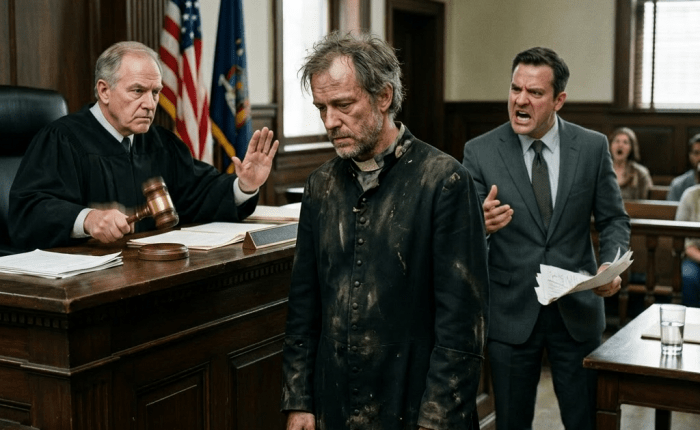
The third chapter of the Book of Zechariah offers us one of the most provocative and startling scenes in all of literature. It is a courtroom drama that strips away the veneer of human effort and forces us to look at how a holy God interacts with a broken humanity. It is a story about a man named Joshua, a High Priest who was supposed to be the pinnacle of purity, but who stood in the presence of the Divine covered in human waste. In this narrative, we find the architecture of redemptive grace. Here we see a grace that is as scandalous as it is beautiful.

What is Grace?

To understand the weight of Zechariah’s vision, we must first grapple with the definition of grace. In our modern vernacular, we often use “grace” as a synonym for “niceness” or “politeness.” But in the courtroom of God, grace is a legal term. It is best understood in contrast to justice and mercy.

Justice is the baseline of the universe; it is getting exactly what you deserve. It is the law of sowing and reaping. The scale is balanced perfectly. If you commit a crime, justice demands the same weight in penalty. It is the objective standard by which the universe maintains its moral order.

Mercy is the suspension of that penalty. It is the judge looking at the guilty and deciding not to give them what they deserve. Mercy is reducing the weight or eliminating it altogether. It is a stay of execution; it is the pardon that stops the hand of judgment.

Grace, however, is the most radical of the three. Grace is getting exactly what you do not deserve. It is not merely the absence of punishment (mercy); it is the presence of unearned favor. Logically, grace is an “unmerited intervention.” It is a gift given to a recipient who has not only failed to earn it but has actively earned its opposite. In the vision of Zechariah, we see this logic play out in real-time, moving beyond abstract definitions into a gritty, lived reality.

The Case Against Us

Zechariah 3:1 opens with a scene of terrifying clarity: “Then he showed me Joshua the high priest standing before the angel of the Lord, and Satan standing at his right hand to accuse him.”

The setting is a courtroom. Joshua the High Priest represents more than himself; he is the corporate representative of the people of Israel. He is the one who is supposed to offer sacrifices for the sins of the nation. He is the “cleanest” man available. Yet, the text tells us in verse 3 that Joshua was clothed in “filthy garments.”

The Hebrew word for “filthy” used here is tso’im. It is not the word for common dust or the sweat of a day’s work. It is an excremental term. It refers to that which is most foul, most repulsive, and most shameful. Imagine the scene: the representative of God’s people standing in the throne room of heaven, and he literally smells of death and decay. The very person meant to bridge the gap between man and God is the one who most embodies the gap.

Satan, the Accuser, stands at his right hand. We often think of Satan as a liar, but in this courtroom, he doesn’t need to lie. He only needs to tell the truth. He points at the waste on Joshua’s robes. He points at the stains. He is essentially saying to God, “How can You call this man yours? Look at him. He is a walking contradiction of Your holiness. If You are a just God, You must consume him.”

And Joshua? Joshua is silent. There is no defense to be made. When our sin is laid bare before the blinding light of God’s holiness, “being a good person” is revealed as a bankrupt argument. We, like Joshua, have no opening statement because our guilt is not a matter of debate—it is a matter of record.

God Interrupts

What happens next is the essence of the Gospel. Before the Accuser can finish his closing argument, the Judge speaks. But He doesn’t speak to Joshua; He speaks to the Accuser.

“The Lord rebuke you, O Satan! The Lord who has chosen Jerusalem rebuke you! Is not this a brand plucked from the fire?” (v. 2)

Notice that the Lord does not argue that Joshua is clean. He does not offer a counterargument to the filth. Instead, He points to His own choice. The defense for the sinner is not the sinner’s character, but the Savior’s election. God’s choice is the shield that stops the Accuser’s darts.

God describes Joshua as a “brand plucked from the fire.” Think of a charred stick in a campfire. The stick is already burning. It is black, smoking, and on the verge of turning to ash. It has no power to jump out of the fire. It has no agency, no “free will” that can overcome the laws of combustion. If it is saved, it is because a hand reached into the heat, suffered the burn, and snatched it out. This is the first movement of grace: God reaches into the judgment we were already experiencing and claims us as His own based on nothing but His own sovereign will.

The Great Exchange

The vision moves from the verbal rebuke to a physical transformation. The Angel of the Lord commands those standing by to “Take off the filthy clothes from him.” God doesn’t just “overlook” the filth. He removes it. He takes the source of our shame and puts it away “as far as the east is from the west.” But grace does not leave us naked.

The Angel says to Joshua, “Behold, I have taken your iniquity away from you, and I will clothe you with pure vestments.”This is the scandal. Joshua did not wash those clothes. He did not go home and scrub until his knuckles bled. He stood still, in all his foulness, and was passive while the King’s attendants draped him in “pure vestments”—robes of state, garments of honor.

This is the great exchange: our rags for His riches. Our filth for His finery. The text even records that Zechariah, watching this, gets swept up in the moment and shouts, “Let them put a clean turban on his head!” (v. 5). The transformation is complete. The man who was a “brand” in the fire is now a Priest in the palace. He is restored to a position of dignity that he never deserved, wearing clothes he never earned.

Removed in a Single Day

The narrative concludes by looking forward. God speaks of a “Servant,” a “Branch,” and a “Stone” with seven eyes. He makes a startling promise: “I will remove the iniquity of this land in a single day” (v. 9).

For the original audience, this was a prophecy. For us, it is history.

How can a holy God take a filthy priest and just… change his clothes? How can He be just and still justify the ungodly? The answer is that the “filth” had to go somewhere. The fire that was consuming the “brand” had to be satisfied. Law and Justice cannot simply be ignored; they must be fulfilled.

Centuries after Zechariah’s vision, the True and Better Joshua—Jesus—stood in another courtroom. Unlike the Joshua of Zechariah 3, Jesus was actually innocent. He was the only human being to ever wear “pure vestments” of perfect, unspotted righteousness. But on a Friday outside of Jerusalem, the roles were reversed in a cosmic transaction.

On the Cross, Jesus Christ was “clothed” in our filthy garments. He took upon Himself the tso’im of our lives—our vomit, our waste, our betrayals, our secret shames. He became the “brand” that was not plucked from the fire. He stayed in the fire of God’s justice until the fire had nothing left to burn. He was consumed so that we could be claimed.

Because of that “single day” on Calvary, we are gifted eternal grace. When we stand before the Lord today, the Accuser may still point to our stains, but the Judge points to the Cross. He points to the “pure vestments” of Christ that now cover our lives.

Wearing the Robes

The message of Zechariah 3 doesn’t end with us just being “forgiven.” It ends with an invitation to “walk in My ways.” This is where many of us get grace wrong. We think the “walking” is how we get the “vestments.” But in the biblical economy, the order is everything. We do not walk in His ways to earn the clothes; we walk in His ways because we have the clothes.

The life of the believer is not a struggle to become clean; it is the joyful response of someone who has already been washed. It is the freedom of the “Filthy Priest” who realized that his filth didn’t have the final word—God’s grace did. We no longer walk in fear of being found out, because we have already been found, plucked, and clothed.

As we navigate our own “Lo-debars” and our own courtrooms of shame, may we hear the rebuke of the Lord against our Accuser. May we feel the weight of the “pure vestments” on our shoulders—a weight that is not heavy, but comforting. And may we live with the staggering confidence that we are no longer defined by the fire we were in, but by the Hand that plucked us out.

Thank God I Failed

Thank God I Failed

Embracing Failure as an Aspect of Faith

We are taught from a young age to strive for success and avoid failure at all costs. The word “failure” itself can conjure feelings of defeat, inadequacy, and disappointment. It’s a concept we dread, something we hide, and something we desperately try to prevent. Given this deeply ingrained instinct, the idea of being grateful for failure seems, at best, counter-intuitive. Yet, this is precisely the profound and often overlooked truth we must confront: failure is not adversarial to faith; rather, it is an integral aspect of faith itself.

The common perception is that if we have true faith, we will succeed. This perspective positions failure as an enemy, something that undermines our belief. If our prayers go unanswered, or our plans fall apart, it’s easy to feel as though our faith was misplaced or insufficient. However, this belief often stems from a misunderstanding of what faith is. Faith is not a cosmic vending machine that dispenses our desired outcome in exchange for belief. Instead, failure doesn’t invalidate faith; it simply means the story is taking a different, unexpected turn.

How Failure Informs and Strengthens Faith

Instead of weakening our faith, failure can actually be a crucial part of its development and deepening. Faith, like a muscle, grows stronger under strain, not in comfort. When we face setbacks, our faith is tested, and we have the opportunity to reaffirm and deepen it, leading to a more resilient and mature belief. Failures are also our greatest teachers. In a faith context, they can teach us about patience, perseverance, and humility. They strip away our pride and self-reliance, prompting us to recognize our limitations and lean more fully on God’s strength and grace. This humility is where God loves to meet us.

Furthermore, failure is rarely a dead end; it’s often a potential turning point. Our faith traditions are rich with themes of redemption, forgiveness, and new beginnings. Failure is the moment God invites us into spiritual renewal or redirects us onto a different path, guided by His divine hand. True faith isn’t just believing when things are easy; it’s most powerfully demonstrated when we continue to hope and strive despite our failures, trusting that God is still at work.

God Works in All Things

Perhaps the most powerful scripture that underscores this idea is Romans 8:28: “And we know that in all things God works for the good of those who love him, who have been called according to his purpose.” This verse directly addresses the idea that failure is not adversarial to faith. It implies that even the things we perceive as failures—the setbacks, mistakes, and moments of weakness—are not outside of God’s redemptive work. He doesn’t just work in our successes; He works in all things.

This speaks to the idea that failure is an aspect of faith. For those who love God and are called by His purpose, failures become part of a larger divine plan. In this context, failure isn’t a sign of abandonment but a step, a lesson, or a refining process within the broader journey of faith. It leads to humility, deepens our dependence on God, and fosters growth. This is beautifully echoed in 2 Corinthians 12:9, where Jesus tells Paul, “My grace is sufficient for you, for my power is made perfect in weakness.” God’s power isn’t made perfect in our flawless performance, but precisely in our weakness and our failures.

Biblical Figures Who Failed

The Bible is a raw and honest portrayal of real people with real faith who experienced profound failures. Through their stories, we see how failure was not an adversary but an integral part of their journey.

  • Peter: He was impulsive and often spoke before thinking. His most notable failures include sinking while walking on water (Matthew 14:28-31) and, most famously, denying Jesus three times (Matthew 26:69-75) after boldly declaring his loyalty. Yet, Jesus never gave up on him. After the resurrection, Jesus sought him out, restoring him by asking him, “Do you love me?” three times, a direct reversal of the three denials. Peter went on to become a foundational leader of the early church, and his failures likely humbled him and made him more reliant on God’s grace.
  • King David: Despite being called “a man after God’s own heart,” David committed the grievous sins of adultery with Bathsheba and the murder of her husband, Uriah (2 Samuel 11). This was a profound moral failure. However, when confronted by the prophet Nathan, David immediately repented and poured out his heart in Psalm 51. God, in His mercy, did not revoke David’s kingship, and it was through his lineage that the Messiah came. David’s failures and deep repentance underscore the power of God’s forgiveness and restoration.
  • Moses: The great leader who brought Israel out of Egypt also had significant failures. In his youthful zeal, he killed an Egyptian, leading to forty years of exile (Exodus 2:11-15). Later, he struck the rock instead of speaking to it for water, an act of disobedience that resulted in him being forbidden from entering the Promised Land (Numbers 20:7-12). Despite these failures, Moses remained God’s chosen leader. His time in the wilderness transformed him from an impulsive prince into a humble and patient shepherd. Even though he didn’t enter the Promised Land, he saw it from Mount Nebo and is still considered one of the greatest prophets in Israel’s history. His journey illustrates that God can still use us mightily even when we fall short.

These biblical figures show us that faith isn’t a flawless performance but a dynamic journey that includes missteps, doubts, and outright failures. It is in the aftermath of these failures that genuine faith is often refined, deepened, and proven to be resilient.

Embracing the “Thank God I Failed” Mindset

Failure is an inevitable part of life, but as we’ve seen, it is not an adversary to faith; it is an integral aspect of it. To embrace this mindset, we must first change how we view failure. See each setback not as a condemnation but as a classroom. Don’t hide your failures; instead, allow God to use them for humility and growth. Trust that God is working in all things for your good, even in the mess.

For those discouraged by past failures, find hope in God’s redemptive power promised in Romans 8:28. For those fearing future failures, I encourage you to step out in faith, knowing that God’s grace is sufficient for you, and His power is made perfect in your weakness, as 2 Corinthians 12:9 reminds us. Let us embrace the journey of faith, knowing that even our stumbles can be used by God for His glory and our deepest good. So, yes, we can say with confidence and gratitude, “Thank God I Failed.” For through those failures, His power is made perfect, and our faith is made strong. Amen.

Minding the Master

Minding the Master

In our rapid-fire, demanding world, it’s easy to get caught up in endless to-do lists, urgent tasks, and the constant clamor for our attention. This relentless pace often leaves us feeling overwhelmed, stressed, and anxious. The 21st century, with its continuous connectivity, information overload, and societal pressures, has seen a significant rise in anxiety. From the gnawing financial and economic fears that keep us up at night, to worries about the future of Social Security benefits, the struggle of underemployment, and the dread of health scares, anxiety has become a pervasive undercurrent in modern life. The unsettling reality of environmental abnormalities and the deeply personal pains of singleness or marital problems can compound this burden, sometimes leading to a profound sense of hopelessness. We often find ourselves busy, but are we busy with the right things, or are we simply trying to outrun our anxieties?

Luke 10:38-42 presents a timeless encounter in the home of Martha and Mary, offering a profound lesson on priorities. Jesus visits their home, and their responses reveal two distinct approaches to His presence, one of which is clearlyburdened by anxiety. This passage challenges us to consider what it truly means to “mind the Master”—to prioritize listening to Jesus above all other good, but lesser, things, especially when the anxieties of life threaten to consume us.

Martha’s Distraction:

Martha’s intentions were not just good; they were rooted in deeply ingrained cultural values. In first-century Jewish society, hospitality (Hebrew: hakhnasat orehim) was not merely good manners but a moral institution and a sacred duty. It was considered a great mitzvah (commandment) and an expression of loving-kindness. Hosts were obligated to provide lavishly for guests, offering food, water for washing dusty feet, and shelter. Abraham, for instance, is a biblical paragon of hospitality, eagerly running to meet and serve his unexpected guests (Genesis 18:1-8). The reputation of a household, and even a community, could hinge on its ability to offer generous hospitality. As the likely head of the house, Martha felt the immense weight of this expectation. She was diligent, taking on the responsibility of preparing a significant meal for Jesus and His disciples—a task that would have been physically demanding and time-consuming. This pressure to perform perfectly and meet such high cultural standards became a primary source of her internal worry.

Her service, though noble and culturally expected, became a source of distraction and overwhelming anxiety. The Greek word periespato, translated as “distracted” (Luke 10:40, NIV), literally means to be “pulled or dragged in different directions.” Martha was being pulled by the numerous tasks, the intense pressure to perform perfectly, and the sheer volume of work required for such an important guest. This internal pulling and scattering of her focus directly led to her anxious state. Her anxiety manifested as worry, frustration, and a sense of being overwhelmed. Her complaint to Jesus—”Lord, don’t you care that my sister has left me to do the work by myself? Tell her to help me!” (Luke 10:40, NIV)—reveals not just a desire for assistance, but a deep-seated stress, irritation, and perhaps a feeling of unfairness or unappreciation, all hallmarks of an anxious mind. She was consumed by the “many preparations” (Luke 10:40) and the fear of falling short of her cultural duty.

This narrative highlights how our good intentions and diligent service can sometimes lead us away from what is most important, especially when driven by external pressures or internal perfectionism. Are we so busy for God that we neglect being with God, allowing our actions to be fueled by worry rather than peace? What “many things” distract us and drive our anxiety, preventing us from focusing on the main thing and finding peace in His presence?

Mary’s Devotion:

In stark contrast to Martha, Mary’s posture signifies humility, reverence, and a profound desire to learn. Sitting at Jesus’ feet was the position of a disciple learning from a Rabbi—a role highly unusual for a woman in that cultural context, yet one she embraced wholeheartedly. Her focus was singular: listening intently to the words of Jesus. She understood the unique and precious opportunity before her, choosing to engage with the source of true peace amidst potential chaos. Mary recognized that the presence of Jesus and His teaching was more important than the elaborate preparation of a meal, no matter how necessary it seemed or how much cultural pressure there was. She chose intimacy and spiritual nourishment over practical tasks, finding peace and tranquility in His presence rather than succumbing to the pressure and anxiety of the moment. Her choice reflects a spiritual “mindfulness” that centers on Christ.

What does it look like for us to “sit at Jesus’ feet” in our daily lives, particularly when facing the anxieties of today? It’s about intentional presence that calms our fears, reorients our priorities, and anchors us in a tumultuous world.

“But one thing is necessary,” Jesus declares. “Mary has chosen what is better, and it will not be taken away from her”(Luke 10:42, NIV). This is the core message. Amid many good things, there is one best thing that truly addresses our deepest needs and anxieties. The spiritual nourishment Mary received from Jesus was eternal and lasting, providing a peace that worldly tasks and accomplishments cannot. This peace offers a profound contrast to Martha’s temporary, anxiety-laden efforts. It is the ultimate antidote to the pervasive worry of life.

Jesus’ Gentle Correction: The One Thing Needed for Freedom from Anxiety

Jesus’ response to Martha is tender yet direct: “Martha, Martha,” the Lord answered, “you are worried and upset about many things, but few things are needed—or indeed only one” (Luke 10:41-42, NIV). He sees her heart and her internal struggle, directly naming her anxiety and the burden she carries. He doesn’t condemn her desire to serve, but the worry that has consumed her. He points out that her frantic activity has produced anxiety, suggesting a better way to live free from such burdens by shifting her focus from the overwhelming “many things” to the singular “one thing.”

What is that “one thing” for us? It is our relationship with Jesus, our communion with Him, and our obedience to His word. Everything else flows from this and is the ultimate antidote to our anxieties. We must guard this “good portion”against the demands and distractions of the world, choosing peace over worry.

Choosing to “Mind the Master”

The story of Martha and Mary is not about condemning service, but about prioritizing the source of all service—Jesus Himself—as the ultimate remedy for our anxieties and worries. The title “Minding the Master” encapsulates the core message of Luke 10:38-42. To “mind” means to pay attention to, to obey, to care for, and to be concerned with. It implies a conscious and deliberate focus. In this context, “Minding the Master” means intentionally prioritizing Jesus—His presence, His words, and His will—above all the demands and distractions of life. It means choosing to sit at His feet, to listen to Him, and to allow His peace to govern our hearts, rather than being consumed by the “many things” that lead to anxiety. In truly minding Him, we find freedom from the grip of worry.

In our lives, we will always have “many things” vying for our attention and contributing to our anxiety, from financial strain to health concerns, and societal pressures to personal struggles. The challenge is to discern the “one thing” that is truly necessary and offers lasting peace. Are we truly “minding the Master” by making Him our ultimate priority, allowing His presence to calm our troubled hearts and minds?

Let us take time to be still and listen to Jesus, especially when anxiety mounts. Let us evaluate our daily schedules and identify what distractions steal our focus from Him and feed our anxiety. Let us choose the “good portion” daily—intentional time in His presence, soaking in His word, and allowing His peace to guard our hearts and minds.

Lord, help us to be like Mary, choosing the better part. Deliver us from the anxiety of many things, and draw us into deeper communion with You, the one thing necessary, that we may find true peace in Your presence.

References

* Brown, C. (Ed.). (1976). Dictionary of New Testament Theology. Zondervan. (For periespato)

* Keener, C. S. (1993). The IVP Bible Background Commentary: New Testament. InterVarsity Press. (For cultural context of hospitality and women as disciples)

* Longenecker, R. N. (2016). The Expositor’s Bible Commentary (Revised Edition): Luke. Zondervan Academic. (For general commentary on Luke 10:38-42)

* Strong, J. (2009). Strong’s Exhaustive Concordance of the Bible. Hendrickson Publishers. (For Greek word definitions)

Remember

Remember

When challenges mount and fears loom large in the whirlwind of life, it’s easy to feel adrift, as if we’re facing insurmountable odds alone. The weight of present troubles can obscure our vision, making us forget the very source of our strength and hope. Yet, the ancient words of King David in Psalm 27:1-6 offer a profound antidote to this despair: “Remember.”

David, a man intimately acquainted with adversity – from facing giants and fleeing a jealous king to enduring betrayal and war – begins this psalm not with a lament, but with a resounding declaration of confidence: “The Lord is my light and my salvation; whom shall I fear? The Lord is the stronghold of my life; of whom shall I be afraid?” (Psalm 27:1). This isn’t a naive optimism, but a battle-tested faith rooted in memory.

David’s confidence isn’t abstract; it’s grounded in his past experiences. He recalls, “When evildoers came against me to devour my flesh, my foes and my enemies stumbled and fell” (Psalm 27:2). He had seen God’s hand move, time and again, turning the tide against seemingly overwhelming forces. It’s in these moments of divine intervention, these countless deliverances from troubles that seemed impossible to overcome, that we find a powerful testament to God’s existence and His active interaction in our lives.

Think about it: can any person truly navigate the “numerous obstacles” of life – the unexpected illnesses, the crushing losses, the sudden betrayals, the financial ruin – without some form of support? While human support is vital, there are moments when only a divine hand can provide the light in the deepest darkness, the salvation from utter despair, and the stronghold against forces that would otherwise consume us. When we look back at our own lives, at the times we somehow made it through, when a door opened unexpectedly, when peace settled in the midst of chaos, or when strength appeared from nowhere, we are witnessing God’s faithfulness. These are not mere coincidences; they are echoes of His promise, “I will never leave you nor forsake you.”

David’s life was a tapestry woven with such divine interventions. Before he ever wore a crown, as a young shepherd boy, he faced beasts that threatened his flock. He didn’t just survive; he conquered. He remembered how God enabled him to rescue his lambs from the jaws of a lion and a bear (1 Samuel 17:34-37). These weren’t minor skirmishes; they were life-or-death struggles where a shepherd boy, armed with only a staff and sling, triumphed over formidable predators.

And then came the ultimate test: Goliath, the Philistine giant, defying the armies of Israel. While seasoned warriors trembled, young David, fueled by the memory of God’s past faithfulness, stepped forward. He declared, “The Lord who delivered me from the paw of the lion and from the paw of the bear will deliver me from the hand of this Philistine” (1 Samuel 17:37). His victory over Goliath was not merely a physical feat; it was a profound act of faith, born from a deep well of remembered deliverances.

David’s reflection in Psalm 27 was likely not about one isolated occurrence, but about journeying through the halls of his memory, recalling each instance of God’s powerful intervention. This process wasn’t just nostalgic; it was an act of worship. Each recalled victory became a fresh reason to honor God with praise, solidifying his confidence that the God who had been faithful in the past would surely be faithful in the present and future. This constant act of remembering and praising transformed his past struggles into pillars of present strength, allowing him to declare with conviction, “Though an army encamp against me, my heart shall not fear; though war rise up against me, yet I will be confident” (Psalm 27:3).

This divine support is not just about external rescue; it’s also about internal transformation. The Apostle Paul reminds us in 2 Timothy 1:7, “For God has not given us a spirit of fear, but of power and of love and of a sound mind.” This verse beautifully complements David’s fearless stance. When we remember God’s faithfulness, we are empowered to overcome the spirit of fear that seeks to paralyze us. We receive a spirit of power, enabling us to face challenges with courage; a spirit of love, allowing us to respond with compassion even in difficult circumstances; and a sound mind, granting us clarity and wisdom when confusion reigns. This inner fortitude is itself a profound deliverance, a testament to God’s ongoing work within us.

It’s tempting to wish away our troubles, to pray for their immediate removal. But some of life’s most profound growth happens not by avoiding the storm, but by learning to lean into it, trusting that God is present and purposeful in the midst of it. David’s psalm isn’t just about escaping trouble; it is about finding God in trouble. His “one thing” was not freedom from enemies, but to “dwell in the house of the Lord all the days of my life, to gaze upon the beauty of the Lord and to inquire in his temple” (Psalm 27:4). He sought intimacy with God despite the surrounding chaos.

When we choose to lean into our trials, when we consciously seek God’s presence and wisdom within the difficulty, we allow Him to refine us. It’s in the crucible of adversity that our faith is tested and strengthened, like gold purified by fire.We learn resilience, patience, and a deeper reliance on God than we ever thought possible. The very things that threaten to break us can, with God’s divine support, become the tools He uses to build us into stronger, more compassionate, and more faithful individuals. We grow not just through the trials, but because of them, as God uses them to shape our character and deepen our understanding of His unwavering faithfulness.

So, when the “army” encamps against you, and “war rises up,” take a moment to pause. Remember. Remember the countless times God has been your light, your salvation, your stronghold. Remember the unseen hand that guided you, the peace that sustained you, the strength that appeared when you had none left. These memories are not just personal anecdotes; they are evidence of a living, interacting God.

Let the spirit of power, love, and a sound mind replace the spirit of fear. And as you lean into the present challenge, trust that the same God who delivered you before is actively working to grow you now. For in remembering His faithfulness, we find not just hope for today, but an unshakeable confidence for all our tomorrows.

In All Thy Ways: Finding God’s Unexpected Path to Healing

In All Thy Ways: Finding God’s Unexpected Path to Healing

We live in a world that often celebrates the grand, the complex, and the highly visible. We strive for success, curate our online personas, and often believe that with enough resources, intelligence, or connections, any problem can be solved. But what happens when we encounter a problem that money can’t buy a solution for, a status can’t overcome, or influence can’t fix?

Our anchor text, 2 Kings 5:1-15, introduces us to Naaman, a man who, by all worldly measures, had it all. He was the commander of the Syrian army, a man of immense stature and success, even credited by the Lord for victories. He was the ancient equivalent of a CEO, a military general, a social media influencer with millions of followers. Yet, beneath the polished exterior, Naaman carried a devastating secret: he was a leper. This incurable disease would eventually lead to isolation, disfigurement, and death. It’s a stark reminder that human achievement, no matter how great, cannot overcome every human limitation.

This brings us to a crucial question: When our greatest strengths fail us, and our biggest problems seem insurmountable, where do we turn for a solution? How does God intervene in such situations?

The Unexpected Messenger of Hope

Naaman’s hope doesn’t come from his king, his advisors, or his vast wealth. It comes from the most improbable source: a young, unnamed Israelite girl, captured in a raid and serving as a slave in his household (2 Kings 5:2-3).

Imagine getting life-changing advice not from a TED Talk speaker or a best-selling author, but from a child, a janitor, or a new immigrant. God delights in using the overlooked, the marginalized, those without a platform, to deliver His most profound messages. This young girl, snatched from her home and forced into servitude by Naaman’s people, could have been consumed by bitterness. Yet, she shows remarkable empathy for her captor, simply stating, “If only my master would see the prophet who is in Samaria! He would cure him of his leprosy.” Her faith wasn’t just a wish; it was a certainty.

In a world saturated with information, misinformation, and skepticism, do we have the courage and conviction of this unnamed girl to speak simply and truthfully about the hope we have in God, even to those who might seem to have everything?

The “App” That Doesn’t Work vs. God’s Simple Command

Naaman, accustomed to power and protocol, takes the “top-down” approach (2 Kings 5:4-5). He goes to his master, the King of Aram, who then writes a letter to the King of Israel. Naaman arrives with immense wealth—a king’s ransom—expecting to buy his healing. How often do we try to “app-ify” our spiritual problems? We seek complex solutions, expensive programs, or influential connections, believing that a “high-level” approach is necessary for a “big” problem. We want a quick fix, a formula, a transaction.

But the King of Israel’s reaction is telling: he tears his clothes in despair. “Am I God, to kill and to make alive?” He recognizes his utter powerlessness in the face of leprosy. This vividly illustrates that no amount of human authority, political power, or technological advancement can solve our deepest, most fundamental spiritual problems. We can build skyscrapers, cure diseases, and connect the world, but we cannot heal a broken spirit or cleanse a sinful heart on our own.

Naaman’s conventional, “top-down” approach has reached its absolute limit. The King of Israel’s helplessness creates a void that only God can fill. This prepares Naaman, and us, for the radical simplicity of God’s true solution, which will come through Elisha. Naaman is about to learn that God’s way is often not about complexity, cost, or prestige, but abouthumble obedience to a seemingly ordinary command, leading to an extraordinary transformation.

In All Thy Ways: Embracing God’s Unexpected Ways to Healing

This narrative powerfully illustrates the timeless wisdom of Proverbs 3:5-6: “Trust in the LORD with all your heart, and lean not on your own understanding; in all your ways acknowledge Him, and He shall direct your paths.”

Naaman, a man who relied on his own understanding and conventional wisdom, had to learn to trust in the Lord and acknowledge Him “in all his ways.” When Elisha sent a messenger with the simple instruction to “Go and wash in the Jordan seven times” (2 Kings 5:10), Naaman was initially furious. This wasn’t the dramatic, impressive display he expected from a prophet. His pride was wounded, and his expectations of a grand solution were shattered. Yet, it was the humble counsel of his servants that led him to obey this simple, counter-intuitive command.

When he finally humbled himself and dipped seven times in the Jordan, his flesh was restored like the flesh of a little child, and he was clean (2 Kings 5:14). This physical healing was followed by a profound spiritual realization as he declared, “Indeed, now I know that there is no God in all the earth, except in Israel” (2 Kings 5:15).

What “leprosy” (deep, incurable problems) do we face in our lives today – the relentless anxiety, the unshakeable addictions, the brokenness in our relationships, the spiritual emptiness that no amount of “likes” or achievements can fill?

Are we open to God working through unexpected people or simple means, or do we insist on our own “grand” solutions, the latest self-help trend, or the most technologically advanced fix? Are we willing to humble ourselves, set aside our pride and our need for control, and listen to the “little voices” – perhaps a quiet prompting, a simple word from a friend, or a verse from Scripture – that might be pointing us to God’s solution?

The Ultimate Healer: Jesus Christ

Naaman’s physical cleansing foreshadows the far greater spiritual cleansing offered through Jesus Christ. Just as Naaman needed to be washed in the Jordan to cleanse his flesh, we need to be washed by the blood of Jesus to be cleansed from the “leprosy” of sin (Romans 3:23, 6:23).

Like Naaman, who was a Gentile, Jesus’ ministry extended beyond the Jewish people, demonstrating God’s universal love and desire for all to be saved (Luke 4:27, where Jesus himself references Naaman’s healing, emphasizing God’s grace to outsiders). Jesus often healed in simple, unexpected ways, just as Elisha did. He didn’t always perform grand spectacles but often used a touch, a word, or even mud and spit, requiring faith and obedience from those he healed (e.g., the blind man in John 9). His power is not about human showmanship, but divine authority.

The humility Naaman learned is central to following Christ. In our self-sufficient age, we must humble ourselves, acknowledge our profound need for a Savior, and trust in His simple, yet profound, call to faith and repentance. It’s not about what we can do or buy, but about what He has done for us.

In a world that constantly tells us to strive, to achieve, to control, Jesus invites us to surrender. Like Naaman, let us be willing to lay aside our pride and preconceived notions, and embrace God’s often simple, yet powerful, instructions for healing and transformation. Trust that God’s way, revealed ultimately in Jesus Christ, is always the best way to find truecleansing, lasting freedom, and eternal life. Indeed, “In all thy ways acknowledge Him, and He shall direct thy paths.”

The Adversary Makes Mistakes

The Adversary Makes Mistakes

The spiritual realm often feels like a battlefield where a cunning, powerful, and relentless adversary lurks, seeking to sow discord, despair, and destruction. We acknowledge the very real presence of spiritual warfare, a struggle against unseen forces that aim to undermine our faith and God’s kingdom. Yet, amidst this daunting reality, there lies a profound and paradoxical truth: despite their formidable power, the adversary makes crucial errors that God, in His infinite sovereignty, masterfully uses for our ultimate good and His unparalleled glory.

There are compelling instances in scripture where the adversary’s actions backfired, serving God’s divine plan. By examining these moments, we will gain strategic insight into spiritual battles, find renewed hope, and witness the undeniable evidence of God’s ultimate and unwavering control.

The adversary, often identified as Satan and his demonic forces, is indeed powerful. They are intelligent, malicious, and actively seek to destroy. As 1 Peter 5:8 warns, “Your adversary, the devil, prowls around like a roaring lion, seeking someone to devour.” John 8:44 further describes the devil as “a murderer from the beginning and the father of lies.” These scriptures paint a clear picture of a formidable foe.

However, it is crucial to understand that this power is not omnipotent. The adversary is a created being, not the Creator. He is finite, not omniscient, lacking God’s infinite knowledge, power, and omnipresence. This inherent limitation is precisely what makes him capable of error. Our struggle, as Ephesians 6:12 states, is against “spiritual forces of evil in the heavenly realms,” implying they are forces, distinct from the ultimate, all-powerful God. They are not the ultimate Power.

Remember, God’s plan is supreme. Nothing, absolutely nothing, happens outside of His permissive or active will. The adversary operates, as it were, on God’s leash. Psalm 115:3 declares, “Our God is in the heavens; he does all that he pleases.” Proverbs 19:21 reinforces this: “Many are the plans in a person’s heart, but it is the Lord’s purpose that prevails.”

This divine sovereignty is the ultimate context for understanding the adversary’s blunders. Even when evil seems to triumph, God is working. Romans 8:28 offers profound comfort: “And we know that in all things God works for the good of those who love him, who have been called according to his purpose.” This truth transforms our perspective on spiritual warfare, shifting it from fear to confidence in God’s ultimate victory.

History, particularly biblical history, is filled with instances where the adversary’s schemes failed and were ingeniously repurposed by God to advance His kingdom. Here are just a few:

Joseph: Evil Intended for Good

The story of Joseph is a testament to God’s ability to turn profound suffering into divine purpose. Joseph’s brothers, driven by jealousy and malice, sold him into slavery. This act was undoubtedly influenced by adversarial forces seeking to destroy God’s promise to Jacob’s lineage and prevent the birth of the nation of Israel. Joseph endured years of hardship, false accusations, and imprisonment.

However, God used every painful step of Joseph’s journey to position him precisely where he needed to be: as a powerful leader in Egypt, capable of saving his family and an entire nation from famine. Joseph’s profound words to his brothers summarize this divine reversal: “You intended to harm me, but God intended it for good to accomplish what is now being done, the saving of many lives” (Genesis 50:20).

Pharaoh and the Exodus

Pharaoh’s stubborn refusal to release God’s people from slavery was a clear manifestation of his own will and the influence of spiritual darkness. The Bible also reveals that God, in His sovereign purpose, hardened Pharaoh’s heart. This divine act, working alongside Pharaoh’s inherent resistance and the adversary’s influence, led to a series of increasingly severe plagues, culminating in the death of the firstborn and, ultimately, his own demise and the destruction of his army. The adversary’s miscalculation here was believing that Pharaoh’s defiance would thwart God’s plan; instead, it became the very instrument through which God’s power was spectacularly displayed and His people delivered.

Each act of defiance by Pharaoh, whether stemming from his own will, the adversary’s orchestration, or God’s sovereign hardening, served only to magnify God’s power and deliver His people in a spectacular, undeniable way. God Himself declared to Pharaoh, “But I have raised you up for this very purpose, that I might show you my power and that my name might be proclaimed in all the earth” (Exodus 9:16). The adversary’s attempt to hold God’s people captive resulted in God’s name being glorified throughout the world.

Paul’s Thorn in the Flesh

The Apostle Paul, a giant of faith and ministry, was afflicted with a mysterious “thorn in the flesh,” which he explicitly identifies as “a messenger of Satan, to torment me” (2 Corinthians 12:7). The adversary’s aim was likely to hinder Paul’s incredibly effective ministry, drive him to despair, or cause him to become conceited.

Yet, this torment became a crucible for divine revelation and power. Instead of hindering him, it forced Paul to rely entirely on God’s grace. God’s response to Paul’s pleas for removal was profound: “My grace is sufficient for you, for my power is made perfect in weakness.” Paul concludes, “Therefore I will boast all the more gladly about my weaknesses, so that Christ’s power may rest on me” (2 Corinthians 12:9-10). The adversary’s attack inadvertently served to deepen Paul’s dependence on God, making God’s power more evident through Paul’s human frailty.

The Cross, Satan’s Greatest Miscalculation

Perhaps the most monumental blunder of the adversary occurred at the cross. From a human perspective, and surely from Satan’s, the crucifixion of Jesus Christ appeared to be the ultimate defeat for God’s Son and His mission. Satan likely believed he had destroyed God’s plan, eradicating the very source of redemption.

Yet, this apparent defeat was, in reality, the ultimate victory over sin, death, and the adversary himself. Acts 2:23-24 powerfully states, “This Man was handed over to you by God’s deliberate plan and foreknowledge; and you, with the help of wicked men, put him to death by nailing him to the cross. But God raised him from the dead, freeing him from the agony of death, because it was impossible for death to keep its hold on him.” The adversary’s act of malice unwittingly fulfilled God’s eternal redemptive plan. 1 Corinthians 2:8 confirms this: “None of the rulers of this age understood it, for if they had, they would not have crucified the Lord of glory.” Through the cross, God “disarmed the powers and authorities, he made a public spectacle of them, triumphing over them by the cross” (Colossians 2:15).

These biblical accounts offer more than just historical anecdotes; they provide profound insights into our own spiritual journey. We clearly see that the adversary is not omnipotent; he can be outmaneuvered, outwitted, and ultimately defeated by God. This knowledge empowers us to face spiritual opposition without paralyzing fear. Furthermore, God’s wisdom, power, and boundless love are never more evident than when He takes the evil intentions of the adversary and flawlessly turns them into good outcomes, showcasing His supreme authority. When we endure trials orchestrated by the adversary, our faith is tested and refined, and we learn to trust God more deeply through these challenges, developing a spiritual resilience that prepares us for future battles. Paradoxically, persecution and opposition often inadvertently lead to the spread of Christianity, as Paul noted in Philippians 1:12: “what has happened to me has really served to advance the gospel.” Thus, the adversary’s attempts to suppress the truth often cause it to spread further and faster.

Understanding that the adversary makes mistakes and that God is sovereign should profoundly impact how we live. We are called to be discerning, acknowledging the reality of spiritual warfare without being paralyzed by fear, for our God is greater. It is essential to cultivate trust and patience, trusting God’s overarching plan even when circumstances are dire, knowing He is working behind the scenes to turn obstacles into opportunities. Our primary defense and source of wisdom in these battles comes through engaging in prayer and relying on the Holy Spirit. Finally, we must persevere in good works, continuing to serve God faithfully, confident that He can use even the enemy’s efforts for His purposes and the advancement of His kingdom.

Willful Faith

Willful Faith

Have you ever found yourself in a state where your emotions feel like a runaway train, and you’re merely a passenger, helpless to control its destructive course? Perhaps it’s anxiety gnawing at your peace, depression casting a long shadow over your days, or a general sense of discouragement that weighs heavily on your spirit. This universal cry of the downcast soul is precisely what the Psalmist captures in Psalm 42. It’s a raw, honest look into the heart of someone experiencing profound distress, not pretending or putting on a brave face, but grappling with a fundamental question. In Psalm 42:5 (NIV), we hear this poignant lament and a profound declaration: “Why, my soul, are you downcast? Why so disturbed within me? Put your hope in God, for I will yet praise him, my Savior and my God.” This single verse presents an internal struggle, a willful act, and a confident expectation. It introduces us to the concept of “Willful Faith”—not blind optimism or a dismissal of pain, but an active, intentional decision to engage our faith in the midst of struggle, choosing to believe and hope even when it feels unnatural.

The problem, then, is the downcast soul itself. The Psalmist asks, “Why, my soul, are you downcast?” This speaks to a general sadness, a feeling of being weighed down, perhaps by unfulfilled desires, loss, or sheer weariness. But he goes deeper, asking, “Why so disturbed within me?” This implies an inner turmoil, a restless anxiety, an agitation that disrupts peace. It’s the internal wrestling match, a swirl of doubts and fears. It is crucial to recognize and honestly identify these feelings in our own lives, normalizing them as experiences even devout people face. The danger of remaining in this state unchecked is that it can lead to despair, paralysis, bitterness, or even the abandonment of faith. We risk being defined by our feelings rather than by our identity in Christ. The Psalmist, however, makes a crucial move: self-interrogation. He doesn’t merely wallow; he asks why. This active examination of the source of his despair, rather than letting it consume him, is the essential first step in active faith. It is a refusal to passively accept his emotional state.

This leads us to the principle: “Put your hope in God.” This is not a gentle suggestion but a direct command from the Psalmist to his own soul. Herein lies the essence of willful faith—an act of the will, not merely a fleeting emotion. The “hope” spoken of here is not wishful thinking; it is a confident expectation firmly rooted in God’s unchanging character and unfailing promises. It’s based on what God has done and what He will surely do. The object of our hope is critical: “in God.” Not in changing circumstances, not in our own limited strength, not in the fallibility of others, but in God alone. To “put your hope” involves active steps. It means recalling God’s character, reminding ourselves of who He is: faithful, loving, powerful, just, sovereign, and intimately present. It involves remembering God’s past faithfulness, looking back at how He has shown up for us or others in seemingly impossible situations. It means resting on God’s promises found in Scripture—His unwavering care for His children, His provision, and His ultimate victory (Philippians 4:6-7, Romans 8:28). This willful part of faith also requires engaging in spiritual disciplines: crying out to God in prayer, pouring out our hearts; choosing to worship Him even when we don’t feel like it, allowing praise to shift our perspective; immersing ourselves in Scripture, letting God’s word speak truth into our situations; and seeking godly counsel and encouragement within a faith community.

The beautiful outcome of this willful act is the promise: “I will yet praise him.” This is not a present reality for the downcast Psalmist, but a future certainty, born from his resolute decision to hope in God. The word “yet” is profoundly powerful; it signifies that despite the current struggle, there will be a time of praise. It is a statement of faith and defiance against despair. The foundation of this future praise is deeply personal: “My Savior and my God.” He grounds his coming praise in who God is to him. “My Savior” speaks of the one who delivers, redeems, and rescues, pointing ultimately to Jesus Christ as the supreme Savior. “My God” reveals a personal relationship; this is not an abstract deity, but the God who is intimately involved in his life. The fruit of such willful faith is multifaceted: joy can coexist with sorrow, for willful faith doesn’t erase pain, but it allows peace to permeate it. It provides perseverance, the strength to keep going when all we want to do is give up. It grants a renewed perspective, shifting our gaze from our overwhelming problems to the all-powerful Problem-Solver. Ultimately, the goal is not just to feel better, but to truly be able to praise God for His faithfulness, even for guiding us through the darkest valleys.

The journey from a downcast soul to putting hope in God inevitably leads to future praise. Embracing willful faith is a daily, often hourly, choice. It is a spiritual muscle that requires consistent exercise. Crucially, it’s not about mustering strength on our own, but about inviting the Holy Spirit to empower our will to hope in God. So, when your soul feels downcast and disturbed, dare to ask yourself the Psalmist’s question, and then, with intentionality, command your soul: “Put your hope in God!” He is unequivocally worthy of your willful faith. He is faithful, even when our feelings betray us. “May the God of hope fill you with all joy and peace as you trust in him, so that you may overflow with hope by the power of the Holy Spirit” (Romans 15:13).

Out of Gloom and Darkness, See

Out of Gloom and Darkness, See

Miracle: an extraordinary event manifesting divine intervention in human affairs.

Many people today dismiss the possibility of miracles because they struggle to accept that God actively intervenes in human affairs. They may witness or hear about inexplicable phenomena, yet they cannot allow themselves to believe in the evidence of God’s hand at work in people’s lives. For these unbelievers, miracles are simply assurances that science will eventually explain.

For such people, there seems to be no hope, for no matter what the Lord says or does, they have made up their minds that they will not believe. Yet, even in our modern world, stories emerge that echo the divine intervention of ancient times:

Consider the incredible healing of Ema McKinley on Christmas Eve 2011, as reported by CBN News. Wheelchair-boundfor years with a debilitating condition that left her foot and hand crooked, Ema claims that after eight hours of intense pain, “Jesus literally entered the room” and healed her. The next day, she was reportedly walking for the first time since 1993, with her limbs straightened.

In March 2015, in Utah, officers responding to a car accident found a vehicle submerged in frigid water. They reported hearing a mysterious voice calling for help, even though the adult driver had been deceased for hours. Following the voice, they found an 18-month-old baby still alive in the backseat.

And in January 2015, we heard of John Smith’s Revival. A 14-year-old boy in St. Charles County, Missouri, fell through the ice and was submerged for 15 minutes. After medical workers had given up hope, his mother prayed over him in the emergency room, and he reportedly came back to life with no lasting brain damage.

These accounts, like many others, defy easy explanation. They invite us to reconsider our understanding of what is possible when the divine intersects with the human.

The Hardness of Bethsaida’s Heart

In Mark 8:22-26, we read about Jesus’ encounter with a blind man in Bethsaida. Bethsaida was a significant fishing village on the northern shore of the Sea of Galilee, a place where Jesus performed many of his “mighty works” and miracles, including healing, feeding the five thousand, and walking on water. It was also the hometown of several of his disciples.

Yet, despite witnessing such powerful demonstrations of divine authority, the people of Bethsaida, along with those in Chorazin and Capernaum, largely remained unbelieving and unrepentant. This is why Jesus pronounced “woes” upon these cities, as recorded in Matthew 11:21-24: “Woe to you, Chorazin! Woe to you, Bethsaida! For if the mighty works done in you had been done in Tyre and Sidon, they would have repented long ago…”

What was it about Bethsaida that led to such a rejection of God’s power?

  • Hardness of Hearts: A willful rejection of divine truth, regardless of the evidence.
  • Familiarity and Complacency: They were so familiar with Jesus’ miracles that they lost their sense of awe and wonder. They became unimpressed, failing to celebrate God’s work for others because they constantly thought, “What has God done for me?”
  • Cultural and Religious Prejudices: While Bethsaida had a Jewish population, it was also a Roman city with diverse beliefs. Instead of embracing the gospel, some may have seen Jesus as a competitor to their traditions or worldviews.
  • Lack of Spiritual Discernment: Despite the physical evidence of miracles, many lacked the spiritual insight to understand Jesus’ true identity and the profound implications of His message. They didn’t truly “see” Him because they didn’t truly “know” Him.

Herein lies a crucial lesson: Being surrounded by unbelieving people, those with hardened hearts who willfully reject God and cannot recognize the movement and power of the Holy Spirit could be standing in the way of your miraculous breakthrough. Get out of Bethsaida!

The Two-Step Revelation

The first thing Jesus did when a blind man was brought to Him in Bethsaida wasn’t to heal him instantly, but to take him by the hand and lead him outside the village (Mark 8:23). This often overlooked detail is crucial, as the subsequent two-step healing—where Jesus touched him twice—often distracts us from the significance of where the healing took place. We get so caught up in wondering why it took two touches instead of one that we miss the profound context, essentially being blind ourselves to the deeper meaning within the text.

This two-stage healing is widely seen by commentators as a powerful symbol of the gradual and often incomplete spiritual understanding of Jesus’s own disciples. Their comprehension of Jesus’s identity and mission, much like the blind man’s sight, was restored progressively and often with difficulty. Jesus frequently used such moments as private teaching opportunities, helping His disciples recognize their own spiritual shortcomings as their faith developed. This miracle’s placement in Mark’s Gospel is key: it happens just before Peter confesses Jesus as the Messiah (Mark 8:29), yet immediately after, Peter rebukes Jesus for speaking of His coming suffering (Mark 8:31-33). This sequence strikingly highlights the disciples’ partial yet developing understanding.

Beyond the physical healing, the blind man’s journey also reflects a profound transition from spiritual gloom to dawning belief. When Jesus first touched him, he could only see “people; they look like trees walking around” (Mark 8:24). This wasn’t full clarity, but it was a tremendous leap from utter darkness to perceiving light and form. For a man who had lived in complete hopelessness, surrounded by a community that fostered skepticism and unbelief, even this partial sight was monumental. He had been willing to try anything, but his environment—a “Bethsaida” of worldliness and lack of faith—had undoubtedly infiltrated his spirit.

As he moved from seeing nothing to seeing something, his faith grew, preparing him for complete restoration. Jesus performed two distinct miracles: first, the physical restoration of his sight, and second, a spiritual journey out of the pervasive influence of Bethsaida’s unbelief. Friend, that’s a message for you today: you might not be where you want to be, but God has already begun bringing you from darkness into His marvelous light!

Out of Gloom and Darkness, See Clearly

Verse 25 tells us: “Once more Jesus put his hands on the man’s eyes. Then his eyes were opened, his sight was restored, and he saw everything clearly.” (Mark 8:25). And then, remarkably, Jesus sent him home, saying, “Don’t even go into the village” (Mark 8:26). The command is clear: It’s time to come out of your Bethsaida. Open your heart to believing in the power of God.

He is still in the miracle-making business. As Isaiah 29:18 prophesied, “out of gloom and darkness the eyes of the blind will see.” In 2011, He picked Ema McKinley up and stood her up straight after a 20-year slump. In 2015, He pulled John Smith out of a frozen lake after being submerged for 15 minutes.

No matter what you are in need of, whatever it is, He can fix it for you. We spend too much time looking for the extraordinary, but we should learn how to thank Him for what He does in the ordinary. As the wise say, “He woke me up this morning. He started me on my way. I should have been dead and gone, but the Lord gave me a new day!”

It’s time to leave Bethsaida, and this time, never go back. With a made-up mind, we can truly embrace the words of the timeless hymn, “Amazing Grace” by John Newton:

Amazing Grace, how sweet the sound,That saved a wretch like me.I once was blind, but now I see.

‘Twas grace that taught my heart to fear, And grace my fears relieved. How precious did that grace appear, The hour I first believed!

Are you ready to leave your “Bethsaida” behind and truly see what God is doing in your life?

References:

News Reports :

  • Ema McKinley’s Healing: Reported by CBN News in late 2011/early 2012. Specific article details would require a search on CBN.com archives (e.g., “Ema McKinley healing CBN”).
  • Utah Baby Rescue (March 2015): Widely reported by various news outlets (e.g., “Utah baby car submerged mysterious voice”).
  • John Smith’s Revival (January 2015): Widely reported by various news outlets, often referencing SSM Health St. Joseph Hospital – Lake Saint Louis and Lake Sainte Louise in St. Charles County, Missouri (e.g., “John Smith Missouri ice miracle”).