The Courage of Waiting

The Courage of Waiting

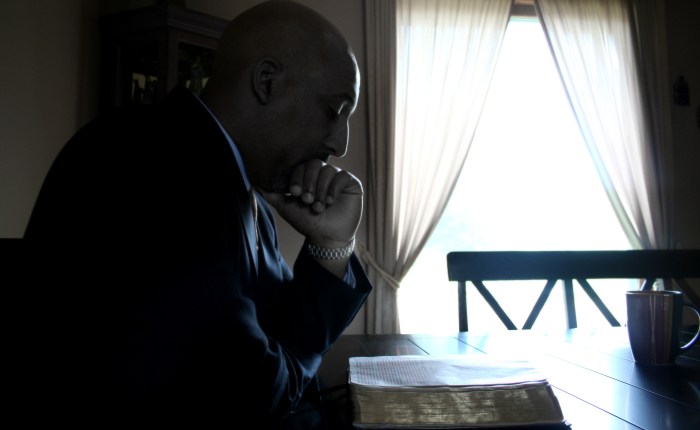
There is a particular kind of courage that doesn’t roar. It doesn’t charge into battle with a war cry or leap from a precipice to save a life. It’s a quieter, more profound kind of strength, born not of action but of stillness. It is the courage of waiting.

This is a quiet, resilient fortitude that the ancient songbook of faith, the Psalms, explores with remarkable clarity. Across its verses, we find a consistent message: true courage is not the absence of fear, but the presence of an unshakeable trust in a higher power. It’s a strength born not from our own will, but from a divine source that acts as both our light and our stronghold. Consider these three passages that connect courage directly to our relationship with God:

  • Psalm 27:1: “The Lord is my light and my salvation—whom shall I fear? The Lord is the stronghold of my life—of whom shall I be afraid?”
  • Psalm 27:14: “Wait for the Lord; be strong, and let your heart take courage; wait for the Lord!”
  • Psalm 31:24: “Be strong and take heart, all you who hope in the Lord.”

Our journey begins with the words of King David, a man who knew a great deal about facing down giants—both literal and figurative. He confronted giant adversaries, endured the relentless pursuit of an envious king, and even suffered the deep wound of betrayal from his own son. Yet, in the face of such turmoil, he makes an incredible, faith-reorienting declaration. This is not a flippant or dismissive rhetorical question. It is a statement of faith that completely reorients a person’s world. David isn’t claiming to have no reason to be afraid; rather, he is choosing to center his identity and security not on his own strength or the absence of danger, but on God. The world may be full of things that inspire fear, but for David, the Lord is a “light” that exposes the darkness and a “stronghold” that offers unshakeable protection. His courage, therefore, isn’t the absence of fear, but the presence of faith. He has an anchor that holds firm no matter how turbulent the sea. This challenges us to ask a fundamental question: who or what is the stronghold of our lives? When we place our trust in anything less than God—our career success, our financial stability, our physical health, or the fleeting approval of others—our courage will inevitably falter. For these are all things that can and will fail us. But the courage that stems from a foundation in God is one that cannot be shaken.

The next theme we will explore is the profound and powerful command to persevere in the very act of waiting. In our modern, fast-paced world, the very concept of waiting feels like a weakness. We are conditioned to seek immediate solutions, instant answers, and quick fixes. The advent of instant communication, next-day delivery, and on-demand streaming has trained us to believe that waiting is an inconvenience, a failure of efficiency. But the psalmist tells us that true courage is found not in the haste of action, but in the profound discipline of waiting on God. To “wait for the Lord” is not to sit idly by in passive resignation. It is a deliberate, active, and expectant posture of hope. It is a deep-seated conviction that says, “I may not see the way forward, the path may be obscured by shadow and uncertainty, but I will trust the one who does. I will be strong and courageous in this present moment, even as I wait for his perfect timing.” This kind of courage is not flashy. It is a quiet, resilient strength that endures through seasons of silence and uncertainty, much like a plant waiting for the right season to bloom or an athlete training for years for a single moment of triumph. It is the resolve to keep your hands open and your heart attentive, even when nothing appears to be happening. This is where the deepest, most enduring kind of courage is forged—in the crucible of patience. It is the courage to not force a timeline, to not rush an answer, but to trust that the one who holds all time in His hands is working on our behalf, even when we cannot perceive it.

Finally, we turn to the conclusion that echoes the theme of hope, but with a new and vital dimension. This verse is a final, resounding call to action. It is not just a personal encouragement, but a collective one, addressed to “all you who hope in the Lord.” It reminds us that our faith journey is not a solitary one. When we feel overwhelmed by the demands of waiting, we can and should draw strength and courage from one another, from the community of faith that shares the same profound hope. Our courage isn’t a solitary act of will; it is a communal practice. In the same way that a team of mountain climbers shares the weight of their gear and encourages each other to keep going, so too do we share the burden of our fears and celebrate the small victories of hope. The courage to wait is fortified by the knowledge that we are not alone. It is a shared journey, and our hope isn’t in our own ability to be strong, but in the steadfast character of God himself. The more we hope in Him, the more our hearts are filled with the courage we need to face whatever comes our way.

The courage of waiting is a tapestry woven from these three threads: the unshakeable foundation of faith in God as our stronghold, the active discipline of patient endurance, and the collective strength found in a community of shared hope. It is the courage to stand in the face of the unknown, not because we are fearless, but because we know the one who holds all things together. It is a courage that is forged in the silent moments of trusting, in the difficult moments of hoping, and in the shared moments of encouragement. And in a world that rushes toward the next thing, the quiet, powerful act of waiting is perhaps the most courageous act of all.

Thank God I Failed

Thank God I Failed

Embracing Failure as an Aspect of Faith

We are taught from a young age to strive for success and avoid failure at all costs. The word “failure” itself can conjure feelings of defeat, inadequacy, and disappointment. It’s a concept we dread, something we hide, and something we desperately try to prevent. Given this deeply ingrained instinct, the idea of being grateful for failure seems, at best, counter-intuitive. Yet, this is precisely the profound and often overlooked truth we must confront: failure is not adversarial to faith; rather, it is an integral aspect of faith itself.

The common perception is that if we have true faith, we will succeed. This perspective positions failure as an enemy, something that undermines our belief. If our prayers go unanswered, or our plans fall apart, it’s easy to feel as though our faith was misplaced or insufficient. However, this belief often stems from a misunderstanding of what faith is. Faith is not a cosmic vending machine that dispenses our desired outcome in exchange for belief. Instead, failure doesn’t invalidate faith; it simply means the story is taking a different, unexpected turn.

How Failure Informs and Strengthens Faith

Instead of weakening our faith, failure can actually be a crucial part of its development and deepening. Faith, like a muscle, grows stronger under strain, not in comfort. When we face setbacks, our faith is tested, and we have the opportunity to reaffirm and deepen it, leading to a more resilient and mature belief. Failures are also our greatest teachers. In a faith context, they can teach us about patience, perseverance, and humility. They strip away our pride and self-reliance, prompting us to recognize our limitations and lean more fully on God’s strength and grace. This humility is where God loves to meet us.

Furthermore, failure is rarely a dead end; it’s often a potential turning point. Our faith traditions are rich with themes of redemption, forgiveness, and new beginnings. Failure is the moment God invites us into spiritual renewal or redirects us onto a different path, guided by His divine hand. True faith isn’t just believing when things are easy; it’s most powerfully demonstrated when we continue to hope and strive despite our failures, trusting that God is still at work.

God Works in All Things

Perhaps the most powerful scripture that underscores this idea is Romans 8:28: “And we know that in all things God works for the good of those who love him, who have been called according to his purpose.” This verse directly addresses the idea that failure is not adversarial to faith. It implies that even the things we perceive as failures—the setbacks, mistakes, and moments of weakness—are not outside of God’s redemptive work. He doesn’t just work in our successes; He works in all things.

This speaks to the idea that failure is an aspect of faith. For those who love God and are called by His purpose, failures become part of a larger divine plan. In this context, failure isn’t a sign of abandonment but a step, a lesson, or a refining process within the broader journey of faith. It leads to humility, deepens our dependence on God, and fosters growth. This is beautifully echoed in 2 Corinthians 12:9, where Jesus tells Paul, “My grace is sufficient for you, for my power is made perfect in weakness.” God’s power isn’t made perfect in our flawless performance, but precisely in our weakness and our failures.

Biblical Figures Who Failed

The Bible is a raw and honest portrayal of real people with real faith who experienced profound failures. Through their stories, we see how failure was not an adversary but an integral part of their journey.

  • Peter: He was impulsive and often spoke before thinking. His most notable failures include sinking while walking on water (Matthew 14:28-31) and, most famously, denying Jesus three times (Matthew 26:69-75) after boldly declaring his loyalty. Yet, Jesus never gave up on him. After the resurrection, Jesus sought him out, restoring him by asking him, “Do you love me?” three times, a direct reversal of the three denials. Peter went on to become a foundational leader of the early church, and his failures likely humbled him and made him more reliant on God’s grace.
  • King David: Despite being called “a man after God’s own heart,” David committed the grievous sins of adultery with Bathsheba and the murder of her husband, Uriah (2 Samuel 11). This was a profound moral failure. However, when confronted by the prophet Nathan, David immediately repented and poured out his heart in Psalm 51. God, in His mercy, did not revoke David’s kingship, and it was through his lineage that the Messiah came. David’s failures and deep repentance underscore the power of God’s forgiveness and restoration.
  • Moses: The great leader who brought Israel out of Egypt also had significant failures. In his youthful zeal, he killed an Egyptian, leading to forty years of exile (Exodus 2:11-15). Later, he struck the rock instead of speaking to it for water, an act of disobedience that resulted in him being forbidden from entering the Promised Land (Numbers 20:7-12). Despite these failures, Moses remained God’s chosen leader. His time in the wilderness transformed him from an impulsive prince into a humble and patient shepherd. Even though he didn’t enter the Promised Land, he saw it from Mount Nebo and is still considered one of the greatest prophets in Israel’s history. His journey illustrates that God can still use us mightily even when we fall short.

These biblical figures show us that faith isn’t a flawless performance but a dynamic journey that includes missteps, doubts, and outright failures. It is in the aftermath of these failures that genuine faith is often refined, deepened, and proven to be resilient.

Embracing the “Thank God I Failed” Mindset

Failure is an inevitable part of life, but as we’ve seen, it is not an adversary to faith; it is an integral aspect of it. To embrace this mindset, we must first change how we view failure. See each setback not as a condemnation but as a classroom. Don’t hide your failures; instead, allow God to use them for humility and growth. Trust that God is working in all things for your good, even in the mess.

For those discouraged by past failures, find hope in God’s redemptive power promised in Romans 8:28. For those fearing future failures, I encourage you to step out in faith, knowing that God’s grace is sufficient for you, and His power is made perfect in your weakness, as 2 Corinthians 12:9 reminds us. Let us embrace the journey of faith, knowing that even our stumbles can be used by God for His glory and our deepest good. So, yes, we can say with confidence and gratitude, “Thank God I Failed.” For through those failures, His power is made perfect, and our faith is made strong. Amen.

In All Thy Ways: Finding God’s Unexpected Path to Healing

In All Thy Ways: Finding God’s Unexpected Path to Healing

We live in a world that often celebrates the grand, the complex, and the highly visible. We strive for success, curate our online personas, and often believe that with enough resources, intelligence, or connections, any problem can be solved. But what happens when we encounter a problem that money can’t buy a solution for, a status can’t overcome, or influence can’t fix?

Our anchor text, 2 Kings 5:1-15, introduces us to Naaman, a man who, by all worldly measures, had it all. He was the commander of the Syrian army, a man of immense stature and success, even credited by the Lord for victories. He was the ancient equivalent of a CEO, a military general, a social media influencer with millions of followers. Yet, beneath the polished exterior, Naaman carried a devastating secret: he was a leper. This incurable disease would eventually lead to isolation, disfigurement, and death. It’s a stark reminder that human achievement, no matter how great, cannot overcome every human limitation.

This brings us to a crucial question: When our greatest strengths fail us, and our biggest problems seem insurmountable, where do we turn for a solution? How does God intervene in such situations?

The Unexpected Messenger of Hope

Naaman’s hope doesn’t come from his king, his advisors, or his vast wealth. It comes from the most improbable source: a young, unnamed Israelite girl, captured in a raid and serving as a slave in his household (2 Kings 5:2-3).

Imagine getting life-changing advice not from a TED Talk speaker or a best-selling author, but from a child, a janitor, or a new immigrant. God delights in using the overlooked, the marginalized, those without a platform, to deliver His most profound messages. This young girl, snatched from her home and forced into servitude by Naaman’s people, could have been consumed by bitterness. Yet, she shows remarkable empathy for her captor, simply stating, “If only my master would see the prophet who is in Samaria! He would cure him of his leprosy.” Her faith wasn’t just a wish; it was a certainty.

In a world saturated with information, misinformation, and skepticism, do we have the courage and conviction of this unnamed girl to speak simply and truthfully about the hope we have in God, even to those who might seem to have everything?

The “App” That Doesn’t Work vs. God’s Simple Command

Naaman, accustomed to power and protocol, takes the “top-down” approach (2 Kings 5:4-5). He goes to his master, the King of Aram, who then writes a letter to the King of Israel. Naaman arrives with immense wealth—a king’s ransom—expecting to buy his healing. How often do we try to “app-ify” our spiritual problems? We seek complex solutions, expensive programs, or influential connections, believing that a “high-level” approach is necessary for a “big” problem. We want a quick fix, a formula, a transaction.

But the King of Israel’s reaction is telling: he tears his clothes in despair. “Am I God, to kill and to make alive?” He recognizes his utter powerlessness in the face of leprosy. This vividly illustrates that no amount of human authority, political power, or technological advancement can solve our deepest, most fundamental spiritual problems. We can build skyscrapers, cure diseases, and connect the world, but we cannot heal a broken spirit or cleanse a sinful heart on our own.

Naaman’s conventional, “top-down” approach has reached its absolute limit. The King of Israel’s helplessness creates a void that only God can fill. This prepares Naaman, and us, for the radical simplicity of God’s true solution, which will come through Elisha. Naaman is about to learn that God’s way is often not about complexity, cost, or prestige, but abouthumble obedience to a seemingly ordinary command, leading to an extraordinary transformation.

In All Thy Ways: Embracing God’s Unexpected Ways to Healing

This narrative powerfully illustrates the timeless wisdom of Proverbs 3:5-6: “Trust in the LORD with all your heart, and lean not on your own understanding; in all your ways acknowledge Him, and He shall direct your paths.”

Naaman, a man who relied on his own understanding and conventional wisdom, had to learn to trust in the Lord and acknowledge Him “in all his ways.” When Elisha sent a messenger with the simple instruction to “Go and wash in the Jordan seven times” (2 Kings 5:10), Naaman was initially furious. This wasn’t the dramatic, impressive display he expected from a prophet. His pride was wounded, and his expectations of a grand solution were shattered. Yet, it was the humble counsel of his servants that led him to obey this simple, counter-intuitive command.

When he finally humbled himself and dipped seven times in the Jordan, his flesh was restored like the flesh of a little child, and he was clean (2 Kings 5:14). This physical healing was followed by a profound spiritual realization as he declared, “Indeed, now I know that there is no God in all the earth, except in Israel” (2 Kings 5:15).

What “leprosy” (deep, incurable problems) do we face in our lives today – the relentless anxiety, the unshakeable addictions, the brokenness in our relationships, the spiritual emptiness that no amount of “likes” or achievements can fill?

Are we open to God working through unexpected people or simple means, or do we insist on our own “grand” solutions, the latest self-help trend, or the most technologically advanced fix? Are we willing to humble ourselves, set aside our pride and our need for control, and listen to the “little voices” – perhaps a quiet prompting, a simple word from a friend, or a verse from Scripture – that might be pointing us to God’s solution?

The Ultimate Healer: Jesus Christ

Naaman’s physical cleansing foreshadows the far greater spiritual cleansing offered through Jesus Christ. Just as Naaman needed to be washed in the Jordan to cleanse his flesh, we need to be washed by the blood of Jesus to be cleansed from the “leprosy” of sin (Romans 3:23, 6:23).

Like Naaman, who was a Gentile, Jesus’ ministry extended beyond the Jewish people, demonstrating God’s universal love and desire for all to be saved (Luke 4:27, where Jesus himself references Naaman’s healing, emphasizing God’s grace to outsiders). Jesus often healed in simple, unexpected ways, just as Elisha did. He didn’t always perform grand spectacles but often used a touch, a word, or even mud and spit, requiring faith and obedience from those he healed (e.g., the blind man in John 9). His power is not about human showmanship, but divine authority.

The humility Naaman learned is central to following Christ. In our self-sufficient age, we must humble ourselves, acknowledge our profound need for a Savior, and trust in His simple, yet profound, call to faith and repentance. It’s not about what we can do or buy, but about what He has done for us.

In a world that constantly tells us to strive, to achieve, to control, Jesus invites us to surrender. Like Naaman, let us be willing to lay aside our pride and preconceived notions, and embrace God’s often simple, yet powerful, instructions for healing and transformation. Trust that God’s way, revealed ultimately in Jesus Christ, is always the best way to find truecleansing, lasting freedom, and eternal life. Indeed, “In all thy ways acknowledge Him, and He shall direct thy paths.”

Willful Faith

Willful Faith

Have you ever found yourself in a state where your emotions feel like a runaway train, and you’re merely a passenger, helpless to control its destructive course? Perhaps it’s anxiety gnawing at your peace, depression casting a long shadow over your days, or a general sense of discouragement that weighs heavily on your spirit. This universal cry of the downcast soul is precisely what the Psalmist captures in Psalm 42. It’s a raw, honest look into the heart of someone experiencing profound distress, not pretending or putting on a brave face, but grappling with a fundamental question. In Psalm 42:5 (NIV), we hear this poignant lament and a profound declaration: “Why, my soul, are you downcast? Why so disturbed within me? Put your hope in God, for I will yet praise him, my Savior and my God.” This single verse presents an internal struggle, a willful act, and a confident expectation. It introduces us to the concept of “Willful Faith”—not blind optimism or a dismissal of pain, but an active, intentional decision to engage our faith in the midst of struggle, choosing to believe and hope even when it feels unnatural.

The problem, then, is the downcast soul itself. The Psalmist asks, “Why, my soul, are you downcast?” This speaks to a general sadness, a feeling of being weighed down, perhaps by unfulfilled desires, loss, or sheer weariness. But he goes deeper, asking, “Why so disturbed within me?” This implies an inner turmoil, a restless anxiety, an agitation that disrupts peace. It’s the internal wrestling match, a swirl of doubts and fears. It is crucial to recognize and honestly identify these feelings in our own lives, normalizing them as experiences even devout people face. The danger of remaining in this state unchecked is that it can lead to despair, paralysis, bitterness, or even the abandonment of faith. We risk being defined by our feelings rather than by our identity in Christ. The Psalmist, however, makes a crucial move: self-interrogation. He doesn’t merely wallow; he asks why. This active examination of the source of his despair, rather than letting it consume him, is the essential first step in active faith. It is a refusal to passively accept his emotional state.

This leads us to the principle: “Put your hope in God.” This is not a gentle suggestion but a direct command from the Psalmist to his own soul. Herein lies the essence of willful faith—an act of the will, not merely a fleeting emotion. The “hope” spoken of here is not wishful thinking; it is a confident expectation firmly rooted in God’s unchanging character and unfailing promises. It’s based on what God has done and what He will surely do. The object of our hope is critical: “in God.” Not in changing circumstances, not in our own limited strength, not in the fallibility of others, but in God alone. To “put your hope” involves active steps. It means recalling God’s character, reminding ourselves of who He is: faithful, loving, powerful, just, sovereign, and intimately present. It involves remembering God’s past faithfulness, looking back at how He has shown up for us or others in seemingly impossible situations. It means resting on God’s promises found in Scripture—His unwavering care for His children, His provision, and His ultimate victory (Philippians 4:6-7, Romans 8:28). This willful part of faith also requires engaging in spiritual disciplines: crying out to God in prayer, pouring out our hearts; choosing to worship Him even when we don’t feel like it, allowing praise to shift our perspective; immersing ourselves in Scripture, letting God’s word speak truth into our situations; and seeking godly counsel and encouragement within a faith community.

The beautiful outcome of this willful act is the promise: “I will yet praise him.” This is not a present reality for the downcast Psalmist, but a future certainty, born from his resolute decision to hope in God. The word “yet” is profoundly powerful; it signifies that despite the current struggle, there will be a time of praise. It is a statement of faith and defiance against despair. The foundation of this future praise is deeply personal: “My Savior and my God.” He grounds his coming praise in who God is to him. “My Savior” speaks of the one who delivers, redeems, and rescues, pointing ultimately to Jesus Christ as the supreme Savior. “My God” reveals a personal relationship; this is not an abstract deity, but the God who is intimately involved in his life. The fruit of such willful faith is multifaceted: joy can coexist with sorrow, for willful faith doesn’t erase pain, but it allows peace to permeate it. It provides perseverance, the strength to keep going when all we want to do is give up. It grants a renewed perspective, shifting our gaze from our overwhelming problems to the all-powerful Problem-Solver. Ultimately, the goal is not just to feel better, but to truly be able to praise God for His faithfulness, even for guiding us through the darkest valleys.

The journey from a downcast soul to putting hope in God inevitably leads to future praise. Embracing willful faith is a daily, often hourly, choice. It is a spiritual muscle that requires consistent exercise. Crucially, it’s not about mustering strength on our own, but about inviting the Holy Spirit to empower our will to hope in God. So, when your soul feels downcast and disturbed, dare to ask yourself the Psalmist’s question, and then, with intentionality, command your soul: “Put your hope in God!” He is unequivocally worthy of your willful faith. He is faithful, even when our feelings betray us. “May the God of hope fill you with all joy and peace as you trust in him, so that you may overflow with hope by the power of the Holy Spirit” (Romans 15:13).

Just a Little While

Just a Little While

The human heart yearns for arrival. From the impatient child in the backseat, “Are we there yet?” to the adult wrestling with life’s profound challenges, the question echoes: “Lord, how long until my breakthrough? When will this season of waiting finally end?” This persistent inquiry is not a sign of weakness, but a testament to our innate desire for resolution, for the fulfillment of God’s promises in our lives. Yet, what if our “arrival” is not solely a matter of God’s timing, but also intimately connected to our posture in the pause? To uncover the profound purpose embedded within our periods of anticipation and trial, let’s turn to a passage of immense comfort and challenge: 1 Peter 5:6-11 (NIV). Peter, writing to believers undergoing severe persecution, offers not a quick escape, but a divine framework for flourishing within the furnace of affliction. He writes: “Humble yourselves, therefore, under God’s mighty hand, that he may lift you up in due time. Cast all your anxiety on him because he cares for you. Be alert and of sober mind. Your enemy the devil prowls around like a roaring lion looking for someone to devour. Resist him, standing firm in the faith, because you know that the family of believers throughout the world is undergoing the same kind of sufferings. And the God of all grace, who called you to his eternal glory in Christ, after you have suffered a little while, will himself restore you and make you strong, firm and steadfast. To him be the power for ever and ever. Amen.” This “suffering” Peter speaks of is not merely fleeting discomfort, but a comprehensive term for the trials, hardships, and pains that often accompany a life of faith. It’s the prolonged illness, the chronic financial strain, the fractured relationship, the seemingly unanswered prayer. Our deepest struggle isn’t always the presence of difficulty itself, but the agonizing duration of the wait for its resolution. Yet, within these verses, God Himself offers a transformative lens through which to view our “lingering hardships,” revealing their meaning, purpose, and most importantly, their divinely appointed end.

Peter doesn’t leave us languishing in our impatience; he provides a clear, actionable pathway to navigate the waiting room of life with grace and strength. The first, and perhaps most crucial, step is to humble yourselves, therefore, under God’s mighty hand.” Humility, in this context, is not self-deprecation, but a profound acknowledgment of God’s absolute sovereignty and our complete dependence on Him. It means releasing our grip on control, relinquishing our prideful attempts to orchestrate our own breakthroughs. We often believe that if we just strategize harder, work longer, or worry more intensely, we can accelerate our arrival. But Peter reminds us that true elevation—”that he may lift you up”—comes in “due time,” God’s perfect time, not our own. This humbling posture leads directly to the second command: “Cast all your anxiety on him because he cares for you.” Our anxieties are often the direct result of our perceived lack of control. When we humbly acknowledge God’s “mighty hand” over every circumstance, we empower ourselves to genuinely lay down our burdens. The Greek word for “cast” here (epiriptó) implies a decisive, once-and-for-all throwing off. It’s not a polite handing over, but a forceful release. Why can we do this? Because He cares. This isn’t a passive interest; it’s an active, compassionate, fatherly concern that embraces every detail of our lives. When we fully grasp His care, the weight of waiting, though still present, becomes immeasurably lighter. We are suffering the wait, yes, but never without the intimate presence and unwavering support of the Almighty.

As we humble ourselves and cast our anxieties, Peter issues a vital warning: “Be alert and of sober mind. Your enemy the devil prowls around like a roaring lion looking for someone to devour.” Our periods of waiting and suffering are not merely passive experiences; they are battlegrounds. The adversary, ever vigilant, seeks to exploit our vulnerability, to plant seeds of doubt, despair, and discouragement. He wants us to believe God has forgotten us, that our faith is futile, that our suffering is pointless. Being “alert and of sober mind” means exercising spiritual discernment. It means guarding our thoughts, saturating ourselves with truth, and recognizing the enemy’s insidious tactics. How often do we see individuals, just on the cusp of a breakthrough, succumb to temptation or discouragement, thereby missing their divine appointment? Satan’s objective is to ensure we never arrive at God’s intended destiny. He seeks to derail us, to convince us that our purpose is unattainable. But Peter assures us that “resistance” is possible, by “standing firm in the faith,” and by remembering that our “family of believers throughout the world is undergoing the same kind of sufferings.” We are not alone in this fight; there is strength and solidarity in our shared journey.

This is where the true glory of the passage shines through, offering not just a promise, but a divine guarantee: “And the God of all grace, who called you to his eternal glory in Christ, after you have suffered a little while, will himself restore you and make you strong, firm and steadfast.” The phrase “a little while” is crucial. In the context of eternity, even a lifetime of suffering is but a fleeting moment. God, who is “the God of all grace,” will not allow our suffering to be in vain. He is actively working within our waiting. This promise is rich with transformative verbs: He will restore what is broken, heal what is wounded, and bring back what was lost. He will make you strong as our weakness in suffering becomes the crucible for divine strength, forging resilience we could not have otherwise gained. He will make us firm, establishing us with a solid footing, ensuring our faith is unshakeable; the KJV’s “establish you” perfectly captures this sense of foundational stability. Finally, He will make us steadfast, resolute and unwavering, enabling us to stand firm against future trials. There is, indeed, a profound purpose in waiting. It is in the “agony of the wait” that our character is refined, our faith deepened, and our dependence on God solidified. The Lord, in His infinite wisdom, knows that if success comes too easily, without the crucible of patience and perseverance, we might not appreciate its value, nor possess the inner fortitude to sustain it. He desires for us not fleeting victories, but a “firm footing on life’s triumphs”—an enduring success built on a foundation of tested faith. So, the next time you find yourself asking, “Are we there yet, Lord?” take heart. You are not stuck; you are in a divine process. Humble yourself under His mighty hand, casting every anxiety upon Him because He deeply cares. Be vigilant against the enemy’s schemes, standing firm in the knowledge that you are part of a global family of faith. Trust that the “little while” of your suffering is a purposeful prelude to God’s glorious work of restoration, strengthening, firming, and establishing you. To Him be the power forever and ever. Amen.

Grown Folk Thinking

Grown Folk Thinking

We learn very early that there are things in life designated as “grown folk stuff.”  Once there existed delineation between the activities of “young folk” and grown folk. Sometimes you wouldn’t know what was reserved for grown folk until you threatened to intrude on it. There were no signs that said, “For Grown Folk Only.”  As a child, you were mostly left to decipher what was grown folk stuff with nothing more than the use of your common sense.  If you saw what looked like as glass of orange juice sitting on a table late in the evening while the Blues blared in the background you’d better stay clear of it. It was highly probably that what was in that glass was for grown folks.  If you suffered the lack of such wisdom, and placed your hand near that glass you would pay a heavy price for grown folk encroachment. Friday’s dawn would usher in grown folk time.  All activities were geared toward the satisfaction of grown folk.  Young folk were thought to have all week to have fun, but Friday night belonged to the grown folk. The music was “grown folk music”, the conversation was “grown folk conversation” and everybody knew what time it was; or whose time it was. So, we thought that being grown meant being old enough to stay up late, drink liquor, smoke cigarettes and listen to the Blues. It would take a lot of living to discover that none of those activities made one grown.  Rather, being grown had more to do with how you carried yourself. To be considered grown you had to know stuff like how to wear your clothes, when to speak and when not to, how to control your emotions, how to show proper respect, and overall how to behave in any social settings.  Basically, grown folk thought and behaved a certain way. 

If you paid attention you could always spot a grown folk impersonator.  There were always a few at every gathering.  You know the type; they would try to look the part, but would quickly be found out.  Either the females put on too much make-up, or the males couldn’t “hold” their liquor. My favorite was when an impersonator would say something trying to sound grown, but end up sounding stupid. The impersonator’s age may have gotten them pass curfew, but they surely were not considered to be grown among the seasoned adults.  It was obvious that some in the grown folk crowd had a little more living to do in order to be worthy of Friday’s dawn.   Impersonators fail to realize that there exists something called grown folk thinking; which cannot be ascertained by an age number. Those who want to be considered grown had better develop a grown-up’s way of thinking. 

The way one begins to think like a grown-up is by first evaluating her or his current thinking status.  That is, to begin asking questions about one’s current view the world. Questions such as: Do you see the world in terms of right versus wrong? Is everything either black, or white?  Do you think that everything should have reasonable explanation? Do you need to know that there are facts that support everything you consider true? If your answer is “yes” to the majority of these you may be old enough to stay up past curfew, drink alcohol, smoke and listen to explicit music, but you are not grown yet.  Education Researcher William Perry Jr. would say that you are at the lowest level of cognitive development.  In other words, you may certainly be an adult by societal standards, but you are still not thinking like a grown-up. Seeing the world in a simplistic way, such as believing that there is only right and wrong, is viewed as absolutism.  Grown folk know that the world has far too many mysteries for us to limit it to absolutes. To think about the world in absolute terms is to shrink existence to the theories of a few gifted intellectual pioneers. Absolutists lack the ability to think critically in the face of real-life conflict.  When confronted with issues like abortion people who think at the lowest cognitive development stage will look to someone else to help them navigate this moral dilemma. A grown-up impersonator at this stage seeks evidence that support their point of view while dismissing evidence that contradict it.  Their world view is largely constructed with a series of biases they have collected from others. Like children, absolutists’ thinkers rely too heavily on others to decipher life.

The good news is people can graduate from this stage. The bad news is most people don’t. Reason being, it is the only mode of thinking they know. Most people find comfort in simplicity, and resist putting their belief system to the test.  Good or bad, right or wrong, they stay where they are.  Never growing up, looking grown, acting grown, but thinking like a child. 

Others who are not afraid to challenge their orientation to life will move to the second stage of cognitive development.  Psychologists refer to this way of thinking as relativism.  These people believe opposite of Absolutists. Relativists think that all truth is relative. Every opinion matters and no one is qualified to judge the perspective of another.  For the relativist the world is vast and cannot be limited to absolutes.  The problem with this mode of thinking is it does not welcome challenge.  Relativists do not like having their ideas challenged or judged. When it comes to controversial issues these thinkers become argumentative, combative and contrary.  Basically, they throw a fit. For this reason, relativist should not hang out with grown folk.

Though relativists can be hard to keep calm they are far better at reasoning than absolutists.  One can have an enriched conversation with relativists; which creates the opportunity for growth.  Thus, there is hope that they will be grown someday.  Being grown would mean that one has reached the highest level of cognitive development, Commitment.  Simply stated, grown folk commit.  Grown folk know that in our world there are a lot of grey areas.  Grown folk also know that all ideas and opinions are not equally valid.  Experts and authority figures make mistakes, and will continue to. Grown folk are aware that uncertainly is woven in the fabric of life, but life must persist in spite of the unknown.  A position can be taken in life as being correct up until it is deemed wrong. When that time comes grown folk are flexible enough to make the necessary adjustment.  Somehow as we mature we understand more fully how complex the world really is. However, grown folk develop the critical thinking skills necessary to cope with an ever changing world that oxymoronically remains the same. People at this stage of commitment thinking accept responsibility for their actions based on what they believe; as a matter of choice. For the grown folk the locust of truth resides within.  Grown folk are not put-off by challenges to their belief system, and view confrontation over ideas as unnecessary.  They are not drunk with their own worldview. Grown folk make room for other perspectives to coexist with their own convictions.  In other words, they know how to “hold their liquor.” When confronted with crisis, controversy, calamity, or the complexities of life we should be ever careful not to intrude on grown folk conversation; though we can legally stay up past curfew.     

 Read (I Corinthians 13:11-12)

Shoved Off the Throne

Shoved Off the Throne

In his book, Made for Goodness, Desmond Tutu talks about a time when he lead presumptuously until he made a simple decision that would serve to reveal the frailties in his ministry. In short, he put off visiting a sick parishioner and she died before he reached out to her. For Desmond Tutu this was a colossal failure. When he received the news that the lady had passed away he felt like he had been shoved off the throne of ethereal ascent. Suddenly, a sanctified, mighty and revered Desmond Tutu was made to feel low, inept, and undeserving. He had to sulk in the pain of failing the deceased woman, failing the community from which she came, failing self, and failing at the commitment he made to God. Perhaps, the latter was the most hurtful.

Desmond Tutu’s pitfall in this situation only serves to show that the best among us fail. We know that Desmond Tutu’s contributions to the world far exceed whatever mistakes he made along the way.  However, there is something we can glean from how he viewed his failure. He said he felt as though he had been shoved off the throne.  For our exploration there are four important questions. First, what throne was he speaking of?  Second, who put him on it? Third, who shoved him off?  Finally, why does it matter?

More than a large chair atop a flight of stairs, a throne is also an impalpable reality.  We don’t always see thrones, but we know they exist. A throne represents a euphoric position of power. On some level we all have a position of power. Thus, we all have a throne to marvel.  Our throne is what we use to display our power. Perhaps this is the reason we work so hard, and spend much of our lives constructing our throne; we want to put our power on display. Desmond Tutu’s throne displayed his ability to lead people in religious devotion.  Yes noble, but undoubtedly a dangerously powerful position.

We like to think that our throne is ordained by God.  This way of thinking helps suppress the guilt that stems from vanity. We would rather believe God desires for us to live elevated than accept that our throne is self-aggrandized.  So, we pray for our throne; we ask God to bless our throne.  We even plead God’s hand in building our throne.  The problem is we construct our throne regardless of what God says. We are determined to acquire our position(s) of power with, or without God’s consent. Thus, we don’t always know for whom, or by whom our throne is built. God and Desmond Tutu may have shared hands in building his throne.  Tutu may have formed, and mounted his throne all alone.  Nonetheless, Desmond Tutu found himself forced off.

Though it may not be clear who built his throne, Desmond Tutu uses language that would help us understand that he did not voluntarily step down. According to him he was shoved off the throne.  In other words, he was forced down.  Apart from himself there are only two other possibilities for who was responsible for his demotion. Either it was the people who acknowledged his throne, or it was God.  People can surely knock us off our pedestal.  They can dismantle our thrones with accusations, gossip, condemnation, or any other use of their power.  In this case witnesses would denote Desmond Tutu’s neglect to visit his parishioner as an understandable blunder.  After all, people witness worse indiscretions committed by leaders frequently.  The standard in which people have become accustomed to holding leaders accountable had been diminished greatly by the time of Tutu’s mistake.  So, the people whom recognized his throne had no impulse to dethrone him. However, God was fully aware of Desmond Tutu’s misstep; and God’s standards do not fluctuate.

Desmond Tutu was ever mindful of his humility under the sight of God.  He was aware that his throne was a privilege, and that he should honor God by being careful with it.   The standard set for governing his throne was far greater than what people would expect of him.  It was a Godly standard.  It was one that was established by him and God alone. No matter what anyone else thought, Tutu was well aware of how far he missed the mark. In the end it would be God, who pricked Desmond Tutu’s conscience, and God who shoved him off the throne.

Why does any of this matter? Heirs of God should be made aware that God reserves the right to bring us down from the noblest pedestals. So how much more should we expect to be dethroned from constructs of selfish ambition? It’s plausible that God only allows us to build thrones so that God can shove us off of them. This is the secret life of God’s chosen; a life of being lifted up and shoved down.  Does this personify God as a mean bully who takes pleasure in setting people up to fail?  No more than it does a teacher who looks forward to her/his students making mistakes.  If we are to grow, learn and be of effective use for God we have to endure the pain of occasionally being brought down.  Only after we are brought down we give proper attention to the flaws in our life’s design. We pick apart the places in our ascent where we worked to build ourselves up without God’s input. In the end, Desmond Tutu appreciated God’s rebuke. He learned that he did not have it all together. There were some areas in his ministry that needed some attention. He also learned that his throne was not completely a divine construct.  Some of it was made of self-glory. This acknowledgement served Desmond Tutu in becoming a better servant.  We should note that from time to time we will be shoved off our throne. It creates in us the humility necessary for the proper use of our power.

Read (Philippians 2:5-8)