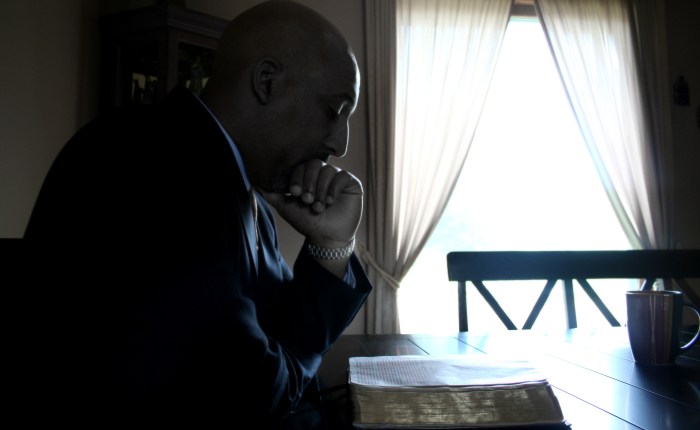
The Courage of Waiting

The Courage of Waiting

There is a particular kind of courage that doesn’t roar. It doesn’t charge into battle with a war cry or leap from a precipice to save a life. It’s a quieter, more profound kind of strength, born not of action but of stillness. It is the courage of waiting.

This is a quiet, resilient fortitude that the ancient songbook of faith, the Psalms, explores with remarkable clarity. Across its verses, we find a consistent message: true courage is not the absence of fear, but the presence of an unshakeable trust in a higher power. It’s a strength born not from our own will, but from a divine source that acts as both our light and our stronghold. Consider these three passages that connect courage directly to our relationship with God:

  • Psalm 27:1: “The Lord is my light and my salvation—whom shall I fear? The Lord is the stronghold of my life—of whom shall I be afraid?”
  • Psalm 27:14: “Wait for the Lord; be strong, and let your heart take courage; wait for the Lord!”
  • Psalm 31:24: “Be strong and take heart, all you who hope in the Lord.”

Our journey begins with the words of King David, a man who knew a great deal about facing down giants—both literal and figurative. He confronted giant adversaries, endured the relentless pursuit of an envious king, and even suffered the deep wound of betrayal from his own son. Yet, in the face of such turmoil, he makes an incredible, faith-reorienting declaration. This is not a flippant or dismissive rhetorical question. It is a statement of faith that completely reorients a person’s world. David isn’t claiming to have no reason to be afraid; rather, he is choosing to center his identity and security not on his own strength or the absence of danger, but on God. The world may be full of things that inspire fear, but for David, the Lord is a “light” that exposes the darkness and a “stronghold” that offers unshakeable protection. His courage, therefore, isn’t the absence of fear, but the presence of faith. He has an anchor that holds firm no matter how turbulent the sea. This challenges us to ask a fundamental question: who or what is the stronghold of our lives? When we place our trust in anything less than God—our career success, our financial stability, our physical health, or the fleeting approval of others—our courage will inevitably falter. For these are all things that can and will fail us. But the courage that stems from a foundation in God is one that cannot be shaken.

The next theme we will explore is the profound and powerful command to persevere in the very act of waiting. In our modern, fast-paced world, the very concept of waiting feels like a weakness. We are conditioned to seek immediate solutions, instant answers, and quick fixes. The advent of instant communication, next-day delivery, and on-demand streaming has trained us to believe that waiting is an inconvenience, a failure of efficiency. But the psalmist tells us that true courage is found not in the haste of action, but in the profound discipline of waiting on God. To “wait for the Lord” is not to sit idly by in passive resignation. It is a deliberate, active, and expectant posture of hope. It is a deep-seated conviction that says, “I may not see the way forward, the path may be obscured by shadow and uncertainty, but I will trust the one who does. I will be strong and courageous in this present moment, even as I wait for his perfect timing.” This kind of courage is not flashy. It is a quiet, resilient strength that endures through seasons of silence and uncertainty, much like a plant waiting for the right season to bloom or an athlete training for years for a single moment of triumph. It is the resolve to keep your hands open and your heart attentive, even when nothing appears to be happening. This is where the deepest, most enduring kind of courage is forged—in the crucible of patience. It is the courage to not force a timeline, to not rush an answer, but to trust that the one who holds all time in His hands is working on our behalf, even when we cannot perceive it.

Finally, we turn to the conclusion that echoes the theme of hope, but with a new and vital dimension. This verse is a final, resounding call to action. It is not just a personal encouragement, but a collective one, addressed to “all you who hope in the Lord.” It reminds us that our faith journey is not a solitary one. When we feel overwhelmed by the demands of waiting, we can and should draw strength and courage from one another, from the community of faith that shares the same profound hope. Our courage isn’t a solitary act of will; it is a communal practice. In the same way that a team of mountain climbers shares the weight of their gear and encourages each other to keep going, so too do we share the burden of our fears and celebrate the small victories of hope. The courage to wait is fortified by the knowledge that we are not alone. It is a shared journey, and our hope isn’t in our own ability to be strong, but in the steadfast character of God himself. The more we hope in Him, the more our hearts are filled with the courage we need to face whatever comes our way.

The courage of waiting is a tapestry woven from these three threads: the unshakeable foundation of faith in God as our stronghold, the active discipline of patient endurance, and the collective strength found in a community of shared hope. It is the courage to stand in the face of the unknown, not because we are fearless, but because we know the one who holds all things together. It is a courage that is forged in the silent moments of trusting, in the difficult moments of hoping, and in the shared moments of encouragement. And in a world that rushes toward the next thing, the quiet, powerful act of waiting is perhaps the most courageous act of all.

Just a Little While

Just a Little While

The human heart yearns for arrival. From the impatient child in the backseat, “Are we there yet?” to the adult wrestling with life’s profound challenges, the question echoes: “Lord, how long until my breakthrough? When will this season of waiting finally end?” This persistent inquiry is not a sign of weakness, but a testament to our innate desire for resolution, for the fulfillment of God’s promises in our lives. Yet, what if our “arrival” is not solely a matter of God’s timing, but also intimately connected to our posture in the pause? To uncover the profound purpose embedded within our periods of anticipation and trial, let’s turn to a passage of immense comfort and challenge: 1 Peter 5:6-11 (NIV). Peter, writing to believers undergoing severe persecution, offers not a quick escape, but a divine framework for flourishing within the furnace of affliction. He writes: “Humble yourselves, therefore, under God’s mighty hand, that he may lift you up in due time. Cast all your anxiety on him because he cares for you. Be alert and of sober mind. Your enemy the devil prowls around like a roaring lion looking for someone to devour. Resist him, standing firm in the faith, because you know that the family of believers throughout the world is undergoing the same kind of sufferings. And the God of all grace, who called you to his eternal glory in Christ, after you have suffered a little while, will himself restore you and make you strong, firm and steadfast. To him be the power for ever and ever. Amen.” This “suffering” Peter speaks of is not merely fleeting discomfort, but a comprehensive term for the trials, hardships, and pains that often accompany a life of faith. It’s the prolonged illness, the chronic financial strain, the fractured relationship, the seemingly unanswered prayer. Our deepest struggle isn’t always the presence of difficulty itself, but the agonizing duration of the wait for its resolution. Yet, within these verses, God Himself offers a transformative lens through which to view our “lingering hardships,” revealing their meaning, purpose, and most importantly, their divinely appointed end.

Peter doesn’t leave us languishing in our impatience; he provides a clear, actionable pathway to navigate the waiting room of life with grace and strength. The first, and perhaps most crucial, step is to humble yourselves, therefore, under God’s mighty hand.” Humility, in this context, is not self-deprecation, but a profound acknowledgment of God’s absolute sovereignty and our complete dependence on Him. It means releasing our grip on control, relinquishing our prideful attempts to orchestrate our own breakthroughs. We often believe that if we just strategize harder, work longer, or worry more intensely, we can accelerate our arrival. But Peter reminds us that true elevation—”that he may lift you up”—comes in “due time,” God’s perfect time, not our own. This humbling posture leads directly to the second command: “Cast all your anxiety on him because he cares for you.” Our anxieties are often the direct result of our perceived lack of control. When we humbly acknowledge God’s “mighty hand” over every circumstance, we empower ourselves to genuinely lay down our burdens. The Greek word for “cast” here (epiriptó) implies a decisive, once-and-for-all throwing off. It’s not a polite handing over, but a forceful release. Why can we do this? Because He cares. This isn’t a passive interest; it’s an active, compassionate, fatherly concern that embraces every detail of our lives. When we fully grasp His care, the weight of waiting, though still present, becomes immeasurably lighter. We are suffering the wait, yes, but never without the intimate presence and unwavering support of the Almighty.

As we humble ourselves and cast our anxieties, Peter issues a vital warning: “Be alert and of sober mind. Your enemy the devil prowls around like a roaring lion looking for someone to devour.” Our periods of waiting and suffering are not merely passive experiences; they are battlegrounds. The adversary, ever vigilant, seeks to exploit our vulnerability, to plant seeds of doubt, despair, and discouragement. He wants us to believe God has forgotten us, that our faith is futile, that our suffering is pointless. Being “alert and of sober mind” means exercising spiritual discernment. It means guarding our thoughts, saturating ourselves with truth, and recognizing the enemy’s insidious tactics. How often do we see individuals, just on the cusp of a breakthrough, succumb to temptation or discouragement, thereby missing their divine appointment? Satan’s objective is to ensure we never arrive at God’s intended destiny. He seeks to derail us, to convince us that our purpose is unattainable. But Peter assures us that “resistance” is possible, by “standing firm in the faith,” and by remembering that our “family of believers throughout the world is undergoing the same kind of sufferings.” We are not alone in this fight; there is strength and solidarity in our shared journey.

This is where the true glory of the passage shines through, offering not just a promise, but a divine guarantee: “And the God of all grace, who called you to his eternal glory in Christ, after you have suffered a little while, will himself restore you and make you strong, firm and steadfast.” The phrase “a little while” is crucial. In the context of eternity, even a lifetime of suffering is but a fleeting moment. God, who is “the God of all grace,” will not allow our suffering to be in vain. He is actively working within our waiting. This promise is rich with transformative verbs: He will restore what is broken, heal what is wounded, and bring back what was lost. He will make you strong as our weakness in suffering becomes the crucible for divine strength, forging resilience we could not have otherwise gained. He will make us firm, establishing us with a solid footing, ensuring our faith is unshakeable; the KJV’s “establish you” perfectly captures this sense of foundational stability. Finally, He will make us steadfast, resolute and unwavering, enabling us to stand firm against future trials. There is, indeed, a profound purpose in waiting. It is in the “agony of the wait” that our character is refined, our faith deepened, and our dependence on God solidified. The Lord, in His infinite wisdom, knows that if success comes too easily, without the crucible of patience and perseverance, we might not appreciate its value, nor possess the inner fortitude to sustain it. He desires for us not fleeting victories, but a “firm footing on life’s triumphs”—an enduring success built on a foundation of tested faith. So, the next time you find yourself asking, “Are we there yet, Lord?” take heart. You are not stuck; you are in a divine process. Humble yourself under His mighty hand, casting every anxiety upon Him because He deeply cares. Be vigilant against the enemy’s schemes, standing firm in the knowledge that you are part of a global family of faith. Trust that the “little while” of your suffering is a purposeful prelude to God’s glorious work of restoration, strengthening, firming, and establishing you. To Him be the power forever and ever. Amen.