
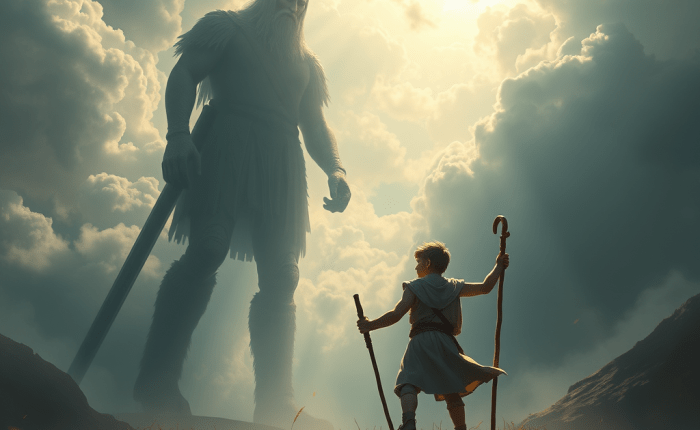
When challenges mount and fears loom large in the whirlwind of life, it’s easy to feel adrift, as if we’re facing insurmountable odds alone. The weight of present troubles can obscure our vision, making us forget the very source of our strength and hope. Yet, the ancient words of King David in Psalm 27:1-6 offer a profound antidote to this despair: “Remember.”
David, a man intimately acquainted with adversity – from facing giants and fleeing a jealous king to enduring betrayal and war – begins this psalm not with a lament, but with a resounding declaration of confidence: “The Lord is my light and my salvation; whom shall I fear? The Lord is the stronghold of my life; of whom shall I be afraid?” (Psalm 27:1). This isn’t a naive optimism, but a battle-tested faith rooted in memory.
David’s confidence isn’t abstract; it’s grounded in his past experiences. He recalls, “When evildoers came against me to devour my flesh, my foes and my enemies stumbled and fell” (Psalm 27:2). He had seen God’s hand move, time and again, turning the tide against seemingly overwhelming forces. It’s in these moments of divine intervention, these countless deliverances from troubles that seemed impossible to overcome, that we find a powerful testament to God’s existence and His active interaction in our lives.
Think about it: can any person truly navigate the “numerous obstacles” of life – the unexpected illnesses, the crushing losses, the sudden betrayals, the financial ruin – without some form of support? While human support is vital, there are moments when only a divine hand can provide the light in the deepest darkness, the salvation from utter despair, and the stronghold against forces that would otherwise consume us. When we look back at our own lives, at the times we somehow made it through, when a door opened unexpectedly, when peace settled in the midst of chaos, or when strength appeared from nowhere, we are witnessing God’s faithfulness. These are not mere coincidences; they are echoes of His promise, “I will never leave you nor forsake you.”
David’s life was a tapestry woven with such divine interventions. Before he ever wore a crown, as a young shepherd boy, he faced beasts that threatened his flock. He didn’t just survive; he conquered. He remembered how God enabled him to rescue his lambs from the jaws of a lion and a bear (1 Samuel 17:34-37). These weren’t minor skirmishes; they were life-or-death struggles where a shepherd boy, armed with only a staff and sling, triumphed over formidable predators.
And then came the ultimate test: Goliath, the Philistine giant, defying the armies of Israel. While seasoned warriors trembled, young David, fueled by the memory of God’s past faithfulness, stepped forward. He declared, “The Lord who delivered me from the paw of the lion and from the paw of the bear will deliver me from the hand of this Philistine” (1 Samuel 17:37). His victory over Goliath was not merely a physical feat; it was a profound act of faith, born from a deep well of remembered deliverances.
David’s reflection in Psalm 27 was likely not about one isolated occurrence, but about journeying through the halls of his memory, recalling each instance of God’s powerful intervention. This process wasn’t just nostalgic; it was an act of worship. Each recalled victory became a fresh reason to honor God with praise, solidifying his confidence that the God who had been faithful in the past would surely be faithful in the present and future. This constant act of remembering and praising transformed his past struggles into pillars of present strength, allowing him to declare with conviction, “Though an army encamp against me, my heart shall not fear; though war rise up against me, yet I will be confident” (Psalm 27:3).
This divine support is not just about external rescue; it’s also about internal transformation. The Apostle Paul reminds us in 2 Timothy 1:7, “For God has not given us a spirit of fear, but of power and of love and of a sound mind.” This verse beautifully complements David’s fearless stance. When we remember God’s faithfulness, we are empowered to overcome the spirit of fear that seeks to paralyze us. We receive a spirit of power, enabling us to face challenges with courage; a spirit of love, allowing us to respond with compassion even in difficult circumstances; and a sound mind, granting us clarity and wisdom when confusion reigns. This inner fortitude is itself a profound deliverance, a testament to God’s ongoing work within us.
It’s tempting to wish away our troubles, to pray for their immediate removal. But some of life’s most profound growth happens not by avoiding the storm, but by learning to lean into it, trusting that God is present and purposeful in the midst of it. David’s psalm isn’t just about escaping trouble; it is about finding God in trouble. His “one thing” was not freedom from enemies, but to “dwell in the house of the Lord all the days of my life, to gaze upon the beauty of the Lord and to inquire in his temple” (Psalm 27:4). He sought intimacy with God despite the surrounding chaos.
When we choose to lean into our trials, when we consciously seek God’s presence and wisdom within the difficulty, we allow Him to refine us. It’s in the crucible of adversity that our faith is tested and strengthened, like gold purified by fire.We learn resilience, patience, and a deeper reliance on God than we ever thought possible. The very things that threaten to break us can, with God’s divine support, become the tools He uses to build us into stronger, more compassionate, and more faithful individuals. We grow not just through the trials, but because of them, as God uses them to shape our character and deepen our understanding of His unwavering faithfulness.
So, when the “army” encamps against you, and “war rises up,” take a moment to pause. Remember. Remember the countless times God has been your light, your salvation, your stronghold. Remember the unseen hand that guided you, the peace that sustained you, the strength that appeared when you had none left. These memories are not just personal anecdotes; they are evidence of a living, interacting God.
Let the spirit of power, love, and a sound mind replace the spirit of fear. And as you lean into the present challenge, trust that the same God who delivered you before is actively working to grow you now. For in remembering His faithfulness, we find not just hope for today, but an unshakeable confidence for all our tomorrows.

 Meditations By Lee