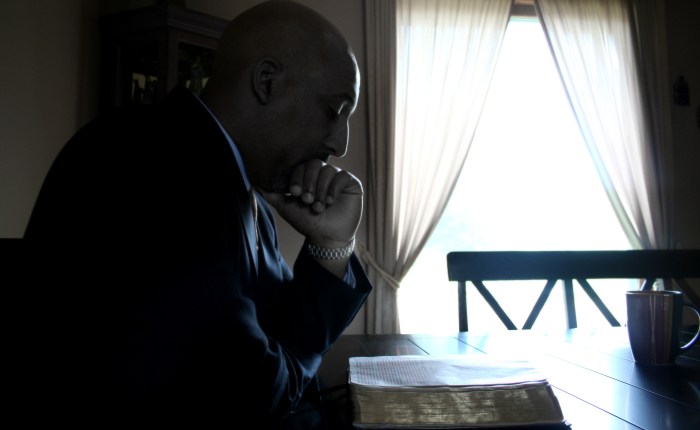
The Courage of Waiting

The Courage of Waiting

There is a particular kind of courage that doesn’t roar. It doesn’t charge into battle with a war cry or leap from a precipice to save a life. It’s a quieter, more profound kind of strength, born not of action but of stillness. It is the courage of waiting.

This is a quiet, resilient fortitude that the ancient songbook of faith, the Psalms, explores with remarkable clarity. Across its verses, we find a consistent message: true courage is not the absence of fear, but the presence of an unshakeable trust in a higher power. It’s a strength born not from our own will, but from a divine source that acts as both our light and our stronghold. Consider these three passages that connect courage directly to our relationship with God:

  • Psalm 27:1: “The Lord is my light and my salvation—whom shall I fear? The Lord is the stronghold of my life—of whom shall I be afraid?”
  • Psalm 27:14: “Wait for the Lord; be strong, and let your heart take courage; wait for the Lord!”
  • Psalm 31:24: “Be strong and take heart, all you who hope in the Lord.”

Our journey begins with the words of King David, a man who knew a great deal about facing down giants—both literal and figurative. He confronted giant adversaries, endured the relentless pursuit of an envious king, and even suffered the deep wound of betrayal from his own son. Yet, in the face of such turmoil, he makes an incredible, faith-reorienting declaration. This is not a flippant or dismissive rhetorical question. It is a statement of faith that completely reorients a person’s world. David isn’t claiming to have no reason to be afraid; rather, he is choosing to center his identity and security not on his own strength or the absence of danger, but on God. The world may be full of things that inspire fear, but for David, the Lord is a “light” that exposes the darkness and a “stronghold” that offers unshakeable protection. His courage, therefore, isn’t the absence of fear, but the presence of faith. He has an anchor that holds firm no matter how turbulent the sea. This challenges us to ask a fundamental question: who or what is the stronghold of our lives? When we place our trust in anything less than God—our career success, our financial stability, our physical health, or the fleeting approval of others—our courage will inevitably falter. For these are all things that can and will fail us. But the courage that stems from a foundation in God is one that cannot be shaken.

The next theme we will explore is the profound and powerful command to persevere in the very act of waiting. In our modern, fast-paced world, the very concept of waiting feels like a weakness. We are conditioned to seek immediate solutions, instant answers, and quick fixes. The advent of instant communication, next-day delivery, and on-demand streaming has trained us to believe that waiting is an inconvenience, a failure of efficiency. But the psalmist tells us that true courage is found not in the haste of action, but in the profound discipline of waiting on God. To “wait for the Lord” is not to sit idly by in passive resignation. It is a deliberate, active, and expectant posture of hope. It is a deep-seated conviction that says, “I may not see the way forward, the path may be obscured by shadow and uncertainty, but I will trust the one who does. I will be strong and courageous in this present moment, even as I wait for his perfect timing.” This kind of courage is not flashy. It is a quiet, resilient strength that endures through seasons of silence and uncertainty, much like a plant waiting for the right season to bloom or an athlete training for years for a single moment of triumph. It is the resolve to keep your hands open and your heart attentive, even when nothing appears to be happening. This is where the deepest, most enduring kind of courage is forged—in the crucible of patience. It is the courage to not force a timeline, to not rush an answer, but to trust that the one who holds all time in His hands is working on our behalf, even when we cannot perceive it.

Finally, we turn to the conclusion that echoes the theme of hope, but with a new and vital dimension. This verse is a final, resounding call to action. It is not just a personal encouragement, but a collective one, addressed to “all you who hope in the Lord.” It reminds us that our faith journey is not a solitary one. When we feel overwhelmed by the demands of waiting, we can and should draw strength and courage from one another, from the community of faith that shares the same profound hope. Our courage isn’t a solitary act of will; it is a communal practice. In the same way that a team of mountain climbers shares the weight of their gear and encourages each other to keep going, so too do we share the burden of our fears and celebrate the small victories of hope. The courage to wait is fortified by the knowledge that we are not alone. It is a shared journey, and our hope isn’t in our own ability to be strong, but in the steadfast character of God himself. The more we hope in Him, the more our hearts are filled with the courage we need to face whatever comes our way.

The courage of waiting is a tapestry woven from these three threads: the unshakeable foundation of faith in God as our stronghold, the active discipline of patient endurance, and the collective strength found in a community of shared hope. It is the courage to stand in the face of the unknown, not because we are fearless, but because we know the one who holds all things together. It is a courage that is forged in the silent moments of trusting, in the difficult moments of hoping, and in the shared moments of encouragement. And in a world that rushes toward the next thing, the quiet, powerful act of waiting is perhaps the most courageous act of all.

I am Your Share and Your Inheritance

I am Your Share and Your Inheritance

There has never been a time when the economy was courteous to all people. This generation’s economy promises to be consistent with all others. Few people will thrive while the masses will wonder if they will ever experience financial relief. A generation ago people hoped for two things to happen in their lifetime. One was to earn enough money to comfortably pay a mortgage while maintaining a savings. The second hope was to be able to pay off the mortgage in time enough to retire with a financial nest egg to withdraw from. A generation ago it was more than conceivable, even expected, that a person would pay off a thirty-year mortgage working for one company. If you had more than three jobs in thirty years you were labeled a “job hopper”. The economy, still not fair to all, was undeniably more stable then. Today, homeowners may work for a dozen employers before paying off a mortgage. This means it is going to be difficult to generate a comfortable retirement for those who have never been able to stay with a company long enough to become vested. This is the reality for generations X, Y and Z. It is plausible that these generations will live longer than any other, but they should expect to work longer, retiring much later than the age of sixty-five.

This paints a grim picture for the working class. We have to face the reality that there is no earthly indication that we will ever enjoy any phase of our lives without experiencing some financial hardship. Of course this is nothing new, it has been the case since the beginning of civilization. To have little or no retirement today will result in the same as having little or no inheritance in biblical times. People who had no inheritance in antiquity found themselves enslaved to an oppressive economic system. There was no hope of relief for the economically disinherited. Without land or legacy they could expect to die while working. We can expect the same if some industry revolution does not reverse this economic instability; just as steel, transportation, computers and the Internet did in the past. The need for an individual to have multiple income streams is rapidly becoming the norm. Soon retirement will be an antiquated idea. Those who don’t have the fortitude to navigate the increasingly competitive job market will have to accept that their days on earth will not be lived gracefully; but with much trepidation.

When suffering endures, with no sign of relief, hope begins to lose its fervor. It is difficult to maintain hope when life refuses to afford you the time, and money to ever realize your own dreams. Instead, all your labor is dedicated to accomplishing the goals of the financially privileged. Our dreams are fueled by the hope that we will get an opportunity to bring them to fruition. What happens to society when a generation loses hope in ever being able to accomplish their dreams? What do they teach their children about life? What happens to their faith in God? The answers to these questions may give some insight to why the most advanced society in human history is in such great moral decline. When the hope of the disinherited is fleeting it is imperative that we hold on to faith affirmations that reinvigorate our optimism.

One faith affirmation can be found in Numbers 18:20. The Lord’s message to Aaron, the Chief Priest of Israel, offers hope to the individual who is struggling to see how s/he will ever experience financial relief in uncertain times. The people of the ancient world were accustomed to hard economic conditions. It was the priest who instilled hope that if Israel honored God and remained faithful they would be relieved of economic worry. As long as they worshipped God in obedience they could expect a harvest. It was the priest’s primary responsibility to ensure that the people remained in right relationship with God. This responsibility yielded little time for the priest to do anything else. Unlike the congregation, Aaron was not able to make a living in the market place or by bartering. Priests were not even allowed to own land. So, their inheritance or financial security heavily depended on the faithfulness of people to give their tithes. Aaron’s job was to prepare the Alter with focus on the people’s penance and devotion to God. The priest would ensure that the people would be taken care of by God through prayer and ordinance, while trusting that they would in turn provide for his own daily sustenance and inheritance. In other words, Aaron depended on the nation of Israel to provide a decent wage and retirement for him. Aware of Aaron’s gullibility about his own financial fate the Lord said to him, “You will have no inheritance in their land, nor will you have any share among them; I am your share and your inheritance among the Israelites (Numbers 18:20).” Wow! This sounds a bit contradictory, especially when considering that God most often provides for us with the use of human hands. It was the people’s responsibility to make sure the priest was taken care of financially. If not the nation of Israel, where would Aaron’s share come from? When we consider Israel’s track record as it relates to obedience to the Will of God, the promise God makes to Aaron offers more relief than query. Like us, the Israelites were extremely hardheaded. Time and time again they would defy the priest. Thus, acting in disobedience to God’s Will for their lives. Consequently God would exercise judgment, dry up the people’s harvest, and allow an economic crisis to spur spiritual cleansing. The priest would not be immune to unstable economic conditions stirred by God’s anger. When the land doesn’t produce a harvest life is harder for everybody. If the tithes and offerings are scarce the priest is left to wonder what will become of his own livelihood.

The nation of Israel constantly demonstrated that they were not a trustworthy source of economic stability. What God says to Aaron serves as a message to all of us who find it difficult to trust that our employer, or the economy will yield a satisfactory portion for our retirement. In essence, God tells Aaron that as long as he is faithful in doing what God ask of him God will provide for his day-to-day needs as well as secure his future. Though Israel will prove to be unreliable, God promises Aaron that there will always be a share set-aside for him in one way, or another. God will knit Aaron’s inheritance like a tapestry. It may be comprised of several sources, but in the end God’s provision will be whole. Unlike a merchant who sells product, the priest cannot use market indicators to calculate his future income potential. The priest must have faith that God will supply his every need despite the people’s neglect of their responsibilities. Just as Aaron could not depend on the nation of Israel to be fair to him, we cannot depend on the world’s economy to provide a fair retirement for us. If we accept that God is our share and our inheritance, we can take comfort in knowing that regardless of what the job market looks like, or how many times we get laid off, or how much the cost of living increases, or how much savings we have at the moment, God will provide a way for us to rest from our labor. This message was solidified by Jesus when he said, “Come to me, all who labor and are heavy laden, and I will give you rest (Matt. 11:28).” In times of trouble God is our refuge and our strength. God will ensure that there will always be a share, and an inheritance for those who trust God.