
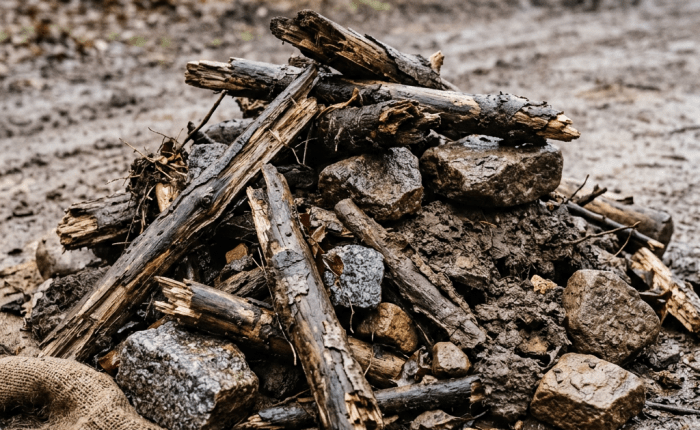
In the eighteenth chapter of 1 Kings, we find one of the most dramatic confrontations in sacred history. The prophet Elijah stands on the heights of Mount Carmel, facing a nation paralyzed by indecision and a land parched by a three-year drought. While the story is often remembered for the fire that eventually falls from heaven, the true power of the narrative lies in what happens just before the miracle. Before the lightning strikes, there is a quiet, manual labor of gathering ruins.
We often live under the modern myth of the “clean start.” We are told that if we want to build something meaningful—a career, a relationship, or a spiritual life—we must first clear the site, haul away the debris, and order fresh, polished materials. We treat our past failures like hazardous waste, believing that God can only build upon a foundation that has been professionally sanitized.
However, Elijah’s actions on that mountain offer a radical, counter-cultural alternative. He suggests that the most powerful movements of God do not happen on brand-new, sterile platforms, but upon “Wet and Broken Pieces.” This is a theology not of the pristine, but of the restored.
The Anatomy of the Ruin
To understand the miracle of the fire, we must first understand the tragedy of the drought. For three years, Israel had been a land of dust. The economy was shattered, the livestock were dying, and the people were spiritually “limping” between two opinions. They were fragmented. They wanted the benefits of God’s covenant while flirting with the convenience of Baal’s culture.
When Elijah finally confronts them, he doesn’t start with a sermon or a miracle. He starts with a site inspection. He finds an altar of the Lord that had been “abandoned.”
Notice that the text doesn’t say the altar was destroyed by an invading army. It says it was abandoned. This is the quietest kind of tragedy. It’s the prayer life that slowly gathered dust. It’s the integrity that eroded one small compromise at a time. It’s the “used-to-be” version of ourselves that we stopped tending to because it became too painful to look at. We think our biggest problem is the “drought” (the external crisis, the lack of resources, the broken world), but Elijah shows us that the real crisis is the internal ruin—the abandoned place where we used to meet with God.
Healing the Stones (Rāpā’)
When Elijah finally moves to act, he issues a simple command: “Come here to me.” As the people gather, he begins the work of reconstruction. But he doesn’t go to a quarry to find new stones. He reaches into the dirt and pulls out the old ones.
In Hebrew, the word for “repaired” in this passage is rāpā’. It is the same word used throughout the Old Testament for “healing.” In Elijah’s hands, masonry became medicine. By putting the broken pieces of the altar back together, he was healing the spiritual identity of the nation.
This is a profound message for anyone who feels that their history has disqualified them from their future. We often spend our lives trying to outrun our “broken pieces.” We try to hide the cracks in our character or the fragments of our failed attempts. But God is a Master of the “Gathering.” He is the Potter who takes the marred clay and reshapes it. He is the Savior who tells the disciples to gather the fragments of bread after the miracle so that “nothing is wasted.”
If you feel like a collection of fragments today, know this: God isn’t looking for a “new” version of you that has no scars. He wants the version of you that is currently sitting in the dirt. He wants to rāpā’—to heal—the altar you abandoned. Your history isn’t something God works despite; it is often the very material He uses to build the structure for His glory.
The Mystery of the Wet Pieces
Once the structure is built, the narrative takes a turn toward the absurd. Elijah doesn’t just lay the sacrifice; he douses it. In a time of extreme drought, water was the most precious commodity on earth. Yet, Elijah orders twelve large jars of it to be poured over the altar.
He makes the “broken pieces” wet. He saturates the wood. He fills the trench. He makes the situation humanly impossible.
Why? Because we often believe that we have to be “dry” to be used by God. We think we need to have our emotions processed, our finances in order, and our “act together” before the fire of God can fall on us. We wait until the dampness of our depression or the “wetness” of our tears has evaporated before we dare to step toward the altar.
But Elijah presents God with a soaking wet mess. He shows us that the “dampness” of our lives—the tears of our grief, the sweat of our struggle, the weight of our exhaustion—does not prevent the fire of God. In fact, the water serves a holy purpose: it proves that when the breakthrough finally comes, it wasn’t sparked by human effort. The “wetness” of your current struggle is simply the backdrop for the unmistakable nature of God’s response.
When the Stones Burn
The climax of the story is one of the most stunning displays of power in the biblical canon. Fire falls from heaven. But pay close attention to what the fire consumes. The text says it burned up the sacrifice, the wood, the stones, the soil, and the water.
In the natural world, fire burns what is flammable. It consumes wood and meat. But it does not consume stone. It does not thrive in water.
This is the “Theology of the Consuming Fire.” When God enters a situation of brokenness, He doesn’t just perform a cosmetic fix. He transforms the very nature of the materials. There are parts of our lives that feel like “stones”—cold, hard, unresponsive areas where we’ve become cynical or numb. We assume these parts of us are just dead weight we have to carry.
But the fire of Carmel proves that God’s presence is intense enough to transform even the most saturated, “stony” parts of our story. The fire did not just dry the water; it overwhelmed it. It did not just blacken the stones; it encompassed them. God’s grace is a force that absorbs our sorrows and shapes our hardest experiences into a testimony of His light. He leaves nothing of the old ruin behind, transforming the “broken pieces” into a site of radiant purpose.
From Ruin to Restoration
The narrative concludes with the people falling on their faces. The “brokenness” has moved from the altar to the people. This is the goal of all spiritual restoration: that we would move from the state of being “broken and abandoned” to being “broken and surrendered.”
The people who were “limping” in verse 21 are now “prostrate” in verse 39. Their fragmentation has been healed by a single, unified vision of who God is.
If you find yourself standing in a drought today, looking at the abandoned altars of your life, take heart. You do not need to find a new quarry. You do not need to hide your tears or wait for your spirit to dry out.
Gather your stones. Lay them out before Him. Pour out the “water” of your current reality—no matter how messy or “impossible” it feels. We serve a God who isn’t intimidated by a soaking wet mess. He is the God of the fragments. He is the God who heals the ruins. And He is waiting to fall as fire upon your wet and broken pieces.


