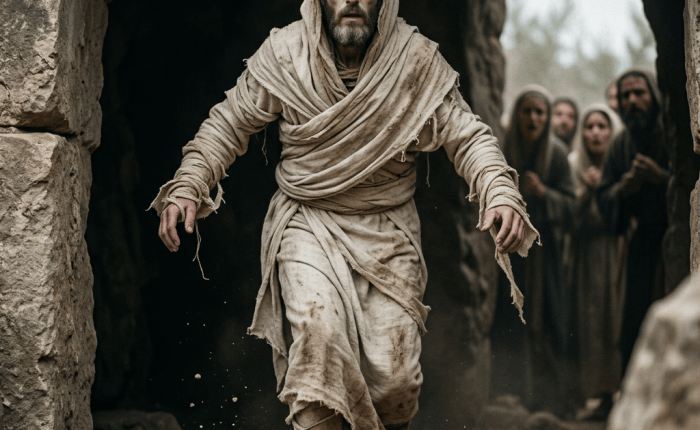
Bad Growth: Closing the Church Revolving Door

Bad Growth: Closing the Church Revolving Door

There is a distinct, intoxicating energy that accompanies a new season of leadership in the local church. When fresh leaders step into roles of influence, they arrive armed with zeal, modern strategies, and an undeniable hunger to see the sanctuary filled. For a leader who has not yet weathered the shifting seasons of ministry, the solution to a quiet sanctuary seems simple: market more aggressively, design trendier programs, craft wittier social media hooks, and adapt the church’s public facing profile to mirror the popular culture.

To these eager hearts, a full pew is the ultimate sign of success. But to those who have spent decades in the trenches of pastoral ministry, a crowded room can sometimes be a beautiful illusion masking a silent crisis.

Having served as a faith leader for sixteen years, I have watched the numerical tide of the church roll in and out. I have taken the helm of a congregation when only seventeen faithful souls sat in the pews, and I have felt the thrill of watching that community swell to over one hundred active participants. I have also navigated the painful, disorienting contraction of the post-COVID-19 era, watching our numbers settle back down to forty or sixty. Now, as the tide begins to rise once more, I find myself standing at a familiar and critical crossroads.

Our new leaders, motivated by a genuine desire to reach the lost, want to launch campaigns to attract the masses. They want to fill the pews. What they do not yet understand, and what only years of tear-soaked prayers and empty seats can teach you, is that there is a fundamental difference between growth and good growth.

If we build a church on the foundation of witty offers, entertainment, and worldly hooks, we will inevitably build a church of consumers rather than disciples. And in doing so, we leave the revolving door of church membership wide open.

The Illusion of the “Rocky Soil” (Understanding Bad Growth)

In His wisdom, Jesus diagnosed this pastoral dilemma long before modern church marketing existed. In the Parable of the Sower, He spoke of seed that fell on rocky ground: “Some fell on rocky places, where it did not have much soil. It sprang up quickly, because the soil was shallow. But when the sun rose, the plants were scorched, and they withered because they had no root” (Matthew 13:5-6).

Notice the diagnostic marker of bad growth: it sprang up quickly.

To the untrained eye, the rapid green sprouts on the rocky soil look like a revival. It looks like success. But because there is no depth, the growth is unsustainable. In the context of the local church, “bad growth” is numerical expansion that is decoupled from spiritual depth and sincere conversion. It is the gathering of a crowd under false pretenses.

When we entice people into the house of God using the same bait the world uses to lure them into theaters, concert halls, and shopping malls, we set a dangerous precedent. We establish a contract with the attendee: “If you come here, we promise to keep you entertained, comfortable, and socially engaged.” The problem with this contract is that the church can never truly compete with the world on the world’s terms. More importantly, when you win people to something, you must keep them by that very thing. If they are attracted by a witty marketing campaign or a high-energy program, they will remain only as long as you can hold their attention. The moment the program loses its novelty, or a more entertaining option opens down the street, they will slip out the back door as quickly as they entered the front. This is the origin of the revolving door. It is exhausting, spiritually depleting, and ultimately builds an audience, not a kingdom institution.

The Wisdom of the Forty-Year Mentor

Years ago, my pastor and mentor, a man who had spent over forty years guiding souls through the complex wilderness of local ministry, handed me a piece of wisdom that forever altered my approach to the pulpit. Observing my youthful frustration with fluctuating numbers, he sat me down and said:

“Son, all growth is not good growth. Some growth is rapid and unsustainable, while other growth is too slow and low. What you want is steady, consistent growth that creates a strong church. You shouldn’t aim for a big church. What you want is to pastor a strong church.”

These words sounded almost counterintuitive to a young pastor eager to make an impact. We live in a culture that equates bigger with better and quantity with quality. But my mentor understood a truth that protects a pastor’s soul: a big church can be incredibly weak, but a strong church will always be exactly as large as God needs it to be to accomplish His purposes.

A weak, large church is a crowd of spectators. A strong, healthy church is a community of contributors.

When we focus solely on filling the pews, we prioritize attendance over adherence. We value heads over hearts. This dynamic produces a passive congregation that expects to be served rather than to serve. They do not immerse themselves in the community; they do not carry one another’s burdens; they do not make sacrifices to advance the Kingdom of God. When a crisis hits—whether it is a global pandemic, a cultural shift, or a personal trial—the weak church crumbles because its members are consumers, not covenant partners.

Conversely, a strong church possesses spiritual infrastructure. It is comprised of individuals who have deep roots in Christ and deep cords of covenantal relationship with one another. When the storms of life or culture beat against a strong church, it stands firm because it is anchored on the Rock, not on the shifting sands of entertainment and consumer preference.

Comparing the Two Paradigms

To help our eager new leaders understand this shift, we must clearly contrast the two approaches to church life. The attractional paradigm, which drives “bad growth,” centers its primary goals on numerical expansion by simply filling the pews. Its methods rely heavily on witty hooks, popular culture, and entertainment, sending an underlying message of “look what we can do for you.” This positions the attendee as a mere consumer or spectator, resulting in low sustainability because it requires constant novelty to retain people. When a crisis inevitably hits, this model suffers high attrition, offense, and departure because there are no deep roots.

In stark contrast, the discipleship paradigm, which yields “good growth,” focuses on spiritual maturity, forming Christ in people. It utilizes the time-tested methods of Gospel proclamation, authentic community, and sacrificial service, offering the challenging invitation to “come, die to yourself, and follow Christ.” Here, the attendee is a disciple and an active contributor. The sustainability of this model is exceptionally high because it is rooted in eternal truth and deep relationship. When crises arrive, this community responds with resilience, mutual support, and a deeper commitment to one another and to God.

Redirecting the Zeal: How to Channel Eager Leadership

How do we speak to this new generation of leaders without quenching their spirit? We do not tell them to stop inviting people. We do not tell them to hate growth. Instead, we call them up to a higher, more demanding standard of growth. We must teach them to channel their promotional energy away from “attraction” and toward “immersion.”

Shift the Invitation from “Come and See” to “Come and Die”

Dietrich Bonhoeffer famously wrote in The Cost of Discipleship, “When Christ calls a man, he bids him come and die.” The gospel is not a product to be marketed with clever slogans; it is a counter-cultural call to surrender. When we invite people to church, we must be honest about what we are inviting them to. We are inviting them to a family where they will be expected to love, forgive, serve, give, and grow. Paradoxically, people are deeply hungry for a call to sacrifice. While worldly hooks might get people through the doors for a week, a high and holy call to discipleship is what makes them stay for a lifetime.

Measure What Matters

If we only celebrate Sunday morning attendance, our leaders will naturally focus all their energy on Sunday morning attendance. We must change our metrics of success.

If we want to gauge true, kingdom-building growth, we must look to the waters of baptism. Real church growth should be measured by how often we wet the baptismal pool. A dry baptistery in a crowded church is a profound warning sign; it tells us we may be collecting spectators, but we are not cultivating converts. When we celebrate the wetting of the baptismal pool, we are celebrating death to self, resurrection in Christ, and the public covenant of a soul surrendered to God. That is a metric of spiritual life, not just physical attendance.

In addition to this primary mark of discipleship, we must expand our focus to celebrate other vital indicators of a healthy community. We must look at how many people are stepping out of the passive pews and into small, intimate discipleship groups where true, life-on-life ministry happens. We must measure our impact by how many members are actively serving our local community outside the church walls. Ultimately, true success is found in the stories of reconciled marriages, broken addictions, and quiet acts of generosity, as well as the quiet, steady spiritual fruit that outlasts any loud, temporary numerical spikes. When our leaders see that the pastor values depth over height, they will begin to align their strategies to cultivate deep roots.

Closing the Door

The revolving door of church membership is a tragedy that quietly breaks the hearts of pastors and exhausts the souls of faithful volunteers. It is a symptom of a church that has mastered the art of introduction but failed at the art of integration.

To my beloved, zealous, and visionary new leaders: I share your hunger to see our church grow. I want our seats filled, our hallways buzzing with life, and our impact felt across our city. But I love you, and I love the flock of God, too much to give you a church built on sand.

Let us not settle for the cheap thrill of a rapid, shallow crowd. Let us commit to the steady, holy, and beautiful work of building a strong church. Let us sow seed deep into the soil of sincere repentance, authentic fellowship, and passionate devotion to Jesus Christ. When we do this, the growth we experience will not be a fleeting wave that leaves us empty in the next season, but a constant, unstoppable tide that closes the revolving door and builds a house that will stand for eternity.

From Fear to Favor

From Fear to Favor

We live in a culture caught in a strange, polarized paradox. On one hand, we are in a perpetual state of trembling. We lie awake at night, anxious about the daily news cycle, paralyzed by financial instability, or terrified of failing the people we love. We are hypersensitive to every shift in our circumstances. Yet, on the other hand, when it comes to the Sovereign Creator of the universe, our world exhibits a profound, casual apathy. We have domesticated God, reducing Him to a harmless, cosmic bystander. We tremble at everything in the world, yet we have lost the capacity to tremble before Him.

This lack of holy fear is perhaps the greatest spiritual crisis of our time. We cannot experience the weight of God’s favor if we have never felt the weight of His holiness.

It is this reality that has created a profound holy tension. How do we transition from the cold, irreverent apathy of our culture to a genuine, trembling fear of the Lord—and from there, into His intimate favor? How do we move from treating God as irrelevant to trembling at His majesty to ultimately resting in His love?

The answer to this modern crisis is beautifully captured in a single, remarkable verse from the Old Testament prophet Zephaniah:

“The Lord your God is with you, the Mighty Warrior who saves. He will take great delight in you; no longer will he rebuke you, but will rejoice over you with singing.” — Zephaniah 3:17 (NIV)

To fully appreciate the depth of this promise, we must look at the historical backdrop of the small, overlooked prophetic book that houses it.

The Danger of Complacency

To understand the beauty of God’s favor in Zephaniah 3:17, we have to understand the bleak landscape of the chapters that precede it. Zephaniah prophesied during the reign of King Josiah in the late 7th century BC. While Josiah was a good king who attempted religious reforms, the nation of Judah was spiritually decaying. Decades of wicked leadership under Manasseh and Amon had left the people steeped in idolatry, moral compromise, and worst of all, spiritual apathy.

The people of Zephaniah’s day weren’t necessarily trembling in fear of God; they simply did not think about Him. In Zephaniah 1:12, the prophet warns that God will search Jerusalem with lamps to punish those “who are complacent, who say to themselves, ‘The Lord will do nothing, either good or bad.'” They had lost their holy fear. They believed God was passive, harmless, and irrelevant to their daily lives.

Because of this deep irreverence, Zephaniah’s opening chapters are some of the most terrifying in the prophets. He warns of the impending “Day of the Lord”—a day of wrath, ruin, distress, and darkness. God is presented as a sovereign Judge coming to sweep away complacency. The message was clear: you cannot ignore the holy Creator forever.

But then, in chapter 3, a dramatic, breathtaking pivot occurs. The tone shifts radically from global judgment to intimate restoration. To experience this restoration in our own lives, there are three vital shifts we must make: Recognize God’s magnitude, receive God’s favor, and rest in God’s sovereignty and song. 

Recognize God’s Magnitude

Zephaniah 3:17 begins with a striking declaration:

“The Lord your God is with you, the Mighty Warrior who saves.”

To receive God’s favor, we must first recognize His magnitude. We must repent of our casual, low-view of God. Zephaniah reminds us that He is Yahweh, the Gibbor—the Mighty Warrior. He is the Creator of the stars, the Commander of angel armies, and the absolute authority over all creation. He is terrifyingly powerful.

Our initial human reaction to such power, when we finally wake up to it, is to tremble. When Moses encountered God on Mt. Sinai, the people shook with fear. When Isaiah saw the Lord high and exalted, he cried out, “Woe to me! I am ruined!” However, notice the incredible modifier Zephaniah attaches to this Warrior: He is the Mighty Warrior who saves.

The very power that should make us tremble is the very power He deploys to rescue us. The transition from fear to favor begins when we realize that God’s omnipotence is not weaponized against us, but mobilized for us. We do not stop fearing His power; rather, our holy fear is transformed into holy safety because we know the Warrior is on our side.

Receive God’s Favor

Zephaniah continues:

“…He will take great delight in you; no longer will he rebuke you…”

Why do so many of us struggle to live in God’s favor? Once we wake up to His holiness, we often swing to the opposite extreme. Instead of being apathetic, we become terrified that we are permanently disappointing Him. We assume His default posture toward us is a frowning brow, a wagging finger, and an impending rebuke.

We try to earn His favor through spiritual performance—praying longer, serving harder, acting better—hoping we can quiet His frustration. But favor is never earned; it is received.

The Hebrew word for “delight” used here suggests a brightness of face, a joyful pleasure. Zephaniah declares that under the banner of His grace, the rebuke has been silenced. Your past mistakes, your current shortcomings, and your lingering struggles do not disqualify you from His love.

When God looks at you, He does not see a project to be tolerated; He sees a child to be celebrated. Transitioning to favor means giving up the exhausting struggle of trying to perform for a Judge, and instead, resting in the unconditional delight of a Father.

Rest in God’s Sovereignty and Song

The verse concludes with one of the most tender, mystifying pictures of God in all of Scripture:

“…but will rejoice over you with singing.”

Think of the sheer scale of this imagery. The same God whose voice shatters the cedars of Lebanon, the God who spoke light into existence and commands the oceans where to stop, is described as singing over you.

Our earthly fears are incredibly noisy. They fill our minds with racket sounds of “what-ifs,” accusations, and anxieties. They tell us we are not enough, we won’t survive, and we are entirely on our own.

How do we drown out the screaming noise of our worldly fears? We must learn to tune our hearts to the frequency of God’s song.

The English Standard Version (ESV) beautifully renders the phrase “no longer will he rebuke you” as “he will quiet you by his love”—a comforting truth also highlighted in the NKJV as “He will quiet you with His love.” There is a holy silence that comes when we stop trying to defend ourselves, stop trying to secure our own futures, and simply let His love soothe our anxious minds. And in that quiet space, we begin to hear His melody. It is a song of redemption, a song of safety, and a song of absolute victory.

Living in favor means you let His song define your identity. When the world tells you to panic, you listen to His rhythm. When your heart tells you to hide, you step into the sound of his voice. The only sound that can calm your fears.

The Bridge From Fear to Favor

How does this ancient shift from judgment to rejoicing bridge to our lives today? The answer is found in the cross of Jesus Christ.

On the cross, the ultimate “Day of the Lord” took place. The terrifying judgment and righteous wrath that we deserved for our rebellion and our apathetic complacency was entirely absorbed by Jesus. The barrier of our guilt was demolished. Because of Christ, the holy God who stood against our sin now stands with us in grace. Jesus is the bridge that carries us from the trembling fear of judgment into the Father’s unmerited favor.

The journey from fear to favor is not a physical journey of distance; it is a spiritual journey of intimacy. You do not have to run away from the holiness of God to find His goodness. They meet perfectly at the cross.

Today, whatever has you trembling, remember this: the Mighty Warrior is with you. The Judge has silenced His rebuke because of Jesus. The Father is looking at you with deep, unshakeable delight.

Stop listening to the loud, frantic voices of your worldly fears, shake off the spiritual apathy of this age, and let yourself be quieted by His love. The Sovereign of the universe is singing over you. It is time to step into His favor, rest in His grace, and sing along.

The Filthy Priest

The Filthy Priest

In the quiet corners of our conscience, most of us carry a persistent, nagging fear: the fear of being found out. We spend a lifetime curated for the public eye, carefully laundering our reputations and stitching together a persona that suggests we are “good people.” We use our professional achievements, our moral stances, and even our religious activities as a sort of spiritual detergent. But in the late hours of the night, when the curated self drops its guard, we know the truth. We know about the “filthy garments” tucked away in the closets of our hearts.

The third chapter of the Book of Zechariah offers us one of the most provocative and startling scenes in all of literature. It is a courtroom drama that strips away the veneer of human effort and forces us to look at how a holy God interacts with a broken humanity. It is a story about a man named Joshua, a High Priest who was supposed to be the pinnacle of purity, but who stood in the presence of the Divine covered in human waste. In this narrative, we find the architecture of redemptive grace. Here we see a grace that is as scandalous as it is beautiful.

What is Grace?

To understand the weight of Zechariah’s vision, we must first grapple with the definition of grace. In our modern vernacular, we often use “grace” as a synonym for “niceness” or “politeness.” But in the courtroom of God, grace is a legal term. It is best understood in contrast to justice and mercy.

Justice is the baseline of the universe; it is getting exactly what you deserve. It is the law of sowing and reaping. The scale is balanced perfectly. If you commit a crime, justice demands the same weight in penalty. It is the objective standard by which the universe maintains its moral order.

Mercy is the suspension of that penalty. It is the judge looking at the guilty and deciding not to give them what they deserve. Mercy is reducing the weight or eliminating it altogether. It is a stay of execution; it is the pardon that stops the hand of judgment.

Grace, however, is the most radical of the three. Grace is getting exactly what you do not deserve. It is not merely the absence of punishment (mercy); it is the presence of unearned favor. Logically, grace is an “unmerited intervention.” It is a gift given to a recipient who has not only failed to earn it but has actively earned its opposite. In the vision of Zechariah, we see this logic play out in real-time, moving beyond abstract definitions into a gritty, lived reality.

The Case Against Us

Zechariah 3:1 opens with a scene of terrifying clarity: “Then he showed me Joshua the high priest standing before the angel of the Lord, and Satan standing at his right hand to accuse him.”

The setting is a courtroom. Joshua the High Priest represents more than himself; he is the corporate representative of the people of Israel. He is the one who is supposed to offer sacrifices for the sins of the nation. He is the “cleanest” man available. Yet, the text tells us in verse 3 that Joshua was clothed in “filthy garments.”

The Hebrew word for “filthy” used here is tso’im. It is not the word for common dust or the sweat of a day’s work. It is an excremental term. It refers to that which is most foul, most repulsive, and most shameful. Imagine the scene: the representative of God’s people standing in the throne room of heaven, and he literally smells of death and decay. The very person meant to bridge the gap between man and God is the one who most embodies the gap.

Satan, the Accuser, stands at his right hand. We often think of Satan as a liar, but in this courtroom, he doesn’t need to lie. He only needs to tell the truth. He points at the waste on Joshua’s robes. He points at the stains. He is essentially saying to God, “How can You call this man yours? Look at him. He is a walking contradiction of Your holiness. If You are a just God, You must consume him.”

And Joshua? Joshua is silent. There is no defense to be made. When our sin is laid bare before the blinding light of God’s holiness, “being a good person” is revealed as a bankrupt argument. We, like Joshua, have no opening statement because our guilt is not a matter of debate—it is a matter of record.

God Interrupts

What happens next is the essence of the Gospel. Before the Accuser can finish his closing argument, the Judge speaks. But He doesn’t speak to Joshua; He speaks to the Accuser.

“The Lord rebuke you, O Satan! The Lord who has chosen Jerusalem rebuke you! Is not this a brand plucked from the fire?” (v. 2)

Notice that the Lord does not argue that Joshua is clean. He does not offer a counterargument to the filth. Instead, He points to His own choice. The defense for the sinner is not the sinner’s character, but the Savior’s election. God’s choice is the shield that stops the Accuser’s darts.

God describes Joshua as a “brand plucked from the fire.” Think of a charred stick in a campfire. The stick is already burning. It is black, smoking, and on the verge of turning to ash. It has no power to jump out of the fire. It has no agency, no “free will” that can overcome the laws of combustion. If it is saved, it is because a hand reached into the heat, suffered the burn, and snatched it out. This is the first movement of grace: God reaches into the judgment we were already experiencing and claims us as His own based on nothing but His own sovereign will.

The Great Exchange

The vision moves from the verbal rebuke to a physical transformation. The Angel of the Lord commands those standing by to “Take off the filthy clothes from him.” God doesn’t just “overlook” the filth. He removes it. He takes the source of our shame and puts it away “as far as the east is from the west.” But grace does not leave us naked.

The Angel says to Joshua, “Behold, I have taken your iniquity away from you, and I will clothe you with pure vestments.”This is the scandal. Joshua did not wash those clothes. He did not go home and scrub until his knuckles bled. He stood still, in all his foulness, and was passive while the King’s attendants draped him in “pure vestments”—robes of state, garments of honor.

This is the great exchange: our rags for His riches. Our filth for His finery. The text even records that Zechariah, watching this, gets swept up in the moment and shouts, “Let them put a clean turban on his head!” (v. 5). The transformation is complete. The man who was a “brand” in the fire is now a Priest in the palace. He is restored to a position of dignity that he never deserved, wearing clothes he never earned.

Removed in a Single Day

The narrative concludes by looking forward. God speaks of a “Servant,” a “Branch,” and a “Stone” with seven eyes. He makes a startling promise: “I will remove the iniquity of this land in a single day” (v. 9).

For the original audience, this was a prophecy. For us, it is history.

How can a holy God take a filthy priest and just… change his clothes? How can He be just and still justify the ungodly? The answer is that the “filth” had to go somewhere. The fire that was consuming the “brand” had to be satisfied. Law and Justice cannot simply be ignored; they must be fulfilled.

Centuries after Zechariah’s vision, the True and Better Joshua—Jesus—stood in another courtroom. Unlike the Joshua of Zechariah 3, Jesus was actually innocent. He was the only human being to ever wear “pure vestments” of perfect, unspotted righteousness. But on a Friday outside of Jerusalem, the roles were reversed in a cosmic transaction.

On the Cross, Jesus Christ was “clothed” in our filthy garments. He took upon Himself the tso’im of our lives—our vomit, our waste, our betrayals, our secret shames. He became the “brand” that was not plucked from the fire. He stayed in the fire of God’s justice until the fire had nothing left to burn. He was consumed so that we could be claimed.

Because of that “single day” on Calvary, we are gifted eternal grace. When we stand before the Lord today, the Accuser may still point to our stains, but the Judge points to the Cross. He points to the “pure vestments” of Christ that now cover our lives.

Wearing the Robes

The message of Zechariah 3 doesn’t end with us just being “forgiven.” It ends with an invitation to “walk in My ways.” This is where many of us get grace wrong. We think the “walking” is how we get the “vestments.” But in the biblical economy, the order is everything. We do not walk in His ways to earn the clothes; we walk in His ways because we have the clothes.

The life of the believer is not a struggle to become clean; it is the joyful response of someone who has already been washed. It is the freedom of the “Filthy Priest” who realized that his filth didn’t have the final word—God’s grace did. We no longer walk in fear of being found out, because we have already been found, plucked, and clothed.

As we navigate our own “Lo-debars” and our own courtrooms of shame, may we hear the rebuke of the Lord against our Accuser. May we feel the weight of the “pure vestments” on our shoulders—a weight that is not heavy, but comforting. And may we live with the staggering confidence that we are no longer defined by the fire we were in, but by the Hand that plucked us out.

About Those Plans

About Those Plans

We treat Jeremiah 29:11 like a spiritual Hallmark card. We cross-stitch it onto pillows, print it on graduation announcements, and whisper it to ourselves when we’re hoping for a promotion, a spouse, or a parking spot. “For I know the plans I have for you,” declares the Lord, “plans to prosper you and not to harm you, plans to give you a hope and a future.”

In our culture, we read this verse as a promise of a quick exit from our problems. We see it as a divine guarantee that the struggle we are currently in is merely a brief detour on the way to our “best life.” But if you pull back the curtain and look at the context in which the message was sent, the words become far less comfortable and infinitely more powerful.

To truly understand the power in Jeremiah 29:11, we have to stop reading it through the lens of our American dream and start reading it through the lens of a Babylonian nightmare.

The Disorientation: Life in the Silence

In 597 B.C., the world as the Israelites knew it came to an end. This wasn’t just a “rough patch” or a temporary setback; it was a state of total, soul-crushing disorientation. Nebuchadnezzar, the iron-fisted king of Babylon, had marched the “best and brightest” of Jerusalem—the craftsmen, the priests, the young nobles like Daniel, and the royal family—700 miles away from everything they knew.

Imagine the trauma. They weren’t just moved; they were deported. They were forced to walk away from the Temple—” the house of God”—leaving it a smoking ruin. For the Israelite mind, this was a theological crisis even more than a political one. They believed that as long as they had the Temple, they had God. With the Temple gone, they were forced to ask the terrifying question: Is God still God if His house is burned down?

They were in exile. Their names were changed to honor Babylonian deities, their language was suppressed, and their God seemed suddenly, deafeningly silent. When you are sitting in the rubble of your own life, your “map” for how things were supposed to go isn’t just lost; it’s been incinerated. You feel like you’re in a “waiting room” with no exit, wondering if God has forgotten your name or lost your address.

The Discourse: The Danger of the Shortcut

In the midst of this void of hope, two voices emerged, creating a spiritual tug-of-war. In Jeremiah 28, we meet a prophet named Hananiah. He was the kind of preacher everyone wanted to hear. He stood in the temple and declared a bold, populist message: “Within two years, the Lord will break the yoke of Babylon! He will bring back the vessels of the house of the Lord and all the exiles!”

We all love a Hananiah. We want the “two-year” prophecy. We want the shortcut, the quick fix, the immediate rescue. Hananiah’s message was intoxicating because it required no change from the people; it only required them to wait for a magic wand to be waved. It was a theology of comfort that ignored the reality of God’s discipline.

But Jeremiah stood up and gave them a “seventy-year” reality check. He wore a wooden yoke around his neck to symbolize the coming years of service to Babylon. When Hananiah snapped that wooden yoke off Jeremiah’s neck, God responded with a terrifying word: “You have broken a wooden yoke, but in its place, you will get a yoke of iron.”

Jeremiah’s letter in Chapter 29 dropped like a lead weight. He essentially told the exiles: Hananiah is lying to you. Your best life isn’t coming in two years. You aren’t leaving. In fact, most of you reading this letter will die in Babylon. So, unpack your bags. Build houses. Plant gardens. Marry off your children. Seek the peace and prosperity (the Shalom) of the city where I have carried you. In other words, get comfortable, you are going to be a foreigner for a while. 

This is the “Discourse” we all face today: Do we listen to the voice that promises an easy exit, or the Voice that calls us to find God in the middle of the mess?

The Reorientation: The Compass of the Plan

This is the gritty soil in which Jeremiah 29:11 was planted. It wasn’t written to people walking across a stage in a cap and gown; it was written to people who were told they were going to grow old and die in a foreign land.

When God says, “For I know the plans I have for you,” He is performing a massive reorientation of our gaze. He is shifting our perspective from the chronos (our timing) to the kairos (His appointed season).

  • Our Expectation: Change my location (Get me out of this mess).
  • God’s Strategy: Change my heart (Make me whole in the mess).

God’s “plan” is often a transformation project, not a rescue mission. The Hebrew word used for “prosper” is Shalom. In our English Bibles, we often think of prosperity as financial or situational success. But Shalom means wholeness, completeness, and being in a right relationship with God and neighbor. God wasn’t promising the exiles would recover their loss from the Babylonians; He was promising that He would make them whole again.

He is the Navigator who knows the map even when we’ve lost the trail. Reorientation means trusting that God is not lost, even when we are.

The Reformation: Beauty from the Burn

Why the seventy years? Why couldn’t God just bring them home after two? Because God was doing a work of Reformation. Before the exile, Israel was a nation addicted to “Yahweh Plus.” They worshipped God, plus Baal. They held religious festivals, plus they oppressed the poor. They relied on a building, the Temple, as a “lucky charm” rather than relying on the Builder. They had become spiritual hoarders, filling their hearts with idols.

God used the rubble of Babylon to strip away the dross. He was a Blacksmith using the heat to reform the metal. In exile, several things happened that changed Israel forever:

  1. Idolatry was Cured: After the exile, the physical worship of carved idols virtually disappeared from Jewish life. The “overdose” of Babylonian paganism finally made them sick of it.
  2. The Word was Elevated: Without a Temple for sacrifice, the people turned to the Scriptures. The “Synagogue” was born in the exile. They became the “People of the Book.”
  3. The Presence was Personal: They learned that God wasn’t a “landlord” in Jerusalem; He was a “Little Sanctuary” (Ezekiel 11:16) that traveled with them in the dirt of Babylon.

God used the fire to “re-form” them into a people who sought Him with “all their heart” (Jer. 29:13). The rubble wasn’t the end of their story; it was the raw material for their new beginning.

The Gospel in the Exile

Ultimately, the story of Jeremiah, Hananiah, and the exiles points us toward a greater Reformer. Jesus Christ didn’t just send us a letter from the safety of Heaven telling us to “hang in there.” He entered our “Babylon.”

The Gospel tells us that Jesus left His “homeland” of perfect glory and became an exile. He was “cast out” of the city. He was stripped of His identity and mocked in a foreign language. On the Cross, Jesus took the “fire” of judgment that our sins deserved. He endured the ultimate “Disorientation”—the separation from the Father—so that we would never have to.

Because of the Cross, the fires we walk through today are never for our destruction; they are only for our purification. Jesus is our “Expected End.” He is the “Future and the Hope” that Jeremiah 29:11 pointed toward.

The “plan” of God for your life isn’t a better job, a bigger house, or an easier path. The plan of God for your life is Jesus. He is the one who reconciles us, reforms us, and brings us home—even if “home” is found in the heart of God while we are still sitting in the rubble of this world.

Trusting the Reformer

If you find yourself sitting in the rubble today, feeling the heat of the fire and the weight of the wait, do not look for the nearest exit. Do not listen to the Hananiahs who promise you a shortcut that avoids the work of the soul.

Instead, look for the Reformer. He hasn’t lost the blueprint for your life. He is not confused by your crisis. He is doing His most profound work in the silence. He is reforming you from the inside out, turning your stone heart into a heart of flesh, and teaching you that Shalom is found in Him alone.

You are being reformed out of rubble. And in His hands, the wreckage is exactly where the masterpiece begins.

Wet and Broken Pieces

Wet and Broken Pieces

In the eighteenth chapter of 1 Kings, we find one of the most dramatic confrontations in sacred history. The prophet Elijah stands on the heights of Mount Carmel, facing a nation paralyzed by indecision and a land parched by a three-year drought. While the story is often remembered for the fire that eventually falls from heaven, the true power of the narrative lies in what happens just before the miracle. Before the lightning strikes, there is a quiet, manual labor of gathering ruins.

We often live under the modern myth of the “clean start.” We are told that if we want to build something meaningful—a career, a relationship, or a spiritual life—we must first clear the site, haul away the debris, and order fresh, polished materials. We treat our past failures like hazardous waste, believing that God can only build upon a foundation that has been professionally sanitized.

However, Elijah’s actions on that mountain offer a radical, counter-cultural alternative. He suggests that the most powerful movements of God do not happen on brand-new, sterile platforms, but upon “Wet and Broken Pieces.” This is a theology not of the pristine, but of the restored.

The Anatomy of the Ruin

To understand the miracle of the fire, we must first understand the tragedy of the drought. For three years, Israel had been a land of dust. The economy was shattered, the livestock were dying, and the people were spiritually “limping” between two opinions. They were fragmented. They wanted the benefits of God’s covenant while flirting with the convenience of Baal’s culture.

When Elijah finally confronts them, he doesn’t start with a sermon or a miracle. He starts with a site inspection. He finds an altar of the Lord that had been “abandoned.”

Notice that the text doesn’t say the altar was destroyed by an invading army. It says it was abandoned. This is the quietest kind of tragedy. It’s the prayer life that slowly gathered dust. It’s the integrity that eroded one small compromise at a time. It’s the “used-to-be” version of ourselves that we stopped tending to because it became too painful to look at. We think our biggest problem is the “drought” (the external crisis, the lack of resources, the broken world), but Elijah shows us that the real crisis is the internal ruin—the abandoned place where we used to meet with God.

Healing the Stones (Rāpā’)

When Elijah finally moves to act, he issues a simple command: “Come here to me.” As the people gather, he begins the work of reconstruction. But he doesn’t go to a quarry to find new stones. He reaches into the dirt and pulls out the old ones.

In Hebrew, the word for “repaired” in this passage is rāpā’. It is the same word used throughout the Old Testament for “healing.” In Elijah’s hands, masonry became medicine. By putting the broken pieces of the altar back together, he was healing the spiritual identity of the nation.

This is a profound message for anyone who feels that their history has disqualified them from their future. We often spend our lives trying to outrun our “broken pieces.” We try to hide the cracks in our character or the fragments of our failed attempts. But God is a Master of the “Gathering.” He is the Potter who takes the marred clay and reshapes it. He is the Savior who tells the disciples to gather the fragments of bread after the miracle so that “nothing is wasted.”

If you feel like a collection of fragments today, know this: God isn’t looking for a “new” version of you that has no scars. He wants the version of you that is currently sitting in the dirt. He wants to rāpā’—to heal—the altar you abandoned. Your history isn’t something God works despite; it is often the very material He uses to build the structure for His glory.

The Mystery of the Wet Pieces

Once the structure is built, the narrative takes a turn toward the absurd. Elijah doesn’t just lay the sacrifice; he douses it. In a time of extreme drought, water was the most precious commodity on earth. Yet, Elijah orders twelve large jars of it to be poured over the altar.

He makes the “broken pieces” wet. He saturates the wood. He fills the trench. He makes the situation humanly impossible.

Why? Because we often believe that we have to be “dry” to be used by God. We think we need to have our emotions processed, our finances in order, and our “act together” before the fire of God can fall on us. We wait until the dampness of our depression or the “wetness” of our tears has evaporated before we dare to step toward the altar.

But Elijah presents God with a soaking wet mess. He shows us that the “dampness” of our lives—the tears of our grief, the sweat of our struggle, the weight of our exhaustion—does not prevent the fire of God. In fact, the water serves a holy purpose: it proves that when the breakthrough finally comes, it wasn’t sparked by human effort. The “wetness” of your current struggle is simply the backdrop for the unmistakable nature of God’s response.

When the Stones Burn

The climax of the story is one of the most stunning displays of power in the biblical canon. Fire falls from heaven. But pay close attention to what the fire consumes. The text says it burned up the sacrifice, the wood, the stones, the soil, and the water.

In the natural world, fire burns what is flammable. It consumes wood and meat. But it does not consume stone. It does not thrive in water.

This is the “Theology of the Consuming Fire.” When God enters a situation of brokenness, He doesn’t just perform a cosmetic fix. He transforms the very nature of the materials. There are parts of our lives that feel like “stones”—cold, hard, unresponsive areas where we’ve become cynical or numb. We assume these parts of us are just dead weight we have to carry.

But the fire of Carmel proves that God’s presence is intense enough to transform even the most saturated, “stony” parts of our story. The fire did not just dry the water; it overwhelmed it. It did not just blacken the stones; it encompassed them. God’s grace is a force that absorbs our sorrows and shapes our hardest experiences into a testimony of His light. He leaves nothing of the old ruin behind, transforming the “broken pieces” into a site of radiant purpose.

From Ruin to Restoration

The narrative concludes with the people falling on their faces. The “brokenness” has moved from the altar to the people. This is the goal of all spiritual restoration: that we would move from the state of being “broken and abandoned” to being “broken and surrendered.”

The people who were “limping” in verse 21 are now “prostrate” in verse 39. Their fragmentation has been healed by a single, unified vision of who God is.

If you find yourself standing in a drought today, looking at the abandoned altars of your life, take heart. You do not need to find a new quarry. You do not need to hide your tears or wait for your spirit to dry out.

Gather your stones. Lay them out before Him. Pour out the “water” of your current reality—no matter how messy or “impossible” it feels. We serve a God who isn’t intimidated by a soaking wet mess. He is the God of the fragments. He is the God who heals the ruins. And He is waiting to fall as fire upon your wet and broken pieces.

Leaving the House of Bread

Leaving the House of Bread

The geography of the soul is often marked by contradictions. Perhaps none is more jarring than the opening of the Book of Ruth: “In the days when the judges ruled, there was a famine in the land.” The setting is Bethlehem—a name that literally translates to Beth-Lehem, the “House of Bread.”

It is a spiritual and existential crisis when the place meant for sustenance becomes a place of starvation. We find ourselves asking the same question Elimelech likely whispered to himself while staring at his parched fields: What do you do when the House of Bread is empty? This question is not merely an ancient one; it is a contemporary cry. It is the cry of the believer sitting in a dry church, the leader managing a failing ministry, and the family searching for stability in a culture that feels increasingly devoid of spiritual nutrients. To understand the road back home, we must first understand why the bread disappeared and why the shortcut to “greener pastures” is so dangerously seductive.

The Crisis of the Empty Shelf

In the biblical narrative, famine was rarely a mere meteorological anomaly; it was a spiritual diagnostic. Under the covenantal framework of the Old Testament, the rain was a gauge of the relationship between the Creator and His people. In Deuteronomy 28, God explicitly warned that if the hearts of the people turned away, the heavens would become like brass and the earth like iron.

During the era of the Judges, Israel was trapped in a chaotic cycle of disobedience, oppression, and half-hearted repentance. The “days when the judges ruled” were defined by a chilling phrase: “Everyone did what was right in his own eyes.” Moral decay had seeped into the soil of the nation, and the resulting famine was God’s megaphone. He didn’t hold back the rain to be cruel; He held it back to be corrective. He was inviting His people to realize that they were looking to the earth for what only Heaven could provide.

Enter Elimelech. His name ironically means “My God is King,” yet his actions suggested that his circumstances were his true sovereign. Faced with a “Bethlehem Famine,” Elimelech reached a breaking point. He was a leader, a husband, and a father. The pressure to provide was immense. But in his haste to escape the drought, he committed a fundamental error: he mistook a difficult season for a permanent sentence.

Many of us face this same “Empty Shelf” crisis. We experience a season of silence from God, or a period of lack in our community, and we assume the Baker has left the House. We forget that the House of Bread is still the House of Bread, even when the shelves are bare. The famine is often the “shaking” that precedes a greater visitation, a test to see if we will trust the Promise or follow our panic.

The Moabite Shortcut

Moab represents the land of “just enough.” Situated across the Jordan, it was a pagan nation known for its opposition to Israel—a place where the rules of the Covenant did not apply. For Elimelech, Moab offered a pragmatic solution to a theological problem. Moab had bread, but it lacked the Presence.

When we choose Moab, we are choosing preservation over providence. We are deciding that our survival is more important than our alignment with God’s will. Elimelech’s decision to move his family was a “Moabite shortcut”—an attempt to solve a spiritual problem with a geographic change. He sought to save his stomach at the risk of his soul.

The tragedy of the shortcut is that it rarely leads to the destination we intend. Elimelech went to Moab to live, but the text tells us he died there. His sons, Mahlon and Kilion, married Moabite women—blending their lineage with a culture that did not honor Yahweh—and within a decade, they too were in the grave. There is a profound spiritual law at work here: what we try to protect outside of God’s will, we eventually lose.

Leaving the path of righteousness to solve a problem of comfort is a high-interest loan that eventually comes due. As Naomi discovered, ten years in Moab stripped her of everything she had tried to protect. She didn’t just lose her husband and her sons; she lost her joy, her heritage, and her hope. Moral decay is progressive; it doesn’t just take what you have, it changes who you are. By the time Naomi looked toward home, she was a shadow of the woman who had left.

The Bitterness of the Far Country

The most poignant moment in the narrative occurs when Naomi returns to the gates of Bethlehem. The women of the city are stirred, asking, “Is this Naomi?” The name Naomi means “Pleasant” or “Sweet.” Her response reveals the depth of the decay: “Do not call me Naomi; call me Mara [Bitter], for the Almighty has dealt very bitterly with me. I went away full, and the Lord has brought me back empty.”

This is the psychological reality of the journey back from Moab. Ten years of compromise had turned sweetness into gall. Naomi’s bitterness was a reflection of her “emptiness.” She felt the weight of the “wasted years”—the decade spent in a land of silence, burial, and stagnation.

However, even in her bitterness, Naomi did something Elimelech failed to do: she acknowledged the Sovereignty of God. Even if she felt God was against her, she knew she had to get back to His territory. The road to restoration doesn’t always begin with a joyful song; sometimes it begins with a bitter, limping walk toward the only place where grace is known to dwell.

The Road to Restoration

The beauty of the narrative is that the road back to Bethlehem is never truly closed. Naomi’s restoration began when she stopped looking at her empty cupboards in Moab and started listening for a “rumor of grace.” She heard that “the Lord had come to the aid of his people by providing food for them.”

Restoration begins with a “hearing” and a “leaving.” To return to holiness, one must be willing to abandon the geography of compromise. You cannot walk toward your future while clinging to the habits, the associations, and the mindset of Moab. It requires a physical and spiritual uprooting—a confession that the world’s bread, however plentiful it may seem on the surface, cannot satisfy the deep, gnawing hunger for the Divine.

When Naomi and Ruth finally crested the hills of Bethlehem, they arrived at a providential moment: the beginning of the barley harvest. This timing is a testament to God’s hidden work. While Naomi was mourning in a foreign land, God was busy healing the soil of Bethlehem. While she was “empty,” God was filling the granaries.

The moment we turn our hearts back toward holiness, we find that God has already gone ahead of us. He does not wait for us to get our lives in order before He starts the harvest; He starts the harvest so that we have something to come home to. The “Process of Return” is not about earning your way back into God’s favor, but about repositioning yourself to receive what His grace has already produced.

The True Bread and the Greater Redeemer

This story serves as a shadow of a greater, more eternal reality. The story of Ruth and Naomi isn’t just about a widow finding food; it’s about a lineage being preserved for the salvation of the world. Through the loyalty of Ruth and the redemption offered by Boaz—the “Kinsman-Redeemer”—the “Empty House” is filled once more.

Boaz acts as a direct type of Christ. He is the one who has the right to redeem, the resources to redeem, and the will to redeem. He takes the “bitterness” of Naomi and the “foreignness” of Ruth and weaves them into the royal tapestry of Israel. Out of this return came Obed, the grandfather of David, and ultimately, the Messiah Himself.

Centuries after Naomi’s return, in that same Bethlehem, the True Bread of Life was born. He was laid in a manger—a feeding trough—signifying that He had come to end the famine of the human soul once and for all. Jesus Christ is the “Bread of Life” who came down from Heaven so that anyone who eats of Him will never hunger again.

Conclusion: An Invitation to the Table

If you find yourself in a season of famine, do not be deceived by the green pastures of Moab. If your “House of Bread” feels empty, do not assume the Spirit has departed. The drought is often a call to deeper prayer, a pruning that precedes a massive outpouring.

The road back home is paved with the grit of repentance and the hope of the harvest. Whether you have wandered for ten days or ten years, the gates of Bethlehem are open. The Redeemer is not looking for those who have never stumbled, but for those who are tired of the husks of Moab and are ready to sit at the Father’s table.

The Father is not just a provider of bread; He is the Bread itself. The road home may be long, and you may arrive feeling “empty” and “bitter,” but the harvest is ready. It is time to leave the fields of Moab and return to the House where you truly belong. The Baker is home, the ovens are warm, and there is a seat reserved just for you.

Thank God I Failed

Thank God I Failed

Embracing Failure as an Aspect of Faith

We are taught from a young age to strive for success and avoid failure at all costs. The word “failure” itself can conjure feelings of defeat, inadequacy, and disappointment. It’s a concept we dread, something we hide, and something we desperately try to prevent. Given this deeply ingrained instinct, the idea of being grateful for failure seems, at best, counter-intuitive. Yet, this is precisely the profound and often overlooked truth we must confront: failure is not adversarial to faith; rather, it is an integral aspect of faith itself.

The common perception is that if we have true faith, we will succeed. This perspective positions failure as an enemy, something that undermines our belief. If our prayers go unanswered, or our plans fall apart, it’s easy to feel as though our faith was misplaced or insufficient. However, this belief often stems from a misunderstanding of what faith is. Faith is not a cosmic vending machine that dispenses our desired outcome in exchange for belief. Instead, failure doesn’t invalidate faith; it simply means the story is taking a different, unexpected turn.

How Failure Informs and Strengthens Faith

Instead of weakening our faith, failure can actually be a crucial part of its development and deepening. Faith, like a muscle, grows stronger under strain, not in comfort. When we face setbacks, our faith is tested, and we have the opportunity to reaffirm and deepen it, leading to a more resilient and mature belief. Failures are also our greatest teachers. In a faith context, they can teach us about patience, perseverance, and humility. They strip away our pride and self-reliance, prompting us to recognize our limitations and lean more fully on God’s strength and grace. This humility is where God loves to meet us.

Furthermore, failure is rarely a dead end; it’s often a potential turning point. Our faith traditions are rich with themes of redemption, forgiveness, and new beginnings. Failure is the moment God invites us into spiritual renewal or redirects us onto a different path, guided by His divine hand. True faith isn’t just believing when things are easy; it’s most powerfully demonstrated when we continue to hope and strive despite our failures, trusting that God is still at work.

God Works in All Things

Perhaps the most powerful scripture that underscores this idea is Romans 8:28: “And we know that in all things God works for the good of those who love him, who have been called according to his purpose.” This verse directly addresses the idea that failure is not adversarial to faith. It implies that even the things we perceive as failures—the setbacks, mistakes, and moments of weakness—are not outside of God’s redemptive work. He doesn’t just work in our successes; He works in all things.

This speaks to the idea that failure is an aspect of faith. For those who love God and are called by His purpose, failures become part of a larger divine plan. In this context, failure isn’t a sign of abandonment but a step, a lesson, or a refining process within the broader journey of faith. It leads to humility, deepens our dependence on God, and fosters growth. This is beautifully echoed in 2 Corinthians 12:9, where Jesus tells Paul, “My grace is sufficient for you, for my power is made perfect in weakness.” God’s power isn’t made perfect in our flawless performance, but precisely in our weakness and our failures.

Biblical Figures Who Failed

The Bible is a raw and honest portrayal of real people with real faith who experienced profound failures. Through their stories, we see how failure was not an adversary but an integral part of their journey.

  • Peter: He was impulsive and often spoke before thinking. His most notable failures include sinking while walking on water (Matthew 14:28-31) and, most famously, denying Jesus three times (Matthew 26:69-75) after boldly declaring his loyalty. Yet, Jesus never gave up on him. After the resurrection, Jesus sought him out, restoring him by asking him, “Do you love me?” three times, a direct reversal of the three denials. Peter went on to become a foundational leader of the early church, and his failures likely humbled him and made him more reliant on God’s grace.
  • King David: Despite being called “a man after God’s own heart,” David committed the grievous sins of adultery with Bathsheba and the murder of her husband, Uriah (2 Samuel 11). This was a profound moral failure. However, when confronted by the prophet Nathan, David immediately repented and poured out his heart in Psalm 51. God, in His mercy, did not revoke David’s kingship, and it was through his lineage that the Messiah came. David’s failures and deep repentance underscore the power of God’s forgiveness and restoration.
  • Moses: The great leader who brought Israel out of Egypt also had significant failures. In his youthful zeal, he killed an Egyptian, leading to forty years of exile (Exodus 2:11-15). Later, he struck the rock instead of speaking to it for water, an act of disobedience that resulted in him being forbidden from entering the Promised Land (Numbers 20:7-12). Despite these failures, Moses remained God’s chosen leader. His time in the wilderness transformed him from an impulsive prince into a humble and patient shepherd. Even though he didn’t enter the Promised Land, he saw it from Mount Nebo and is still considered one of the greatest prophets in Israel’s history. His journey illustrates that God can still use us mightily even when we fall short.

These biblical figures show us that faith isn’t a flawless performance but a dynamic journey that includes missteps, doubts, and outright failures. It is in the aftermath of these failures that genuine faith is often refined, deepened, and proven to be resilient.

Embracing the “Thank God I Failed” Mindset

Failure is an inevitable part of life, but as we’ve seen, it is not an adversary to faith; it is an integral aspect of it. To embrace this mindset, we must first change how we view failure. See each setback not as a condemnation but as a classroom. Don’t hide your failures; instead, allow God to use them for humility and growth. Trust that God is working in all things for your good, even in the mess.

For those discouraged by past failures, find hope in God’s redemptive power promised in Romans 8:28. For those fearing future failures, I encourage you to step out in faith, knowing that God’s grace is sufficient for you, and His power is made perfect in your weakness, as 2 Corinthians 12:9 reminds us. Let us embrace the journey of faith, knowing that even our stumbles can be used by God for His glory and our deepest good. So, yes, we can say with confidence and gratitude, “Thank God I Failed.” For through those failures, His power is made perfect, and our faith is made strong. Amen.

Minding the Master

Minding the Master

In our rapid-fire, demanding world, it’s easy to get caught up in endless to-do lists, urgent tasks, and the constant clamor for our attention. This relentless pace often leaves us feeling overwhelmed, stressed, and anxious. The 21st century, with its continuous connectivity, information overload, and societal pressures, has seen a significant rise in anxiety. From the gnawing financial and economic fears that keep us up at night, to worries about the future of Social Security benefits, the struggle of underemployment, and the dread of health scares, anxiety has become a pervasive undercurrent in modern life. The unsettling reality of environmental abnormalities and the deeply personal pains of singleness or marital problems can compound this burden, sometimes leading to a profound sense of hopelessness. We often find ourselves busy, but are we busy with the right things, or are we simply trying to outrun our anxieties?

Luke 10:38-42 presents a timeless encounter in the home of Martha and Mary, offering a profound lesson on priorities. Jesus visits their home, and their responses reveal two distinct approaches to His presence, one of which is clearlyburdened by anxiety. This passage challenges us to consider what it truly means to “mind the Master”—to prioritize listening to Jesus above all other good, but lesser, things, especially when the anxieties of life threaten to consume us.

Martha’s Distraction:

Martha’s intentions were not just good; they were rooted in deeply ingrained cultural values. In first-century Jewish society, hospitality (Hebrew: hakhnasat orehim) was not merely good manners but a moral institution and a sacred duty. It was considered a great mitzvah (commandment) and an expression of loving-kindness. Hosts were obligated to provide lavishly for guests, offering food, water for washing dusty feet, and shelter. Abraham, for instance, is a biblical paragon of hospitality, eagerly running to meet and serve his unexpected guests (Genesis 18:1-8). The reputation of a household, and even a community, could hinge on its ability to offer generous hospitality. As the likely head of the house, Martha felt the immense weight of this expectation. She was diligent, taking on the responsibility of preparing a significant meal for Jesus and His disciples—a task that would have been physically demanding and time-consuming. This pressure to perform perfectly and meet such high cultural standards became a primary source of her internal worry.

Her service, though noble and culturally expected, became a source of distraction and overwhelming anxiety. The Greek word periespato, translated as “distracted” (Luke 10:40, NIV), literally means to be “pulled or dragged in different directions.” Martha was being pulled by the numerous tasks, the intense pressure to perform perfectly, and the sheer volume of work required for such an important guest. This internal pulling and scattering of her focus directly led to her anxious state. Her anxiety manifested as worry, frustration, and a sense of being overwhelmed. Her complaint to Jesus—”Lord, don’t you care that my sister has left me to do the work by myself? Tell her to help me!” (Luke 10:40, NIV)—reveals not just a desire for assistance, but a deep-seated stress, irritation, and perhaps a feeling of unfairness or unappreciation, all hallmarks of an anxious mind. She was consumed by the “many preparations” (Luke 10:40) and the fear of falling short of her cultural duty.

This narrative highlights how our good intentions and diligent service can sometimes lead us away from what is most important, especially when driven by external pressures or internal perfectionism. Are we so busy for God that we neglect being with God, allowing our actions to be fueled by worry rather than peace? What “many things” distract us and drive our anxiety, preventing us from focusing on the main thing and finding peace in His presence?

Mary’s Devotion:

In stark contrast to Martha, Mary’s posture signifies humility, reverence, and a profound desire to learn. Sitting at Jesus’ feet was the position of a disciple learning from a Rabbi—a role highly unusual for a woman in that cultural context, yet one she embraced wholeheartedly. Her focus was singular: listening intently to the words of Jesus. She understood the unique and precious opportunity before her, choosing to engage with the source of true peace amidst potential chaos. Mary recognized that the presence of Jesus and His teaching was more important than the elaborate preparation of a meal, no matter how necessary it seemed or how much cultural pressure there was. She chose intimacy and spiritual nourishment over practical tasks, finding peace and tranquility in His presence rather than succumbing to the pressure and anxiety of the moment. Her choice reflects a spiritual “mindfulness” that centers on Christ.

What does it look like for us to “sit at Jesus’ feet” in our daily lives, particularly when facing the anxieties of today? It’s about intentional presence that calms our fears, reorients our priorities, and anchors us in a tumultuous world.

“But one thing is necessary,” Jesus declares. “Mary has chosen what is better, and it will not be taken away from her”(Luke 10:42, NIV). This is the core message. Amid many good things, there is one best thing that truly addresses our deepest needs and anxieties. The spiritual nourishment Mary received from Jesus was eternal and lasting, providing a peace that worldly tasks and accomplishments cannot. This peace offers a profound contrast to Martha’s temporary, anxiety-laden efforts. It is the ultimate antidote to the pervasive worry of life.

Jesus’ Gentle Correction: The One Thing Needed for Freedom from Anxiety

Jesus’ response to Martha is tender yet direct: “Martha, Martha,” the Lord answered, “you are worried and upset about many things, but few things are needed—or indeed only one” (Luke 10:41-42, NIV). He sees her heart and her internal struggle, directly naming her anxiety and the burden she carries. He doesn’t condemn her desire to serve, but the worry that has consumed her. He points out that her frantic activity has produced anxiety, suggesting a better way to live free from such burdens by shifting her focus from the overwhelming “many things” to the singular “one thing.”

What is that “one thing” for us? It is our relationship with Jesus, our communion with Him, and our obedience to His word. Everything else flows from this and is the ultimate antidote to our anxieties. We must guard this “good portion”against the demands and distractions of the world, choosing peace over worry.

Choosing to “Mind the Master”

The story of Martha and Mary is not about condemning service, but about prioritizing the source of all service—Jesus Himself—as the ultimate remedy for our anxieties and worries. The title “Minding the Master” encapsulates the core message of Luke 10:38-42. To “mind” means to pay attention to, to obey, to care for, and to be concerned with. It implies a conscious and deliberate focus. In this context, “Minding the Master” means intentionally prioritizing Jesus—His presence, His words, and His will—above all the demands and distractions of life. It means choosing to sit at His feet, to listen to Him, and to allow His peace to govern our hearts, rather than being consumed by the “many things” that lead to anxiety. In truly minding Him, we find freedom from the grip of worry.

In our lives, we will always have “many things” vying for our attention and contributing to our anxiety, from financial strain to health concerns, and societal pressures to personal struggles. The challenge is to discern the “one thing” that is truly necessary and offers lasting peace. Are we truly “minding the Master” by making Him our ultimate priority, allowing His presence to calm our troubled hearts and minds?

Let us take time to be still and listen to Jesus, especially when anxiety mounts. Let us evaluate our daily schedules and identify what distractions steal our focus from Him and feed our anxiety. Let us choose the “good portion” daily—intentional time in His presence, soaking in His word, and allowing His peace to guard our hearts and minds.

Lord, help us to be like Mary, choosing the better part. Deliver us from the anxiety of many things, and draw us into deeper communion with You, the one thing necessary, that we may find true peace in Your presence.

References

* Brown, C. (Ed.). (1976). Dictionary of New Testament Theology. Zondervan. (For periespato)

* Keener, C. S. (1993). The IVP Bible Background Commentary: New Testament. InterVarsity Press. (For cultural context of hospitality and women as disciples)

* Longenecker, R. N. (2016). The Expositor’s Bible Commentary (Revised Edition): Luke. Zondervan Academic. (For general commentary on Luke 10:38-42)

* Strong, J. (2009). Strong’s Exhaustive Concordance of the Bible. Hendrickson Publishers. (For Greek word definitions)

Remember

Remember

When challenges mount and fears loom large in the whirlwind of life, it’s easy to feel adrift, as if we’re facing insurmountable odds alone. The weight of present troubles can obscure our vision, making us forget the very source of our strength and hope. Yet, the ancient words of King David in Psalm 27:1-6 offer a profound antidote to this despair: “Remember.”

David, a man intimately acquainted with adversity – from facing giants and fleeing a jealous king to enduring betrayal and war – begins this psalm not with a lament, but with a resounding declaration of confidence: “The Lord is my light and my salvation; whom shall I fear? The Lord is the stronghold of my life; of whom shall I be afraid?” (Psalm 27:1). This isn’t a naive optimism, but a battle-tested faith rooted in memory.

David’s confidence isn’t abstract; it’s grounded in his past experiences. He recalls, “When evildoers came against me to devour my flesh, my foes and my enemies stumbled and fell” (Psalm 27:2). He had seen God’s hand move, time and again, turning the tide against seemingly overwhelming forces. It’s in these moments of divine intervention, these countless deliverances from troubles that seemed impossible to overcome, that we find a powerful testament to God’s existence and His active interaction in our lives.

Think about it: can any person truly navigate the “numerous obstacles” of life – the unexpected illnesses, the crushing losses, the sudden betrayals, the financial ruin – without some form of support? While human support is vital, there are moments when only a divine hand can provide the light in the deepest darkness, the salvation from utter despair, and the stronghold against forces that would otherwise consume us. When we look back at our own lives, at the times we somehow made it through, when a door opened unexpectedly, when peace settled in the midst of chaos, or when strength appeared from nowhere, we are witnessing God’s faithfulness. These are not mere coincidences; they are echoes of His promise, “I will never leave you nor forsake you.”

David’s life was a tapestry woven with such divine interventions. Before he ever wore a crown, as a young shepherd boy, he faced beasts that threatened his flock. He didn’t just survive; he conquered. He remembered how God enabled him to rescue his lambs from the jaws of a lion and a bear (1 Samuel 17:34-37). These weren’t minor skirmishes; they were life-or-death struggles where a shepherd boy, armed with only a staff and sling, triumphed over formidable predators.

And then came the ultimate test: Goliath, the Philistine giant, defying the armies of Israel. While seasoned warriors trembled, young David, fueled by the memory of God’s past faithfulness, stepped forward. He declared, “The Lord who delivered me from the paw of the lion and from the paw of the bear will deliver me from the hand of this Philistine” (1 Samuel 17:37). His victory over Goliath was not merely a physical feat; it was a profound act of faith, born from a deep well of remembered deliverances.

David’s reflection in Psalm 27 was likely not about one isolated occurrence, but about journeying through the halls of his memory, recalling each instance of God’s powerful intervention. This process wasn’t just nostalgic; it was an act of worship. Each recalled victory became a fresh reason to honor God with praise, solidifying his confidence that the God who had been faithful in the past would surely be faithful in the present and future. This constant act of remembering and praising transformed his past struggles into pillars of present strength, allowing him to declare with conviction, “Though an army encamp against me, my heart shall not fear; though war rise up against me, yet I will be confident” (Psalm 27:3).

This divine support is not just about external rescue; it’s also about internal transformation. The Apostle Paul reminds us in 2 Timothy 1:7, “For God has not given us a spirit of fear, but of power and of love and of a sound mind.” This verse beautifully complements David’s fearless stance. When we remember God’s faithfulness, we are empowered to overcome the spirit of fear that seeks to paralyze us. We receive a spirit of power, enabling us to face challenges with courage; a spirit of love, allowing us to respond with compassion even in difficult circumstances; and a sound mind, granting us clarity and wisdom when confusion reigns. This inner fortitude is itself a profound deliverance, a testament to God’s ongoing work within us.

It’s tempting to wish away our troubles, to pray for their immediate removal. But some of life’s most profound growth happens not by avoiding the storm, but by learning to lean into it, trusting that God is present and purposeful in the midst of it. David’s psalm isn’t just about escaping trouble; it is about finding God in trouble. His “one thing” was not freedom from enemies, but to “dwell in the house of the Lord all the days of my life, to gaze upon the beauty of the Lord and to inquire in his temple” (Psalm 27:4). He sought intimacy with God despite the surrounding chaos.

When we choose to lean into our trials, when we consciously seek God’s presence and wisdom within the difficulty, we allow Him to refine us. It’s in the crucible of adversity that our faith is tested and strengthened, like gold purified by fire.We learn resilience, patience, and a deeper reliance on God than we ever thought possible. The very things that threaten to break us can, with God’s divine support, become the tools He uses to build us into stronger, more compassionate, and more faithful individuals. We grow not just through the trials, but because of them, as God uses them to shape our character and deepen our understanding of His unwavering faithfulness.

So, when the “army” encamps against you, and “war rises up,” take a moment to pause. Remember. Remember the countless times God has been your light, your salvation, your stronghold. Remember the unseen hand that guided you, the peace that sustained you, the strength that appeared when you had none left. These memories are not just personal anecdotes; they are evidence of a living, interacting God.

Let the spirit of power, love, and a sound mind replace the spirit of fear. And as you lean into the present challenge, trust that the same God who delivered you before is actively working to grow you now. For in remembering His faithfulness, we find not just hope for today, but an unshakeable confidence for all our tomorrows.

In All Thy Ways: Finding God’s Unexpected Path to Healing

In All Thy Ways: Finding God’s Unexpected Path to Healing

We live in a world that often celebrates the grand, the complex, and the highly visible. We strive for success, curate our online personas, and often believe that with enough resources, intelligence, or connections, any problem can be solved. But what happens when we encounter a problem that money can’t buy a solution for, a status can’t overcome, or influence can’t fix?

Our anchor text, 2 Kings 5:1-15, introduces us to Naaman, a man who, by all worldly measures, had it all. He was the commander of the Syrian army, a man of immense stature and success, even credited by the Lord for victories. He was the ancient equivalent of a CEO, a military general, a social media influencer with millions of followers. Yet, beneath the polished exterior, Naaman carried a devastating secret: he was a leper. This incurable disease would eventually lead to isolation, disfigurement, and death. It’s a stark reminder that human achievement, no matter how great, cannot overcome every human limitation.

This brings us to a crucial question: When our greatest strengths fail us, and our biggest problems seem insurmountable, where do we turn for a solution? How does God intervene in such situations?

The Unexpected Messenger of Hope

Naaman’s hope doesn’t come from his king, his advisors, or his vast wealth. It comes from the most improbable source: a young, unnamed Israelite girl, captured in a raid and serving as a slave in his household (2 Kings 5:2-3).

Imagine getting life-changing advice not from a TED Talk speaker or a best-selling author, but from a child, a janitor, or a new immigrant. God delights in using the overlooked, the marginalized, those without a platform, to deliver His most profound messages. This young girl, snatched from her home and forced into servitude by Naaman’s people, could have been consumed by bitterness. Yet, she shows remarkable empathy for her captor, simply stating, “If only my master would see the prophet who is in Samaria! He would cure him of his leprosy.” Her faith wasn’t just a wish; it was a certainty.

In a world saturated with information, misinformation, and skepticism, do we have the courage and conviction of this unnamed girl to speak simply and truthfully about the hope we have in God, even to those who might seem to have everything?

The “App” That Doesn’t Work vs. God’s Simple Command

Naaman, accustomed to power and protocol, takes the “top-down” approach (2 Kings 5:4-5). He goes to his master, the King of Aram, who then writes a letter to the King of Israel. Naaman arrives with immense wealth—a king’s ransom—expecting to buy his healing. How often do we try to “app-ify” our spiritual problems? We seek complex solutions, expensive programs, or influential connections, believing that a “high-level” approach is necessary for a “big” problem. We want a quick fix, a formula, a transaction.

But the King of Israel’s reaction is telling: he tears his clothes in despair. “Am I God, to kill and to make alive?” He recognizes his utter powerlessness in the face of leprosy. This vividly illustrates that no amount of human authority, political power, or technological advancement can solve our deepest, most fundamental spiritual problems. We can build skyscrapers, cure diseases, and connect the world, but we cannot heal a broken spirit or cleanse a sinful heart on our own.

Naaman’s conventional, “top-down” approach has reached its absolute limit. The King of Israel’s helplessness creates a void that only God can fill. This prepares Naaman, and us, for the radical simplicity of God’s true solution, which will come through Elisha. Naaman is about to learn that God’s way is often not about complexity, cost, or prestige, but abouthumble obedience to a seemingly ordinary command, leading to an extraordinary transformation.

In All Thy Ways: Embracing God’s Unexpected Ways to Healing

This narrative powerfully illustrates the timeless wisdom of Proverbs 3:5-6: “Trust in the LORD with all your heart, and lean not on your own understanding; in all your ways acknowledge Him, and He shall direct your paths.”

Naaman, a man who relied on his own understanding and conventional wisdom, had to learn to trust in the Lord and acknowledge Him “in all his ways.” When Elisha sent a messenger with the simple instruction to “Go and wash in the Jordan seven times” (2 Kings 5:10), Naaman was initially furious. This wasn’t the dramatic, impressive display he expected from a prophet. His pride was wounded, and his expectations of a grand solution were shattered. Yet, it was the humble counsel of his servants that led him to obey this simple, counter-intuitive command.

When he finally humbled himself and dipped seven times in the Jordan, his flesh was restored like the flesh of a little child, and he was clean (2 Kings 5:14). This physical healing was followed by a profound spiritual realization as he declared, “Indeed, now I know that there is no God in all the earth, except in Israel” (2 Kings 5:15).

What “leprosy” (deep, incurable problems) do we face in our lives today – the relentless anxiety, the unshakeable addictions, the brokenness in our relationships, the spiritual emptiness that no amount of “likes” or achievements can fill?

Are we open to God working through unexpected people or simple means, or do we insist on our own “grand” solutions, the latest self-help trend, or the most technologically advanced fix? Are we willing to humble ourselves, set aside our pride and our need for control, and listen to the “little voices” – perhaps a quiet prompting, a simple word from a friend, or a verse from Scripture – that might be pointing us to God’s solution?

The Ultimate Healer: Jesus Christ

Naaman’s physical cleansing foreshadows the far greater spiritual cleansing offered through Jesus Christ. Just as Naaman needed to be washed in the Jordan to cleanse his flesh, we need to be washed by the blood of Jesus to be cleansed from the “leprosy” of sin (Romans 3:23, 6:23).

Like Naaman, who was a Gentile, Jesus’ ministry extended beyond the Jewish people, demonstrating God’s universal love and desire for all to be saved (Luke 4:27, where Jesus himself references Naaman’s healing, emphasizing God’s grace to outsiders). Jesus often healed in simple, unexpected ways, just as Elisha did. He didn’t always perform grand spectacles but often used a touch, a word, or even mud and spit, requiring faith and obedience from those he healed (e.g., the blind man in John 9). His power is not about human showmanship, but divine authority.

The humility Naaman learned is central to following Christ. In our self-sufficient age, we must humble ourselves, acknowledge our profound need for a Savior, and trust in His simple, yet profound, call to faith and repentance. It’s not about what we can do or buy, but about what He has done for us.

In a world that constantly tells us to strive, to achieve, to control, Jesus invites us to surrender. Like Naaman, let us be willing to lay aside our pride and preconceived notions, and embrace God’s often simple, yet powerful, instructions for healing and transformation. Trust that God’s way, revealed ultimately in Jesus Christ, is always the best way to find truecleansing, lasting freedom, and eternal life. Indeed, “In all thy ways acknowledge Him, and He shall direct thy paths.”