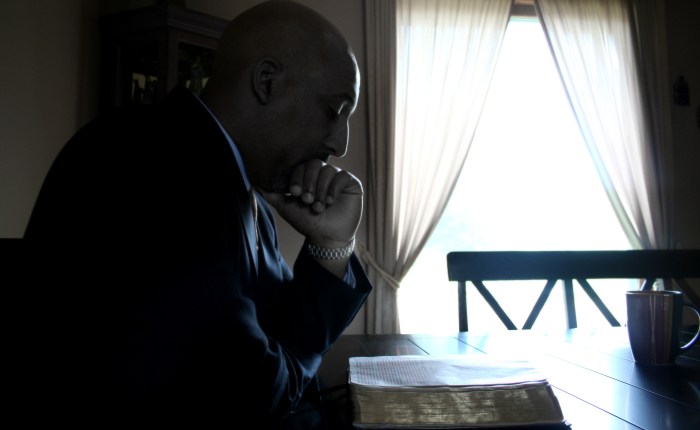
From Fear to Favor

From Fear to Favor

We live in a culture caught in a strange, polarized paradox. On one hand, we are in a perpetual state of trembling. We lie awake at night, anxious about the daily news cycle, paralyzed by financial instability, or terrified of failing the people we love. We are hypersensitive to every shift in our circumstances. Yet, on the other hand, when it comes to the Sovereign Creator of the universe, our world exhibits a profound, casual apathy. We have domesticated God, reducing Him to a harmless, cosmic bystander. We tremble at everything in the world, yet we have lost the capacity to tremble before Him.

This lack of holy fear is perhaps the greatest spiritual crisis of our time. We cannot experience the weight of God’s favor if we have never felt the weight of His holiness.

It is this reality that has created a profound holy tension. How do we transition from the cold, irreverent apathy of our culture to a genuine, trembling fear of the Lord—and from there, into His intimate favor? How do we move from treating God as irrelevant to trembling at His majesty to ultimately resting in His love?

The answer to this modern crisis is beautifully captured in a single, remarkable verse from the Old Testament prophet Zephaniah:

“The Lord your God is with you, the Mighty Warrior who saves. He will take great delight in you; no longer will he rebuke you, but will rejoice over you with singing.” — Zephaniah 3:17 (NIV)

To fully appreciate the depth of this promise, we must look at the historical backdrop of the small, overlooked prophetic book that houses it.

The Danger of Complacency

To understand the beauty of God’s favor in Zephaniah 3:17, we have to understand the bleak landscape of the chapters that precede it. Zephaniah prophesied during the reign of King Josiah in the late 7th century BC. While Josiah was a good king who attempted religious reforms, the nation of Judah was spiritually decaying. Decades of wicked leadership under Manasseh and Amon had left the people steeped in idolatry, moral compromise, and worst of all, spiritual apathy.

The people of Zephaniah’s day weren’t necessarily trembling in fear of God; they simply did not think about Him. In Zephaniah 1:12, the prophet warns that God will search Jerusalem with lamps to punish those “who are complacent, who say to themselves, ‘The Lord will do nothing, either good or bad.'” They had lost their holy fear. They believed God was passive, harmless, and irrelevant to their daily lives.

Because of this deep irreverence, Zephaniah’s opening chapters are some of the most terrifying in the prophets. He warns of the impending “Day of the Lord”—a day of wrath, ruin, distress, and darkness. God is presented as a sovereign Judge coming to sweep away complacency. The message was clear: you cannot ignore the holy Creator forever.

But then, in chapter 3, a dramatic, breathtaking pivot occurs. The tone shifts radically from global judgment to intimate restoration. To experience this restoration in our own lives, there are three vital shifts we must make: Recognize God’s magnitude, receive God’s favor, and rest in God’s sovereignty and song. 

Recognize God’s Magnitude

Zephaniah 3:17 begins with a striking declaration:

“The Lord your God is with you, the Mighty Warrior who saves.”

To receive God’s favor, we must first recognize His magnitude. We must repent of our casual, low-view of God. Zephaniah reminds us that He is Yahweh, the Gibbor—the Mighty Warrior. He is the Creator of the stars, the Commander of angel armies, and the absolute authority over all creation. He is terrifyingly powerful.

Our initial human reaction to such power, when we finally wake up to it, is to tremble. When Moses encountered God on Mt. Sinai, the people shook with fear. When Isaiah saw the Lord high and exalted, he cried out, “Woe to me! I am ruined!” However, notice the incredible modifier Zephaniah attaches to this Warrior: He is the Mighty Warrior who saves.

The very power that should make us tremble is the very power He deploys to rescue us. The transition from fear to favor begins when we realize that God’s omnipotence is not weaponized against us, but mobilized for us. We do not stop fearing His power; rather, our holy fear is transformed into holy safety because we know the Warrior is on our side.

Receive God’s Favor

Zephaniah continues:

“…He will take great delight in you; no longer will he rebuke you…”

Why do so many of us struggle to live in God’s favor? Once we wake up to His holiness, we often swing to the opposite extreme. Instead of being apathetic, we become terrified that we are permanently disappointing Him. We assume His default posture toward us is a frowning brow, a wagging finger, and an impending rebuke.

We try to earn His favor through spiritual performance—praying longer, serving harder, acting better—hoping we can quiet His frustration. But favor is never earned; it is received.

The Hebrew word for “delight” used here suggests a brightness of face, a joyful pleasure. Zephaniah declares that under the banner of His grace, the rebuke has been silenced. Your past mistakes, your current shortcomings, and your lingering struggles do not disqualify you from His love.

When God looks at you, He does not see a project to be tolerated; He sees a child to be celebrated. Transitioning to favor means giving up the exhausting struggle of trying to perform for a Judge, and instead, resting in the unconditional delight of a Father.

Rest in God’s Sovereignty and Song

The verse concludes with one of the most tender, mystifying pictures of God in all of Scripture:

“…but will rejoice over you with singing.”

Think of the sheer scale of this imagery. The same God whose voice shatters the cedars of Lebanon, the God who spoke light into existence and commands the oceans where to stop, is described as singing over you.

Our earthly fears are incredibly noisy. They fill our minds with racket sounds of “what-ifs,” accusations, and anxieties. They tell us we are not enough, we won’t survive, and we are entirely on our own.

How do we drown out the screaming noise of our worldly fears? We must learn to tune our hearts to the frequency of God’s song.

The English Standard Version (ESV) beautifully renders the phrase “no longer will he rebuke you” as “he will quiet you by his love”—a comforting truth also highlighted in the NKJV as “He will quiet you with His love.” There is a holy silence that comes when we stop trying to defend ourselves, stop trying to secure our own futures, and simply let His love soothe our anxious minds. And in that quiet space, we begin to hear His melody. It is a song of redemption, a song of safety, and a song of absolute victory.

Living in favor means you let His song define your identity. When the world tells you to panic, you listen to His rhythm. When your heart tells you to hide, you step into the sound of his voice. The only sound that can calm your fears.

The Bridge From Fear to Favor

How does this ancient shift from judgment to rejoicing bridge to our lives today? The answer is found in the cross of Jesus Christ.

On the cross, the ultimate “Day of the Lord” took place. The terrifying judgment and righteous wrath that we deserved for our rebellion and our apathetic complacency was entirely absorbed by Jesus. The barrier of our guilt was demolished. Because of Christ, the holy God who stood against our sin now stands with us in grace. Jesus is the bridge that carries us from the trembling fear of judgment into the Father’s unmerited favor.

The journey from fear to favor is not a physical journey of distance; it is a spiritual journey of intimacy. You do not have to run away from the holiness of God to find His goodness. They meet perfectly at the cross.

Today, whatever has you trembling, remember this: the Mighty Warrior is with you. The Judge has silenced His rebuke because of Jesus. The Father is looking at you with deep, unshakeable delight.

Stop listening to the loud, frantic voices of your worldly fears, shake off the spiritual apathy of this age, and let yourself be quieted by His love. The Sovereign of the universe is singing over you. It is time to step into His favor, rest in His grace, and sing along.


About Those Plans

About Those Plans

We treat Jeremiah 29:11 like a spiritual Hallmark card. We cross-stitch it onto pillows, print it on graduation announcements, and whisper it to ourselves when we’re hoping for a promotion, a spouse, or a parking spot. “For I know the plans I have for you,” declares the Lord, “plans to prosper you and not to harm you, plans to give you a hope and a future.”

In our culture, we read this verse as a promise of a quick exit from our problems. We see it as a divine guarantee that the struggle we are currently in is merely a brief detour on the way to our “best life.” But if you pull back the curtain and look at the context in which the message was sent, the words become far less comfortable and infinitely more powerful.

To truly understand the power in Jeremiah 29:11, we have to stop reading it through the lens of our American dream and start reading it through the lens of a Babylonian nightmare.

The Disorientation: Life in the Silence

In 597 B.C., the world as the Israelites knew it came to an end. This wasn’t just a “rough patch” or a temporary setback; it was a state of total, soul-crushing disorientation. Nebuchadnezzar, the iron-fisted king of Babylon, had marched the “best and brightest” of Jerusalem—the craftsmen, the priests, the young nobles like Daniel, and the royal family—700 miles away from everything they knew.

Imagine the trauma. They weren’t just moved; they were deported. They were forced to walk away from the Temple—” the house of God”—leaving it a smoking ruin. For the Israelite mind, this was a theological crisis even more than a political one. They believed that as long as they had the Temple, they had God. With the Temple gone, they were forced to ask the terrifying question: Is God still God if His house is burned down?

They were in exile. Their names were changed to honor Babylonian deities, their language was suppressed, and their God seemed suddenly, deafeningly silent. When you are sitting in the rubble of your own life, your “map” for how things were supposed to go isn’t just lost; it’s been incinerated. You feel like you’re in a “waiting room” with no exit, wondering if God has forgotten your name or lost your address.

The Discourse: The Danger of the Shortcut

In the midst of this void of hope, two voices emerged, creating a spiritual tug-of-war. In Jeremiah 28, we meet a prophet named Hananiah. He was the kind of preacher everyone wanted to hear. He stood in the temple and declared a bold, populist message: “Within two years, the Lord will break the yoke of Babylon! He will bring back the vessels of the house of the Lord and all the exiles!”

We all love a Hananiah. We want the “two-year” prophecy. We want the shortcut, the quick fix, the immediate rescue. Hananiah’s message was intoxicating because it required no change from the people; it only required them to wait for a magic wand to be waved. It was a theology of comfort that ignored the reality of God’s discipline.

But Jeremiah stood up and gave them a “seventy-year” reality check. He wore a wooden yoke around his neck to symbolize the coming years of service to Babylon. When Hananiah snapped that wooden yoke off Jeremiah’s neck, God responded with a terrifying word: “You have broken a wooden yoke, but in its place, you will get a yoke of iron.”

Jeremiah’s letter in Chapter 29 dropped like a lead weight. He essentially told the exiles: Hananiah is lying to you. Your best life isn’t coming in two years. You aren’t leaving. In fact, most of you reading this letter will die in Babylon. So, unpack your bags. Build houses. Plant gardens. Marry off your children. Seek the peace and prosperity (the Shalom) of the city where I have carried you. In other words, get comfortable, you are going to be a foreigner for a while. 

This is the “Discourse” we all face today: Do we listen to the voice that promises an easy exit, or the Voice that calls us to find God in the middle of the mess?

The Reorientation: The Compass of the Plan

This is the gritty soil in which Jeremiah 29:11 was planted. It wasn’t written to people walking across a stage in a cap and gown; it was written to people who were told they were going to grow old and die in a foreign land.

When God says, “For I know the plans I have for you,” He is performing a massive reorientation of our gaze. He is shifting our perspective from the chronos (our timing) to the kairos (His appointed season).

  • Our Expectation: Change my location (Get me out of this mess).
  • God’s Strategy: Change my heart (Make me whole in the mess).

God’s “plan” is often a transformation project, not a rescue mission. The Hebrew word used for “prosper” is Shalom. In our English Bibles, we often think of prosperity as financial or situational success. But Shalom means wholeness, completeness, and being in a right relationship with God and neighbor. God wasn’t promising the exiles would recover their loss from the Babylonians; He was promising that He would make them whole again.

He is the Navigator who knows the map even when we’ve lost the trail. Reorientation means trusting that God is not lost, even when we are.

The Reformation: Beauty from the Burn

Why the seventy years? Why couldn’t God just bring them home after two? Because God was doing a work of Reformation. Before the exile, Israel was a nation addicted to “Yahweh Plus.” They worshipped God, plus Baal. They held religious festivals, plus they oppressed the poor. They relied on a building, the Temple, as a “lucky charm” rather than relying on the Builder. They had become spiritual hoarders, filling their hearts with idols.

God used the rubble of Babylon to strip away the dross. He was a Blacksmith using the heat to reform the metal. In exile, several things happened that changed Israel forever:

  1. Idolatry was Cured: After the exile, the physical worship of carved idols virtually disappeared from Jewish life. The “overdose” of Babylonian paganism finally made them sick of it.
  2. The Word was Elevated: Without a Temple for sacrifice, the people turned to the Scriptures. The “Synagogue” was born in the exile. They became the “People of the Book.”
  3. The Presence was Personal: They learned that God wasn’t a “landlord” in Jerusalem; He was a “Little Sanctuary” (Ezekiel 11:16) that traveled with them in the dirt of Babylon.

God used the fire to “re-form” them into a people who sought Him with “all their heart” (Jer. 29:13). The rubble wasn’t the end of their story; it was the raw material for their new beginning.

The Gospel in the Exile

Ultimately, the story of Jeremiah, Hananiah, and the exiles points us toward a greater Reformer. Jesus Christ didn’t just send us a letter from the safety of Heaven telling us to “hang in there.” He entered our “Babylon.”

The Gospel tells us that Jesus left His “homeland” of perfect glory and became an exile. He was “cast out” of the city. He was stripped of His identity and mocked in a foreign language. On the Cross, Jesus took the “fire” of judgment that our sins deserved. He endured the ultimate “Disorientation”—the separation from the Father—so that we would never have to.

Because of the Cross, the fires we walk through today are never for our destruction; they are only for our purification. Jesus is our “Expected End.” He is the “Future and the Hope” that Jeremiah 29:11 pointed toward.

The “plan” of God for your life isn’t a better job, a bigger house, or an easier path. The plan of God for your life is Jesus. He is the one who reconciles us, reforms us, and brings us home—even if “home” is found in the heart of God while we are still sitting in the rubble of this world.

Trusting the Reformer

If you find yourself sitting in the rubble today, feeling the heat of the fire and the weight of the wait, do not look for the nearest exit. Do not listen to the Hananiahs who promise you a shortcut that avoids the work of the soul.

Instead, look for the Reformer. He hasn’t lost the blueprint for your life. He is not confused by your crisis. He is doing His most profound work in the silence. He is reforming you from the inside out, turning your stone heart into a heart of flesh, and teaching you that Shalom is found in Him alone.

You are being reformed out of rubble. And in His hands, the wreckage is exactly where the masterpiece begins.

Wet and Broken Pieces

Wet and Broken Pieces

In the eighteenth chapter of 1 Kings, we find one of the most dramatic confrontations in sacred history. The prophet Elijah stands on the heights of Mount Carmel, facing a nation paralyzed by indecision and a land parched by a three-year drought. While the story is often remembered for the fire that eventually falls from heaven, the true power of the narrative lies in what happens just before the miracle. Before the lightning strikes, there is a quiet, manual labor of gathering ruins.

We often live under the modern myth of the “clean start.” We are told that if we want to build something meaningful—a career, a relationship, or a spiritual life—we must first clear the site, haul away the debris, and order fresh, polished materials. We treat our past failures like hazardous waste, believing that God can only build upon a foundation that has been professionally sanitized.

However, Elijah’s actions on that mountain offer a radical, counter-cultural alternative. He suggests that the most powerful movements of God do not happen on brand-new, sterile platforms, but upon “Wet and Broken Pieces.” This is a theology not of the pristine, but of the restored.

The Anatomy of the Ruin

To understand the miracle of the fire, we must first understand the tragedy of the drought. For three years, Israel had been a land of dust. The economy was shattered, the livestock were dying, and the people were spiritually “limping” between two opinions. They were fragmented. They wanted the benefits of God’s covenant while flirting with the convenience of Baal’s culture.

When Elijah finally confronts them, he doesn’t start with a sermon or a miracle. He starts with a site inspection. He finds an altar of the Lord that had been “abandoned.”

Notice that the text doesn’t say the altar was destroyed by an invading army. It says it was abandoned. This is the quietest kind of tragedy. It’s the prayer life that slowly gathered dust. It’s the integrity that eroded one small compromise at a time. It’s the “used-to-be” version of ourselves that we stopped tending to because it became too painful to look at. We think our biggest problem is the “drought” (the external crisis, the lack of resources, the broken world), but Elijah shows us that the real crisis is the internal ruin—the abandoned place where we used to meet with God.

Healing the Stones (Rāpā’)

When Elijah finally moves to act, he issues a simple command: “Come here to me.” As the people gather, he begins the work of reconstruction. But he doesn’t go to a quarry to find new stones. He reaches into the dirt and pulls out the old ones.

In Hebrew, the word for “repaired” in this passage is rāpā’. It is the same word used throughout the Old Testament for “healing.” In Elijah’s hands, masonry became medicine. By putting the broken pieces of the altar back together, he was healing the spiritual identity of the nation.

This is a profound message for anyone who feels that their history has disqualified them from their future. We often spend our lives trying to outrun our “broken pieces.” We try to hide the cracks in our character or the fragments of our failed attempts. But God is a Master of the “Gathering.” He is the Potter who takes the marred clay and reshapes it. He is the Savior who tells the disciples to gather the fragments of bread after the miracle so that “nothing is wasted.”

If you feel like a collection of fragments today, know this: God isn’t looking for a “new” version of you that has no scars. He wants the version of you that is currently sitting in the dirt. He wants to rāpā’—to heal—the altar you abandoned. Your history isn’t something God works despite; it is often the very material He uses to build the structure for His glory.

The Mystery of the Wet Pieces

Once the structure is built, the narrative takes a turn toward the absurd. Elijah doesn’t just lay the sacrifice; he douses it. In a time of extreme drought, water was the most precious commodity on earth. Yet, Elijah orders twelve large jars of it to be poured over the altar.

He makes the “broken pieces” wet. He saturates the wood. He fills the trench. He makes the situation humanly impossible.

Why? Because we often believe that we have to be “dry” to be used by God. We think we need to have our emotions processed, our finances in order, and our “act together” before the fire of God can fall on us. We wait until the dampness of our depression or the “wetness” of our tears has evaporated before we dare to step toward the altar.

But Elijah presents God with a soaking wet mess. He shows us that the “dampness” of our lives—the tears of our grief, the sweat of our struggle, the weight of our exhaustion—does not prevent the fire of God. In fact, the water serves a holy purpose: it proves that when the breakthrough finally comes, it wasn’t sparked by human effort. The “wetness” of your current struggle is simply the backdrop for the unmistakable nature of God’s response.

When the Stones Burn

The climax of the story is one of the most stunning displays of power in the biblical canon. Fire falls from heaven. But pay close attention to what the fire consumes. The text says it burned up the sacrifice, the wood, the stones, the soil, and the water.

In the natural world, fire burns what is flammable. It consumes wood and meat. But it does not consume stone. It does not thrive in water.

This is the “Theology of the Consuming Fire.” When God enters a situation of brokenness, He doesn’t just perform a cosmetic fix. He transforms the very nature of the materials. There are parts of our lives that feel like “stones”—cold, hard, unresponsive areas where we’ve become cynical or numb. We assume these parts of us are just dead weight we have to carry.

But the fire of Carmel proves that God’s presence is intense enough to transform even the most saturated, “stony” parts of our story. The fire did not just dry the water; it overwhelmed it. It did not just blacken the stones; it encompassed them. God’s grace is a force that absorbs our sorrows and shapes our hardest experiences into a testimony of His light. He leaves nothing of the old ruin behind, transforming the “broken pieces” into a site of radiant purpose.

From Ruin to Restoration

The narrative concludes with the people falling on their faces. The “brokenness” has moved from the altar to the people. This is the goal of all spiritual restoration: that we would move from the state of being “broken and abandoned” to being “broken and surrendered.”

The people who were “limping” in verse 21 are now “prostrate” in verse 39. Their fragmentation has been healed by a single, unified vision of who God is.

If you find yourself standing in a drought today, looking at the abandoned altars of your life, take heart. You do not need to find a new quarry. You do not need to hide your tears or wait for your spirit to dry out.

Gather your stones. Lay them out before Him. Pour out the “water” of your current reality—no matter how messy or “impossible” it feels. We serve a God who isn’t intimidated by a soaking wet mess. He is the God of the fragments. He is the God who heals the ruins. And He is waiting to fall as fire upon your wet and broken pieces.

Are you Sure you Got This?

Are you Sure you Got This?

Friends, we live in a culture that relentlessly celebrates the self-made person. From every podcast and billboard, the message is the same: “Pull yourself up by your bootstraps,” “Trust your gut,” and “You are your own hero.” This mindset, which emphasizes personal strength, control, and achievement above all else, feels like the air we breathe. It tells us that success, stability, and even happiness are entirely dependent on our hustle, our cleverness, and our capacity to manage every crisis.

But what if this powerful drive to be our own savior is, in fact, the greatest spiritual trap?

When we turn to the Scriptures, we find a story that sounds a profound and powerful warning against this very mindset—a story about a man who had everything—God’s anointing, charisma, military might—but lost it all because he chose to rely on himself instead of his God. That man was King Saul.

Saul began his reign with incredible potential, humble and strong. Yet, his ending was tragic, marked by paranoia, bitterness, and destruction. And it all began when he decided he knew better than God. His narrative is not just an ancient history lesson; it’s a timeless mirror for our own souls, showing us the dangerous allure and devastating consequence of trying to be our own savior. It’s a message of ultimate importance for anyone seeking true peace and lasting reliance.

The Warning: The Instant Folly of Self-Reliance

Saul’s spiritual downfall wasn’t a sudden, cataclysmic event; it was a slow, subtle surrender to pressure. His first majoract of disobedience, recorded in 1 Samuel 13, perfectly illustrates how self-reliance kicks in at the moment we feel most vulnerable. This story challenges us to recognize the precise moment we attempt to step into God’s role, exchanging faith for frantic action.

The Pressure Point: Fear Over Faith (1 Samuel 13:5-14)

Imagine the scene: Saul and his men are trapped in a geopolitical pressure cooker. The Philistines, a powerful and intimidating enemy, are massed in Michmash, their numbers described as being “like the sand which is on the seashore in multitude.” Saul was commanded by the prophet Samuel to wait seven days for him to arrive and offer a sacrifice to consecrate the army for battle. This was God’s specific, explicit instruction: wait for Me.

But as the days dragged on, the waiting became unbearable. The soldiers, gripped by terror, began to scatter and desert Saul’s camp. Saul looked at his dwindling resources, felt the terrifying weight of imminent collapse, and panicked. He thought, “I have to do something, or I’ll lose everything.”

The action that followed—Saul performing the priestly duty himself—was the birth of his self-reliance. He put his perceived urgent need (preserving his army and his kingdom) above God’s explicit patient command (waiting).

This is the lesson for us: Self-reliance kicks in when we feel we have to control an outcome. It’s the whisper in your mind during a financial crisis that says, “God isn’t moving fast enough; you handle this by cutting corners.” It’s the impulse when a relationship is rocky to manipulate or control the other person because you can’t trust the timing of healing or reconciliation. We exchange the powerful peace of faith for the futility and exhaustion of our own frantic action. We confuse our human deadline with God’s perfect timing. Saul’s error was believing that his immediate action could generate better results than God’s intervention.

The Deeper Cost: Disobedience Masquerading as Piety

When Samuel finally arrived and confronted Saul, Saul’s response wasn’t a humble apology; it was a complex rationalization. He essentially argued that his disobedience was a necessary good.

“I saw that the people were scattered from me, and that you did not come within the days appointed, and that the Philistines gathered themselves together at Michmash, I forced myself therefore, and offered a burnt offering” (1 Samuel 13:11-12, adapted).

Saul dressed up his blatant disobedience as a necessary religious act, trying to “compel myself to offer the burnt offering.” He tried to sanctify his frantic need for control by calling it piety. This is the deeper cost of self-reliance.

When we rely on self, we invariably rationalize our sin. We lie to ourselves: “I have to fudge these numbers to save my business.” “I have to lash out and control my children because they’ll fail otherwise.” “I have to keep overworking because God rewards effort, not rest.” We cloak our arrogance of control in the guise of good intentions, necessity, or even faith. We make excuses, but God sees the deeper issue: a lack of trust in His absolute sovereignty. Saul’s kingship was stripped from him not because he missed a date on the calendar, but because his act revealed a heart that had elevated its own judgment above the living God.

The Revelation: God Values Trust Over Talent

Saul’s second major failure, detailed in 1 Samuel 15, revealed a profound and incredibly inspiring truth about what God desires from us. This truth is deeply liberating because it takes the pressure off our performance, our impressive talents, and our personal accomplishments.

The Idol of Partial Obedience (1 Samuel 15)

In this second scenario, God gave Saul a clear, black-and-white command: wage war against the Amalekites and utterly destroy everything—people, livestock, and goods. This was a judgment rooted in history, and the command was absolute.

Saul went, fought, and won. But instead of executing the command fully, he spared Agag, the Amalekite king, and the best of the sheep and cattle. When confronted by Samuel, Saul offered the same tired defense:

“The troops took sheep and oxen, the best of the things devoted to destruction, to sacrifice to the Lord your God in Gilgal” (1 Samuel 15:21).

Saul thought his military success and his “good” idea of a superior sacrifice would compensate for his disobedience. He thought his talent as a general and his generous offering could somehow improve upon God’s will. He substituted God’s command with his own human judgment, relying on his impressive works and resources to cover his lack of simple trust.

The lie here is that partial obedience is just disobedience with a good excuse. By saving the best, Saul was building an idol to his own talent: “I won the war, and now I’ll use my superior wisdom to manage the spoils.” He was attempting to edit the Creator’s script.

The Inspired Priority: “To Obey is Better than Sacrifice”

When Samuel finally confronted Saul, he declared one of the most eternal and powerful truths in Scripture:

“Has the Lord as great delight in burnt offerings and sacrifices, as in obeying the voice of the Lord? Behold, to obey is better than sacrifice, and to heed is better than the fat of rams. For rebellion is as the sin of divination, and arrogance is as iniquity and idolatry” (1 Samuel 15:22-23).

This passage is a stunning revelation and an incredibly inspiring message for all of us struggling with performance anxiety and self-reliance. It tells us that God doesn’t need our impressive plans, our superior resources, or our self-generated achievements. He doesn’t need your perfect business plan, your massive bank account, or your flawless reputation. He doesn’t need the “best of the sheep” that you stole from His plan.

What God desires is our simple, humble reliance and trust.

It is liberating to know that our greatest gift to God is not a performance we have to strive for, but the simple, beautiful act of obedience—submission to His will. Saul’s talent couldn’t save him from his fate; our quiet, daily obedience can save us from the exhaustion of constantly trying to be better than God. Our performance matters far less than our position of dependence. This shifts the focus from our competence to God’s, and that is where true peace lies.

The Path Forward: Choosing Dependence Over Dominance

The story of Saul doesn’t have to be our story. The opposite of self-reliance isn’t weakness; it’s a powerful, liberating dependence that leads to true, sustainable strength.

The Remedy for Arrogance: Humility

Samuel called Saul’s rebellion a sin like “arrogance like the evil of idolatry” (1 Samuel 15:23). Why is self-reliance likened to idolatry? Because when we rely solely on self, we effectively make ourselves the idol. We transfer the attributes of omnipresence, omniscience, and omnipotence from God to our own capacity for control. We believe we are the source, the resource, and the ultimate savior of our own lives. This is spiritual narcissism.

The path out of this spiritual dead-end is not a path of greater striving, but a path of radical surrender. It is the simple, honest, and profoundly encouraging acknowledgment that “I can’t. I don’t know. I’m not enough. But God can.” This acknowledgement is not weakness; it is the genesis of all true power. Humility is simply accepting your role as the dependent creature and resting in the knowledge of the all-sufficient Creator. It’s the ultimate step out of exhaustion and into freedom.

Trusting God’s Provision, Not Our Plan

Saul’s mistake was constantly believing his resources—his army, his judgment, his stolen cattle—were his source of power. He was always looking inward or outward to his possessions, never upward to his Provider.

When we feel the pressure to control, to manipulate, or to race ahead of God’s timing, it’s a sign that we’ve forgotten that God is the source of all provision, protection, and wisdom. We don’t have to strive for control over our circumstances; we only have to trust His competence over our own.

This looks like:

  1. Pausing before Acting: When anxiety demands an immediate, frantic response, pause, pray, and ask, “Is this action based on faith or fear?”
  2. Laying Down the Crown: Regularly placing the weight of your worries—finances, relationships, health—at the foot of the cross.
  3. Seeking First: Prioritizing prayer, quiet meditation, and the study of the Scriptures before you prioritize work, endless consumption, or networking.

When we lean into God’s competence, He gives us peace that surpasses understanding and directs our steps toward His perfect, unfailing plan.

A Word from Our Savior

Saul’s tragedy was believing he could manage life better than God. He tried to save his own kingdom through his own efforts, his own disobedience, and his own partial obedience, and he lost it all.

The message for us, the ultimate antidote to the spiritual trap of self-reliance, comes directly from the gentle teaching of our Lord Jesus Christ. Saul’s self-talk was, “I can do it.” Jesus’ invitation to us is a radically different one: “Come to Me.”

In the Sermon on the Mount, Jesus speaks directly to our worries—the very things that drive our self-reliance: our food, our clothing, our future. He confronts our panicked striving head-on:

“Therefore do not worry, saying, ‘What shall we eat?’ or ‘What shall we drink?’ or ‘What shall we wear?’… But seek first the kingdom of God and His righteousness, and all these things shall be added to you” (Matthew 6:31, 33).

Jesus invites us to lay down the exhausting, fruitless burden of trying to be our own god, our own provider, and our own savior. He calls us to a radical, liberating dependence. The man who truly “has this” isn’t the one running the fastest or controlling the most variables. The one who “has this” is the one who has fully surrendered the desire to control and has simply handed the reins back to the Creator.

Let’s step out of Saul’s shadow and step into the light of Christ’s promise: True strength, true peace, and true provision are found only when we stop trying to do it ourselves and simply trust Him to do it through us.

The Courage of Waiting

The Courage of Waiting

There is a particular kind of courage that doesn’t roar. It doesn’t charge into battle with a war cry or leap from a precipice to save a life. It’s a quieter, more profound kind of strength, born not of action but of stillness. It is the courage of waiting.

This is a quiet, resilient fortitude that the ancient songbook of faith, the Psalms, explores with remarkable clarity. Across its verses, we find a consistent message: true courage is not the absence of fear, but the presence of an unshakeable trust in a higher power. It’s a strength born not from our own will, but from a divine source that acts as both our light and our stronghold. Consider these three passages that connect courage directly to our relationship with God:

  • Psalm 27:1: “The Lord is my light and my salvation—whom shall I fear? The Lord is the stronghold of my life—of whom shall I be afraid?”
  • Psalm 27:14: “Wait for the Lord; be strong, and let your heart take courage; wait for the Lord!”
  • Psalm 31:24: “Be strong and take heart, all you who hope in the Lord.”

Our journey begins with the words of King David, a man who knew a great deal about facing down giants—both literal and figurative. He confronted giant adversaries, endured the relentless pursuit of an envious king, and even suffered the deep wound of betrayal from his own son. Yet, in the face of such turmoil, he makes an incredible, faith-reorienting declaration. This is not a flippant or dismissive rhetorical question. It is a statement of faith that completely reorients a person’s world. David isn’t claiming to have no reason to be afraid; rather, he is choosing to center his identity and security not on his own strength or the absence of danger, but on God. The world may be full of things that inspire fear, but for David, the Lord is a “light” that exposes the darkness and a “stronghold” that offers unshakeable protection. His courage, therefore, isn’t the absence of fear, but the presence of faith. He has an anchor that holds firm no matter how turbulent the sea. This challenges us to ask a fundamental question: who or what is the stronghold of our lives? When we place our trust in anything less than God—our career success, our financial stability, our physical health, or the fleeting approval of others—our courage will inevitably falter. For these are all things that can and will fail us. But the courage that stems from a foundation in God is one that cannot be shaken.

The next theme we will explore is the profound and powerful command to persevere in the very act of waiting. In our modern, fast-paced world, the very concept of waiting feels like a weakness. We are conditioned to seek immediate solutions, instant answers, and quick fixes. The advent of instant communication, next-day delivery, and on-demand streaming has trained us to believe that waiting is an inconvenience, a failure of efficiency. But the psalmist tells us that true courage is found not in the haste of action, but in the profound discipline of waiting on God. To “wait for the Lord” is not to sit idly by in passive resignation. It is a deliberate, active, and expectant posture of hope. It is a deep-seated conviction that says, “I may not see the way forward, the path may be obscured by shadow and uncertainty, but I will trust the one who does. I will be strong and courageous in this present moment, even as I wait for his perfect timing.” This kind of courage is not flashy. It is a quiet, resilient strength that endures through seasons of silence and uncertainty, much like a plant waiting for the right season to bloom or an athlete training for years for a single moment of triumph. It is the resolve to keep your hands open and your heart attentive, even when nothing appears to be happening. This is where the deepest, most enduring kind of courage is forged—in the crucible of patience. It is the courage to not force a timeline, to not rush an answer, but to trust that the one who holds all time in His hands is working on our behalf, even when we cannot perceive it.

Finally, we turn to the conclusion that echoes the theme of hope, but with a new and vital dimension. This verse is a final, resounding call to action. It is not just a personal encouragement, but a collective one, addressed to “all you who hope in the Lord.” It reminds us that our faith journey is not a solitary one. When we feel overwhelmed by the demands of waiting, we can and should draw strength and courage from one another, from the community of faith that shares the same profound hope. Our courage isn’t a solitary act of will; it is a communal practice. In the same way that a team of mountain climbers shares the weight of their gear and encourages each other to keep going, so too do we share the burden of our fears and celebrate the small victories of hope. The courage to wait is fortified by the knowledge that we are not alone. It is a shared journey, and our hope isn’t in our own ability to be strong, but in the steadfast character of God himself. The more we hope in Him, the more our hearts are filled with the courage we need to face whatever comes our way.

The courage of waiting is a tapestry woven from these three threads: the unshakeable foundation of faith in God as our stronghold, the active discipline of patient endurance, and the collective strength found in a community of shared hope. It is the courage to stand in the face of the unknown, not because we are fearless, but because we know the one who holds all things together. It is a courage that is forged in the silent moments of trusting, in the difficult moments of hoping, and in the shared moments of encouragement. And in a world that rushes toward the next thing, the quiet, powerful act of waiting is perhaps the most courageous act of all.

Remember

Remember

When challenges mount and fears loom large in the whirlwind of life, it’s easy to feel adrift, as if we’re facing insurmountable odds alone. The weight of present troubles can obscure our vision, making us forget the very source of our strength and hope. Yet, the ancient words of King David in Psalm 27:1-6 offer a profound antidote to this despair: “Remember.”

David, a man intimately acquainted with adversity – from facing giants and fleeing a jealous king to enduring betrayal and war – begins this psalm not with a lament, but with a resounding declaration of confidence: “The Lord is my light and my salvation; whom shall I fear? The Lord is the stronghold of my life; of whom shall I be afraid?” (Psalm 27:1). This isn’t a naive optimism, but a battle-tested faith rooted in memory.

David’s confidence isn’t abstract; it’s grounded in his past experiences. He recalls, “When evildoers came against me to devour my flesh, my foes and my enemies stumbled and fell” (Psalm 27:2). He had seen God’s hand move, time and again, turning the tide against seemingly overwhelming forces. It’s in these moments of divine intervention, these countless deliverances from troubles that seemed impossible to overcome, that we find a powerful testament to God’s existence and His active interaction in our lives.

Think about it: can any person truly navigate the “numerous obstacles” of life – the unexpected illnesses, the crushing losses, the sudden betrayals, the financial ruin – without some form of support? While human support is vital, there are moments when only a divine hand can provide the light in the deepest darkness, the salvation from utter despair, and the stronghold against forces that would otherwise consume us. When we look back at our own lives, at the times we somehow made it through, when a door opened unexpectedly, when peace settled in the midst of chaos, or when strength appeared from nowhere, we are witnessing God’s faithfulness. These are not mere coincidences; they are echoes of His promise, “I will never leave you nor forsake you.”

David’s life was a tapestry woven with such divine interventions. Before he ever wore a crown, as a young shepherd boy, he faced beasts that threatened his flock. He didn’t just survive; he conquered. He remembered how God enabled him to rescue his lambs from the jaws of a lion and a bear (1 Samuel 17:34-37). These weren’t minor skirmishes; they were life-or-death struggles where a shepherd boy, armed with only a staff and sling, triumphed over formidable predators.

And then came the ultimate test: Goliath, the Philistine giant, defying the armies of Israel. While seasoned warriors trembled, young David, fueled by the memory of God’s past faithfulness, stepped forward. He declared, “The Lord who delivered me from the paw of the lion and from the paw of the bear will deliver me from the hand of this Philistine” (1 Samuel 17:37). His victory over Goliath was not merely a physical feat; it was a profound act of faith, born from a deep well of remembered deliverances.

David’s reflection in Psalm 27 was likely not about one isolated occurrence, but about journeying through the halls of his memory, recalling each instance of God’s powerful intervention. This process wasn’t just nostalgic; it was an act of worship. Each recalled victory became a fresh reason to honor God with praise, solidifying his confidence that the God who had been faithful in the past would surely be faithful in the present and future. This constant act of remembering and praising transformed his past struggles into pillars of present strength, allowing him to declare with conviction, “Though an army encamp against me, my heart shall not fear; though war rise up against me, yet I will be confident” (Psalm 27:3).

This divine support is not just about external rescue; it’s also about internal transformation. The Apostle Paul reminds us in 2 Timothy 1:7, “For God has not given us a spirit of fear, but of power and of love and of a sound mind.” This verse beautifully complements David’s fearless stance. When we remember God’s faithfulness, we are empowered to overcome the spirit of fear that seeks to paralyze us. We receive a spirit of power, enabling us to face challenges with courage; a spirit of love, allowing us to respond with compassion even in difficult circumstances; and a sound mind, granting us clarity and wisdom when confusion reigns. This inner fortitude is itself a profound deliverance, a testament to God’s ongoing work within us.

It’s tempting to wish away our troubles, to pray for their immediate removal. But some of life’s most profound growth happens not by avoiding the storm, but by learning to lean into it, trusting that God is present and purposeful in the midst of it. David’s psalm isn’t just about escaping trouble; it is about finding God in trouble. His “one thing” was not freedom from enemies, but to “dwell in the house of the Lord all the days of my life, to gaze upon the beauty of the Lord and to inquire in his temple” (Psalm 27:4). He sought intimacy with God despite the surrounding chaos.

When we choose to lean into our trials, when we consciously seek God’s presence and wisdom within the difficulty, we allow Him to refine us. It’s in the crucible of adversity that our faith is tested and strengthened, like gold purified by fire.We learn resilience, patience, and a deeper reliance on God than we ever thought possible. The very things that threaten to break us can, with God’s divine support, become the tools He uses to build us into stronger, more compassionate, and more faithful individuals. We grow not just through the trials, but because of them, as God uses them to shape our character and deepen our understanding of His unwavering faithfulness.

So, when the “army” encamps against you, and “war rises up,” take a moment to pause. Remember. Remember the countless times God has been your light, your salvation, your stronghold. Remember the unseen hand that guided you, the peace that sustained you, the strength that appeared when you had none left. These memories are not just personal anecdotes; they are evidence of a living, interacting God.

Let the spirit of power, love, and a sound mind replace the spirit of fear. And as you lean into the present challenge, trust that the same God who delivered you before is actively working to grow you now. For in remembering His faithfulness, we find not just hope for today, but an unshakeable confidence for all our tomorrows.

Willful Faith

Willful Faith

Have you ever found yourself in a state where your emotions feel like a runaway train, and you’re merely a passenger, helpless to control its destructive course? Perhaps it’s anxiety gnawing at your peace, depression casting a long shadow over your days, or a general sense of discouragement that weighs heavily on your spirit. This universal cry of the downcast soul is precisely what the Psalmist captures in Psalm 42. It’s a raw, honest look into the heart of someone experiencing profound distress, not pretending or putting on a brave face, but grappling with a fundamental question. In Psalm 42:5 (NIV), we hear this poignant lament and a profound declaration: “Why, my soul, are you downcast? Why so disturbed within me? Put your hope in God, for I will yet praise him, my Savior and my God.” This single verse presents an internal struggle, a willful act, and a confident expectation. It introduces us to the concept of “Willful Faith”—not blind optimism or a dismissal of pain, but an active, intentional decision to engage our faith in the midst of struggle, choosing to believe and hope even when it feels unnatural.

The problem, then, is the downcast soul itself. The Psalmist asks, “Why, my soul, are you downcast?” This speaks to a general sadness, a feeling of being weighed down, perhaps by unfulfilled desires, loss, or sheer weariness. But he goes deeper, asking, “Why so disturbed within me?” This implies an inner turmoil, a restless anxiety, an agitation that disrupts peace. It’s the internal wrestling match, a swirl of doubts and fears. It is crucial to recognize and honestly identify these feelings in our own lives, normalizing them as experiences even devout people face. The danger of remaining in this state unchecked is that it can lead to despair, paralysis, bitterness, or even the abandonment of faith. We risk being defined by our feelings rather than by our identity in Christ. The Psalmist, however, makes a crucial move: self-interrogation. He doesn’t merely wallow; he asks why. This active examination of the source of his despair, rather than letting it consume him, is the essential first step in active faith. It is a refusal to passively accept his emotional state.

This leads us to the principle: “Put your hope in God.” This is not a gentle suggestion but a direct command from the Psalmist to his own soul. Herein lies the essence of willful faith—an act of the will, not merely a fleeting emotion. The “hope” spoken of here is not wishful thinking; it is a confident expectation firmly rooted in God’s unchanging character and unfailing promises. It’s based on what God has done and what He will surely do. The object of our hope is critical: “in God.” Not in changing circumstances, not in our own limited strength, not in the fallibility of others, but in God alone. To “put your hope” involves active steps. It means recalling God’s character, reminding ourselves of who He is: faithful, loving, powerful, just, sovereign, and intimately present. It involves remembering God’s past faithfulness, looking back at how He has shown up for us or others in seemingly impossible situations. It means resting on God’s promises found in Scripture—His unwavering care for His children, His provision, and His ultimate victory (Philippians 4:6-7, Romans 8:28). This willful part of faith also requires engaging in spiritual disciplines: crying out to God in prayer, pouring out our hearts; choosing to worship Him even when we don’t feel like it, allowing praise to shift our perspective; immersing ourselves in Scripture, letting God’s word speak truth into our situations; and seeking godly counsel and encouragement within a faith community.

The beautiful outcome of this willful act is the promise: “I will yet praise him.” This is not a present reality for the downcast Psalmist, but a future certainty, born from his resolute decision to hope in God. The word “yet” is profoundly powerful; it signifies that despite the current struggle, there will be a time of praise. It is a statement of faith and defiance against despair. The foundation of this future praise is deeply personal: “My Savior and my God.” He grounds his coming praise in who God is to him. “My Savior” speaks of the one who delivers, redeems, and rescues, pointing ultimately to Jesus Christ as the supreme Savior. “My God” reveals a personal relationship; this is not an abstract deity, but the God who is intimately involved in his life. The fruit of such willful faith is multifaceted: joy can coexist with sorrow, for willful faith doesn’t erase pain, but it allows peace to permeate it. It provides perseverance, the strength to keep going when all we want to do is give up. It grants a renewed perspective, shifting our gaze from our overwhelming problems to the all-powerful Problem-Solver. Ultimately, the goal is not just to feel better, but to truly be able to praise God for His faithfulness, even for guiding us through the darkest valleys.

The journey from a downcast soul to putting hope in God inevitably leads to future praise. Embracing willful faith is a daily, often hourly, choice. It is a spiritual muscle that requires consistent exercise. Crucially, it’s not about mustering strength on our own, but about inviting the Holy Spirit to empower our will to hope in God. So, when your soul feels downcast and disturbed, dare to ask yourself the Psalmist’s question, and then, with intentionality, command your soul: “Put your hope in God!” He is unequivocally worthy of your willful faith. He is faithful, even when our feelings betray us. “May the God of hope fill you with all joy and peace as you trust in him, so that you may overflow with hope by the power of the Holy Spirit” (Romans 15:13).

I am Your Share and Your Inheritance

I am Your Share and Your Inheritance

There has never been a time when the economy was courteous to all people. This generation’s economy promises to be consistent with all others. Few people will thrive while the masses will wonder if they will ever experience financial relief. A generation ago people hoped for two things to happen in their lifetime. One was to earn enough money to comfortably pay a mortgage while maintaining a savings. The second hope was to be able to pay off the mortgage in time enough to retire with a financial nest egg to withdraw from. A generation ago it was more than conceivable, even expected, that a person would pay off a thirty-year mortgage working for one company. If you had more than three jobs in thirty years you were labeled a “job hopper”. The economy, still not fair to all, was undeniably more stable then. Today, homeowners may work for a dozen employers before paying off a mortgage. This means it is going to be difficult to generate a comfortable retirement for those who have never been able to stay with a company long enough to become vested. This is the reality for generations X, Y and Z. It is plausible that these generations will live longer than any other, but they should expect to work longer, retiring much later than the age of sixty-five.

This paints a grim picture for the working class. We have to face the reality that there is no earthly indication that we will ever enjoy any phase of our lives without experiencing some financial hardship. Of course this is nothing new, it has been the case since the beginning of civilization. To have little or no retirement today will result in the same as having little or no inheritance in biblical times. People who had no inheritance in antiquity found themselves enslaved to an oppressive economic system. There was no hope of relief for the economically disinherited. Without land or legacy they could expect to die while working. We can expect the same if some industry revolution does not reverse this economic instability; just as steel, transportation, computers and the Internet did in the past. The need for an individual to have multiple income streams is rapidly becoming the norm. Soon retirement will be an antiquated idea. Those who don’t have the fortitude to navigate the increasingly competitive job market will have to accept that their days on earth will not be lived gracefully; but with much trepidation.

When suffering endures, with no sign of relief, hope begins to lose its fervor. It is difficult to maintain hope when life refuses to afford you the time, and money to ever realize your own dreams. Instead, all your labor is dedicated to accomplishing the goals of the financially privileged. Our dreams are fueled by the hope that we will get an opportunity to bring them to fruition. What happens to society when a generation loses hope in ever being able to accomplish their dreams? What do they teach their children about life? What happens to their faith in God? The answers to these questions may give some insight to why the most advanced society in human history is in such great moral decline. When the hope of the disinherited is fleeting it is imperative that we hold on to faith affirmations that reinvigorate our optimism.

One faith affirmation can be found in Numbers 18:20. The Lord’s message to Aaron, the Chief Priest of Israel, offers hope to the individual who is struggling to see how s/he will ever experience financial relief in uncertain times. The people of the ancient world were accustomed to hard economic conditions. It was the priest who instilled hope that if Israel honored God and remained faithful they would be relieved of economic worry. As long as they worshipped God in obedience they could expect a harvest. It was the priest’s primary responsibility to ensure that the people remained in right relationship with God. This responsibility yielded little time for the priest to do anything else. Unlike the congregation, Aaron was not able to make a living in the market place or by bartering. Priests were not even allowed to own land. So, their inheritance or financial security heavily depended on the faithfulness of people to give their tithes. Aaron’s job was to prepare the Alter with focus on the people’s penance and devotion to God. The priest would ensure that the people would be taken care of by God through prayer and ordinance, while trusting that they would in turn provide for his own daily sustenance and inheritance. In other words, Aaron depended on the nation of Israel to provide a decent wage and retirement for him. Aware of Aaron’s gullibility about his own financial fate the Lord said to him, “You will have no inheritance in their land, nor will you have any share among them; I am your share and your inheritance among the Israelites (Numbers 18:20).” Wow! This sounds a bit contradictory, especially when considering that God most often provides for us with the use of human hands. It was the people’s responsibility to make sure the priest was taken care of financially. If not the nation of Israel, where would Aaron’s share come from? When we consider Israel’s track record as it relates to obedience to the Will of God, the promise God makes to Aaron offers more relief than query. Like us, the Israelites were extremely hardheaded. Time and time again they would defy the priest. Thus, acting in disobedience to God’s Will for their lives. Consequently God would exercise judgment, dry up the people’s harvest, and allow an economic crisis to spur spiritual cleansing. The priest would not be immune to unstable economic conditions stirred by God’s anger. When the land doesn’t produce a harvest life is harder for everybody. If the tithes and offerings are scarce the priest is left to wonder what will become of his own livelihood.

The nation of Israel constantly demonstrated that they were not a trustworthy source of economic stability. What God says to Aaron serves as a message to all of us who find it difficult to trust that our employer, or the economy will yield a satisfactory portion for our retirement. In essence, God tells Aaron that as long as he is faithful in doing what God ask of him God will provide for his day-to-day needs as well as secure his future. Though Israel will prove to be unreliable, God promises Aaron that there will always be a share set-aside for him in one way, or another. God will knit Aaron’s inheritance like a tapestry. It may be comprised of several sources, but in the end God’s provision will be whole. Unlike a merchant who sells product, the priest cannot use market indicators to calculate his future income potential. The priest must have faith that God will supply his every need despite the people’s neglect of their responsibilities. Just as Aaron could not depend on the nation of Israel to be fair to him, we cannot depend on the world’s economy to provide a fair retirement for us. If we accept that God is our share and our inheritance, we can take comfort in knowing that regardless of what the job market looks like, or how many times we get laid off, or how much the cost of living increases, or how much savings we have at the moment, God will provide a way for us to rest from our labor. This message was solidified by Jesus when he said, “Come to me, all who labor and are heavy laden, and I will give you rest (Matt. 11:28).” In times of trouble God is our refuge and our strength. God will ensure that there will always be a share, and an inheritance for those who trust God.